
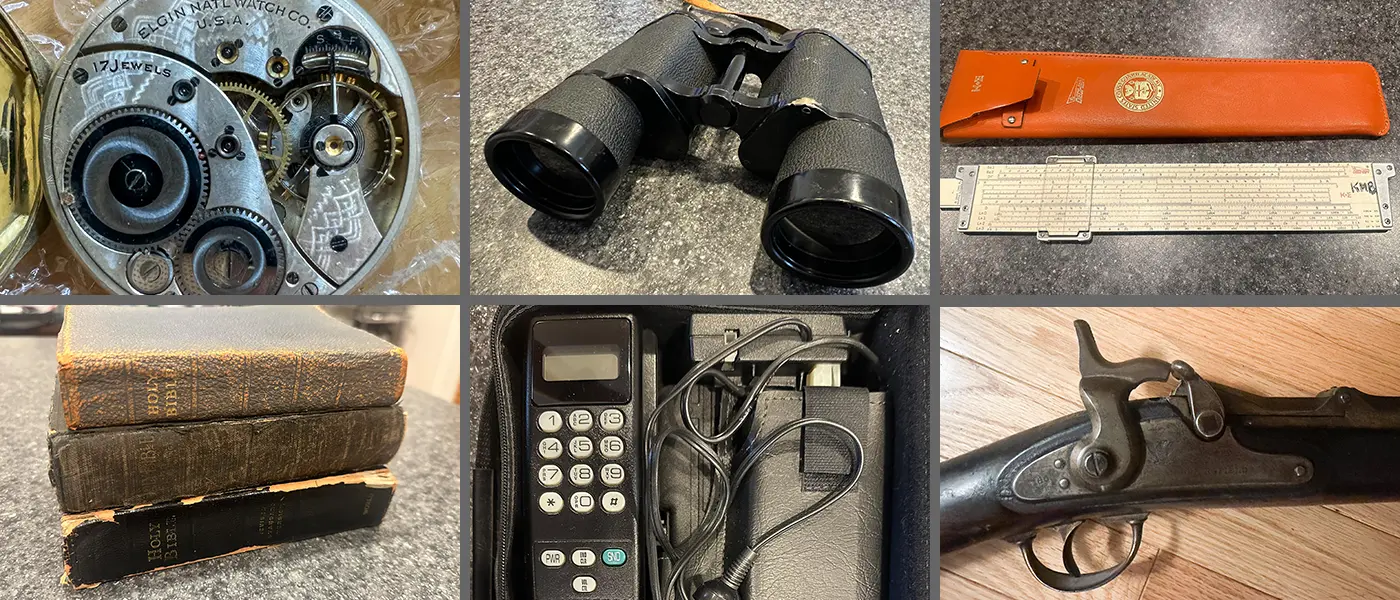
My parents are ‘downsizing’ for an upcoming move to a smaller place. They will be selling a lot of things, but they graciously allowed me and my sister to go through the house and take some things that might be useful or have sentimental value. The ones I’m most excited about are family heirlooms, historic items, and old gizmos including binoculars, guns, slide rules, and pocket watches. Here are some of my favorites.
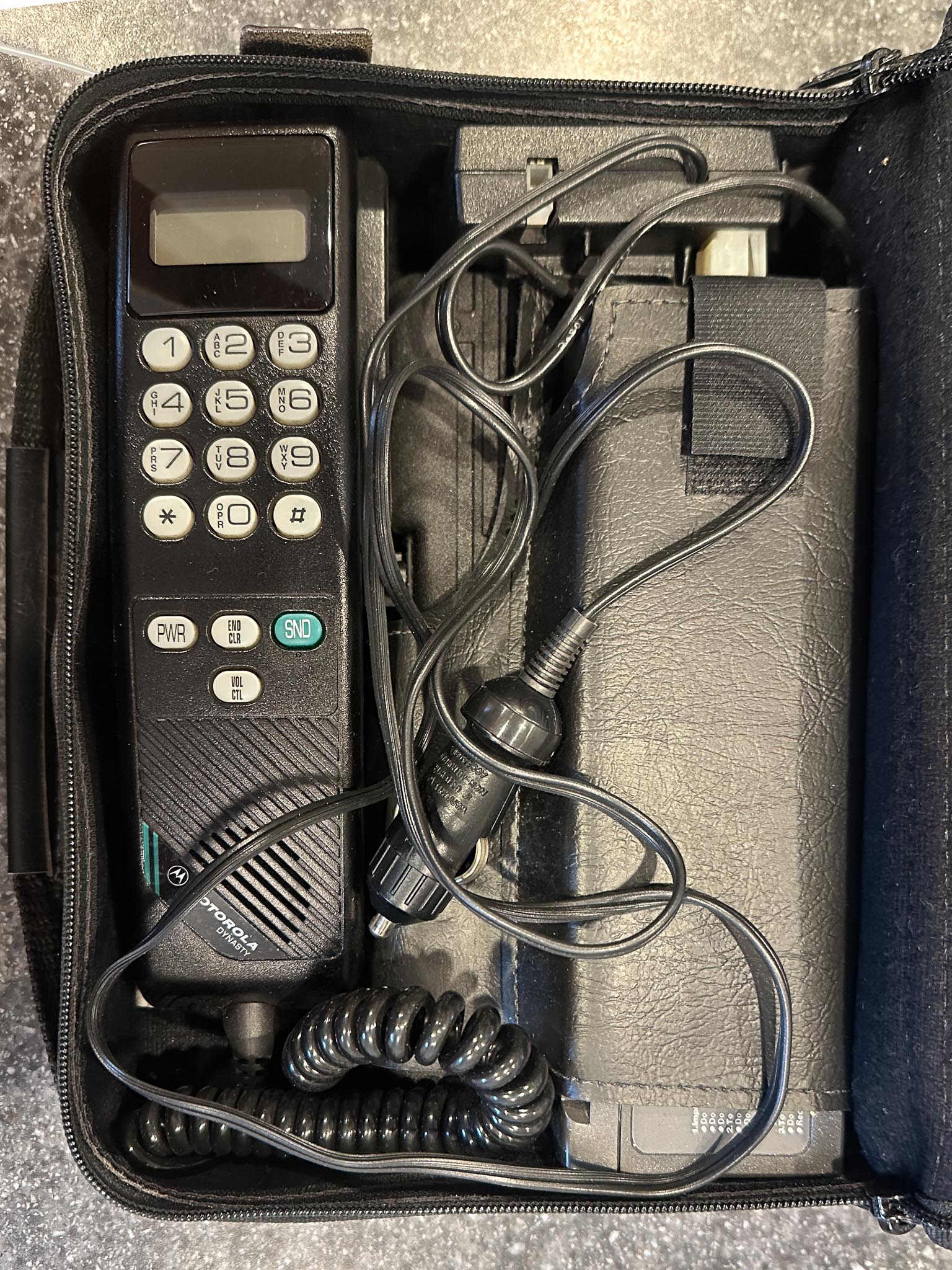
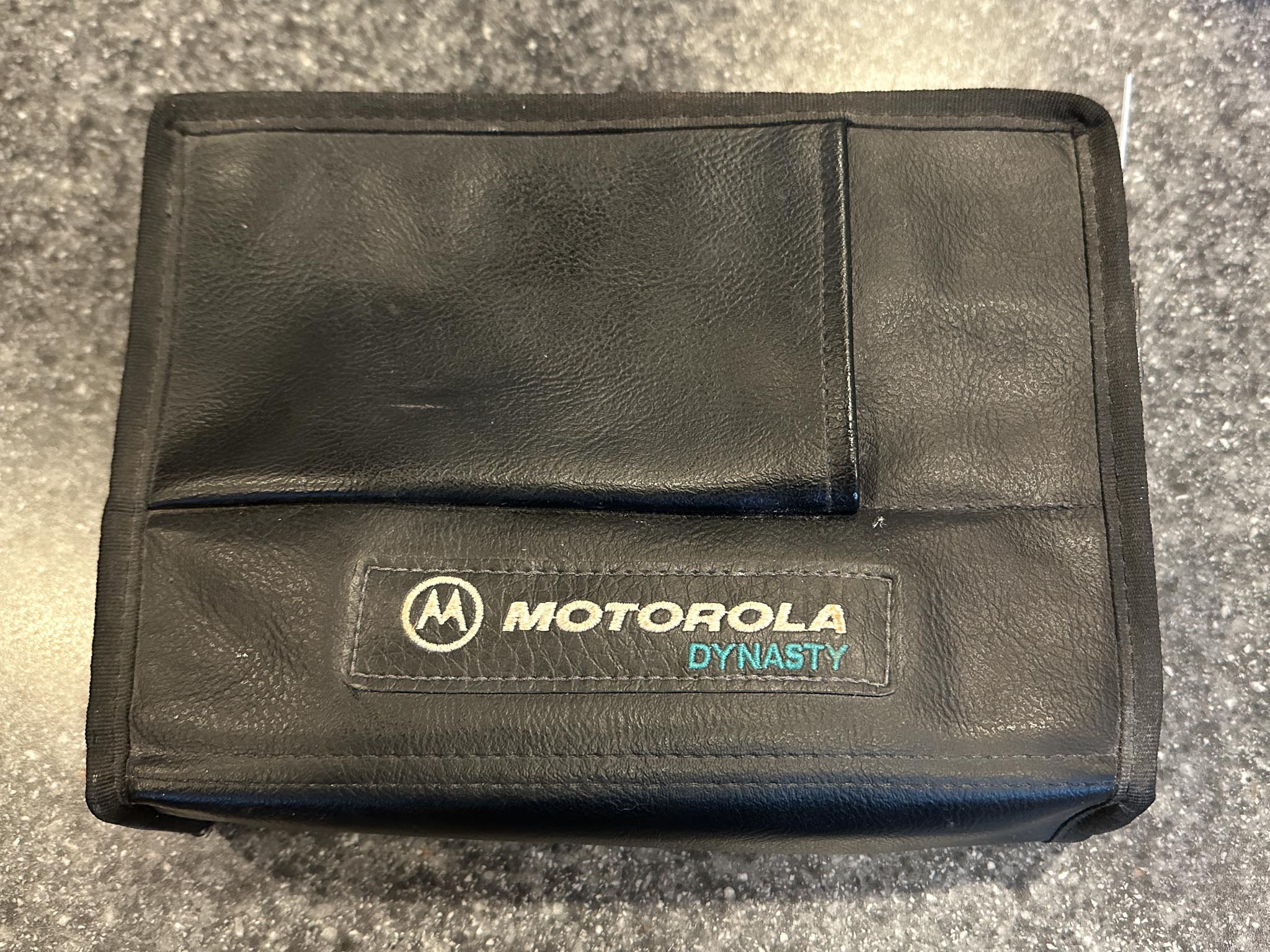
Motorola Dynasty Cellular Phone
This is a Motorola Dynasty SCN2390A, a Motorola bag phone manufactured in the first half of April 1994. It used the defunct Advanced Mobile Phone System (AMPS) analog protocol, so it would be impossible to get it connected and make calls, but it’s a cool thing to have. For a lot of people my age (or older), these were the first mobile phones they ever used . . . or even saw.
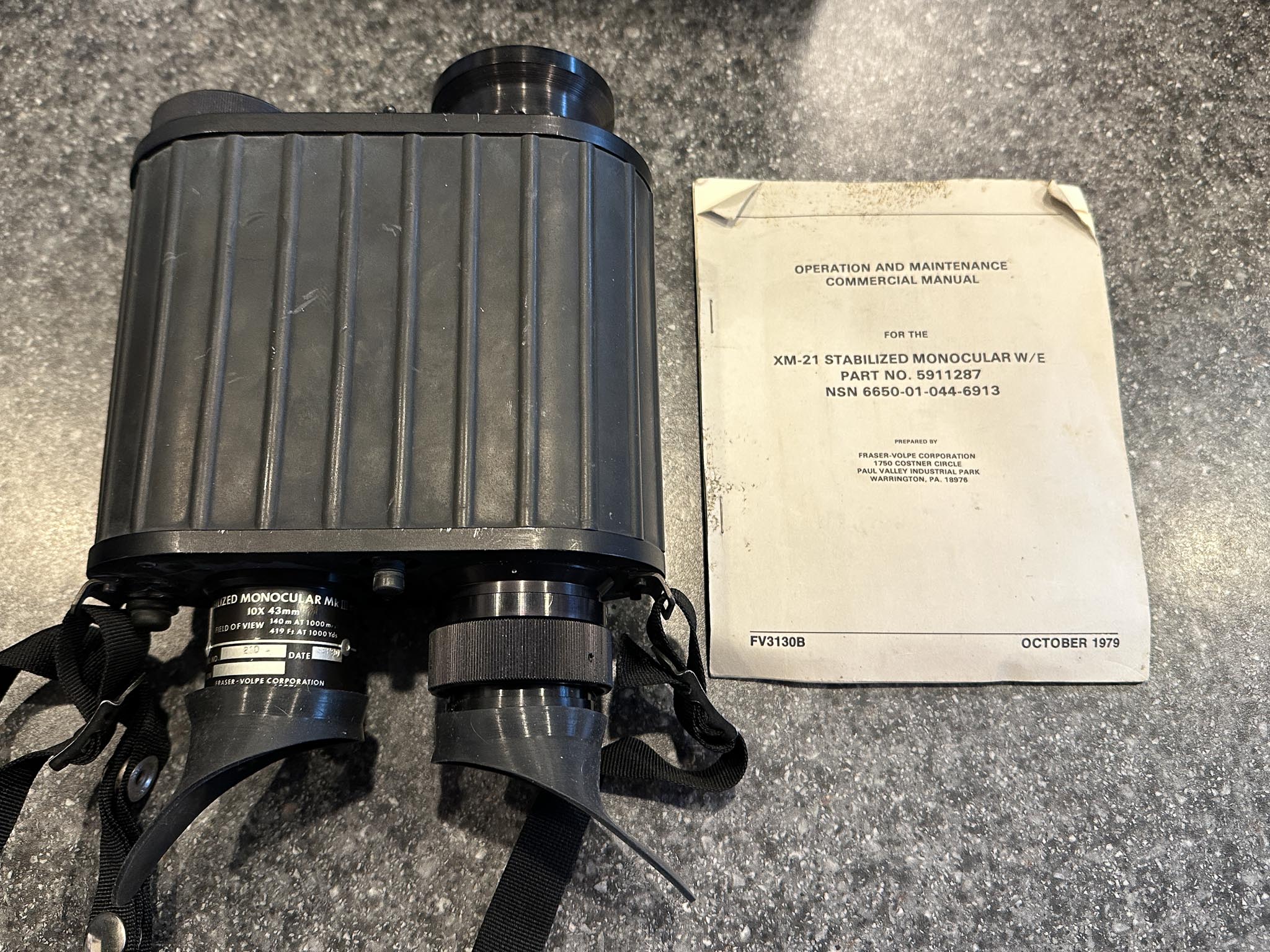
XM-21 Stabilized Monocular
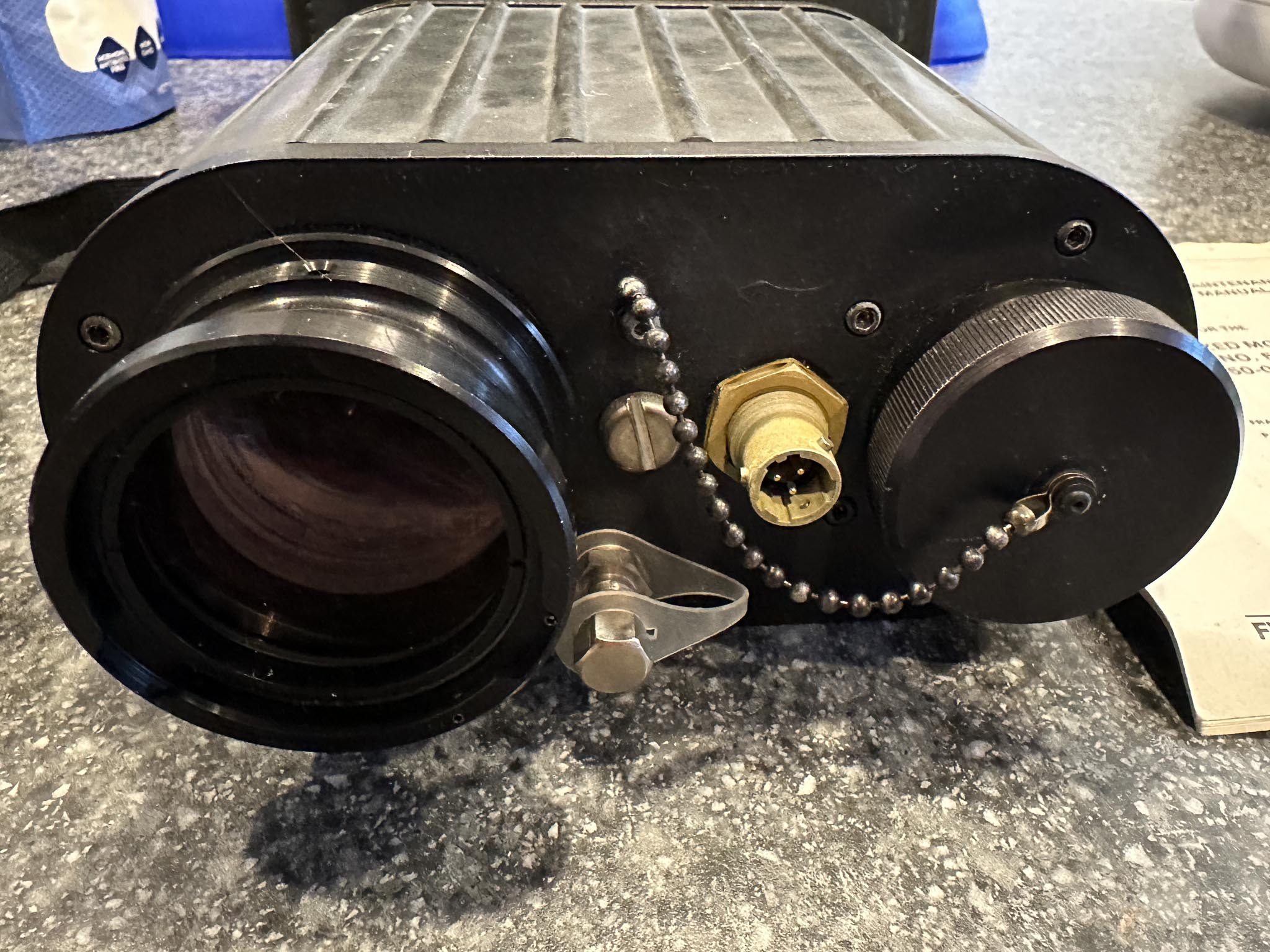
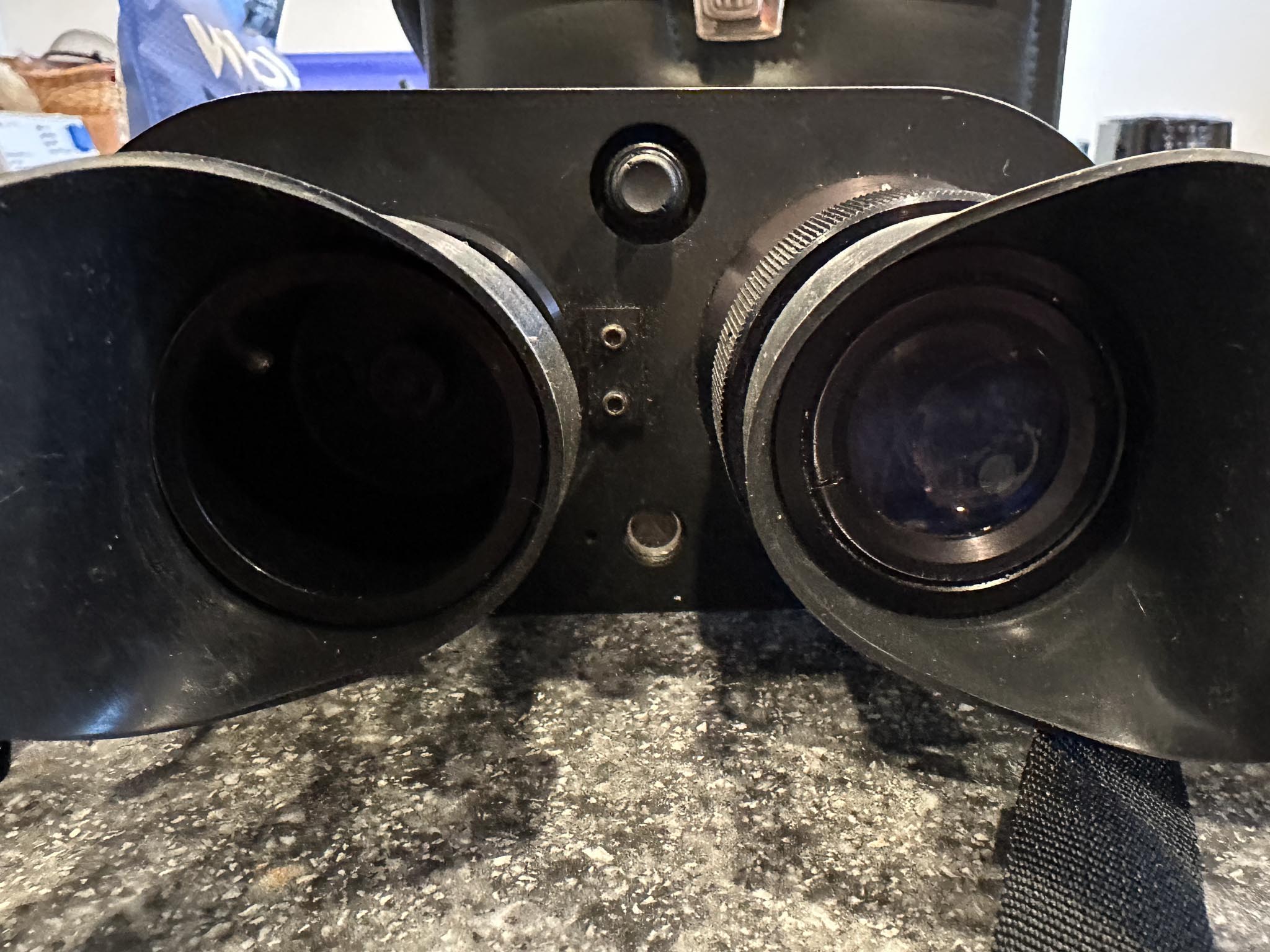
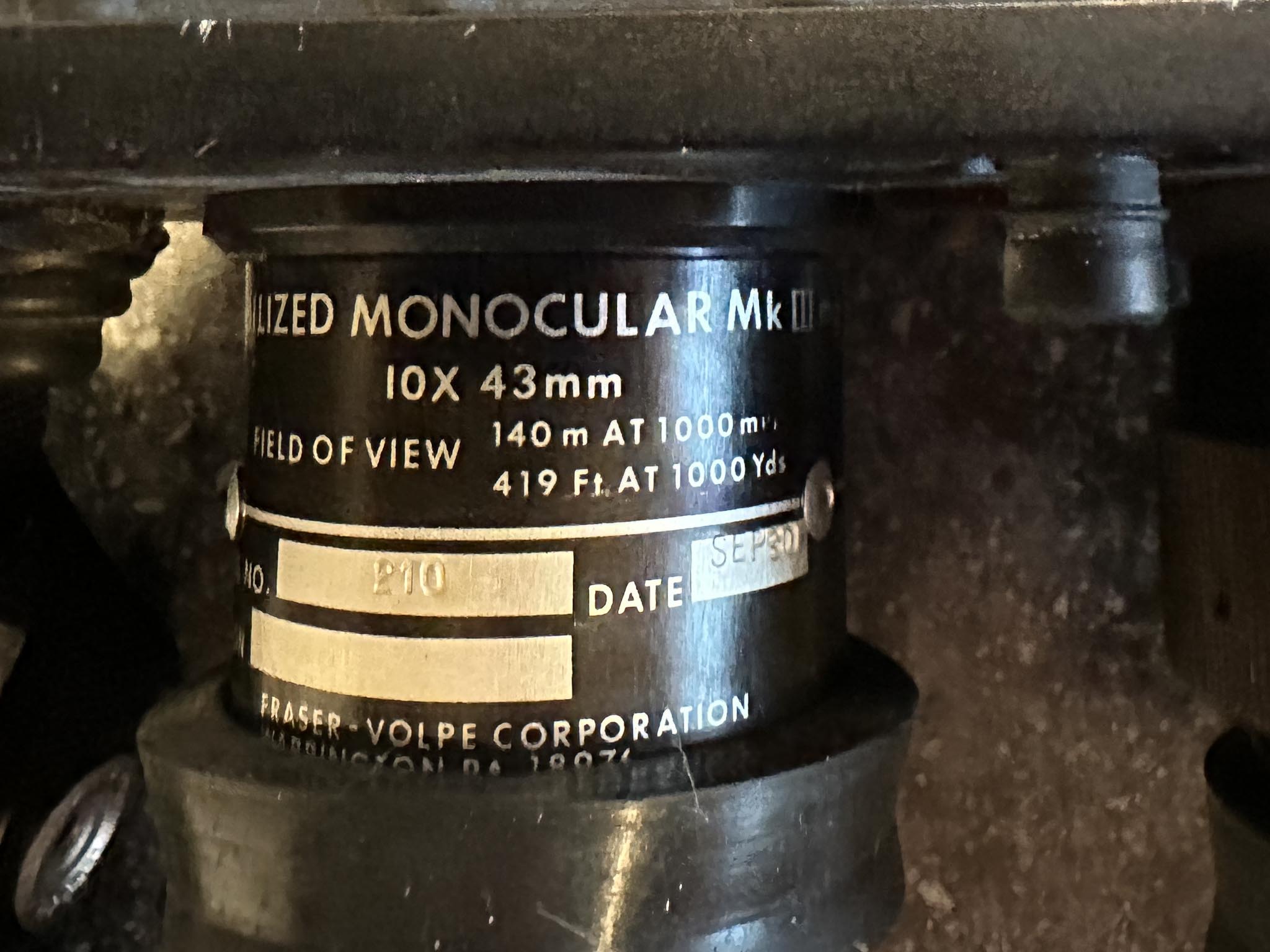
This is a U.S. government-issued (presumably U.S. Coast Guard) XM-21 Stabilized Monocular Mk. III manufactured by Fraser-Volpe Corporation in September 1980. When it’s turned off, it works like a 10×43 monocular (you use it like binoculars, but the left eyepiece is blocked). When it’s turned on, it can gyro-stabilize. That means if you have shaky hands, or if you’re in a moving vehicle like a USCG patrol boat or helicopter, you still see a perfectly clear, stable image.
It runs on a single D battery. You turn it on and let it spin-up the gyroscope for a couple minutes, and when you want the stabilized image you hold down a little button with your left thumb. I remember playing with this thing as a kid. It had a bent pin on the negative battery connector, but after I fixed that and cleaned some contacts, it still works perfectly.
E. Leitz 7×50 Marseptit Binoculars
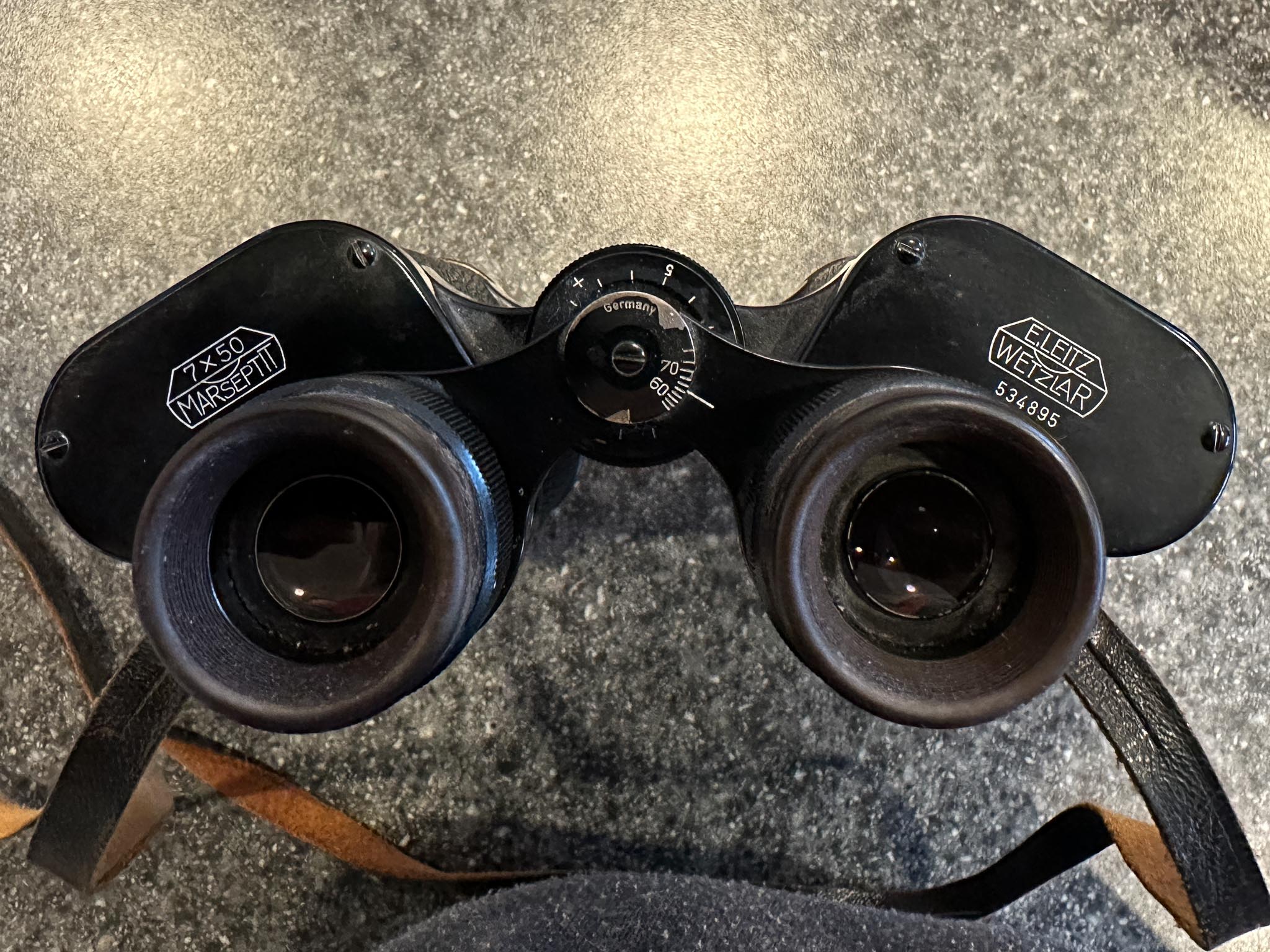
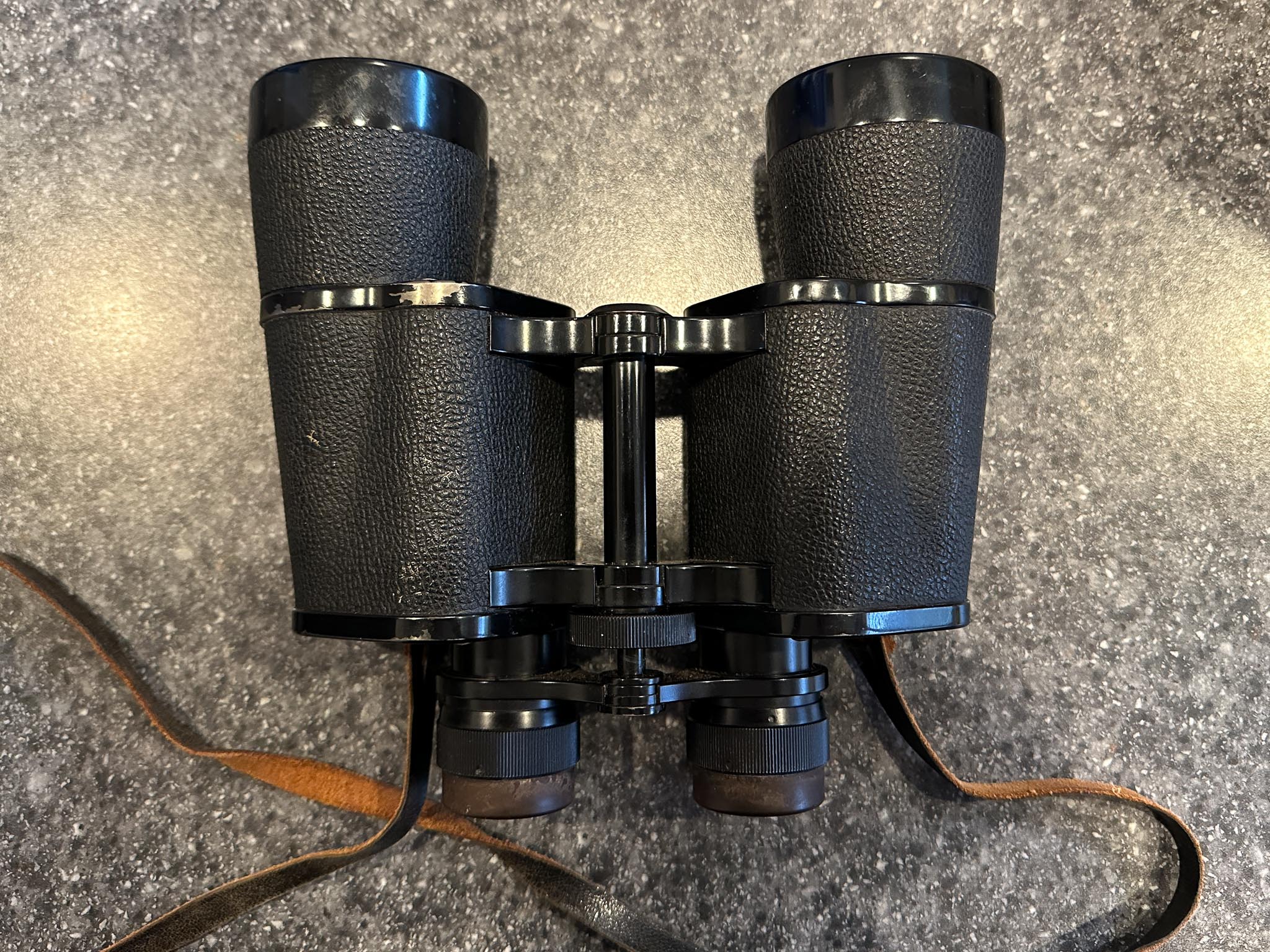
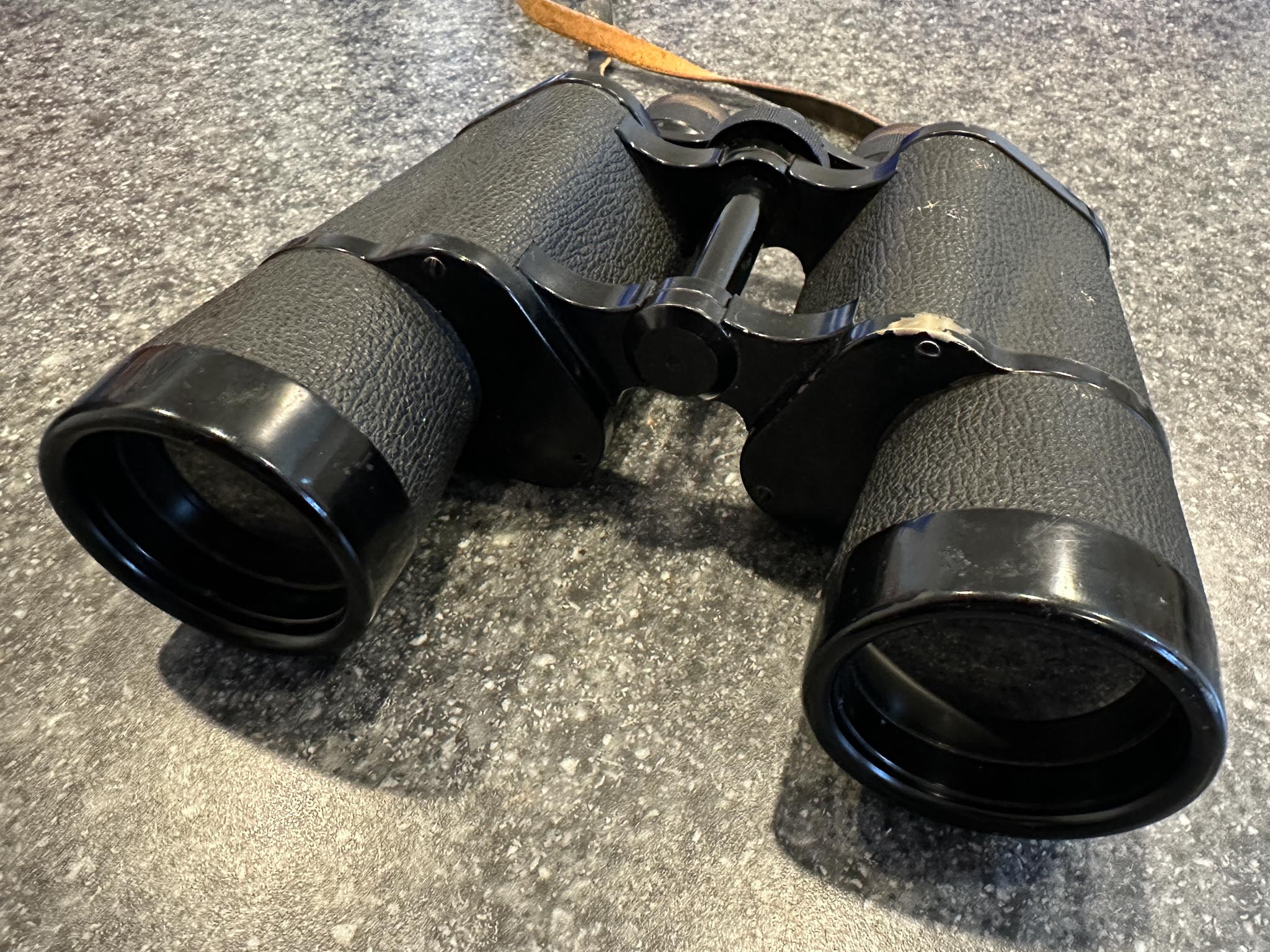
These are E. Leitz 7×50 Marseptit binoculars manufactured in Wetzlar, [West] Germany, in 1953. They belonged to my maternal grandparents who lived on Lake Audubon in Reston, Virginia. These sat in their kitchen by the big sliding glass door so they were near at-hand to look at anything interesting out on the lake. I looked through these hundreds and hundreds of times between 1982 and 2020. E. Leitz might not be a familiar name, but you probably know one of their brands (which is now the name of the company): their cameras, and now all their products, are called Leicas. The name means Lei[tz] Ca[meras].
This pair is showing wear, but they work just fine. There’s some lens fungus or a defect or something visible on the left side up at the top, but it’s only at the edge of the image and it’s not all that noticeable. I haven’t spent any time on it yet, but I didn’t see anything obvious on the exterior objective or ocular lenses, so I’m assuming it’s on an interior lens or the prism. I vaguely remember the same irregularity years ago, so it may be an original manufacturing defect or old damage or something. I’m inclined to ignore it unless it starts growing or worsening.
From what I can find online, the Marseptit is the model with a single focus control in the middle (like most modern binoculars). An earlier model, the Marsept, had eyepieces with independent focus; aside from that difference, it’s basically the same design. During World War II, the Marsept 7×50 was issued as “dienstglas” (service binoculars) for the Nazi Wehrmacht, and a version with a different body style was used by Kriegsmarine U-Boat crews. There are even some pictures of a pair around the neck of an Austrian man with a funny mustache.
Colt Handguns
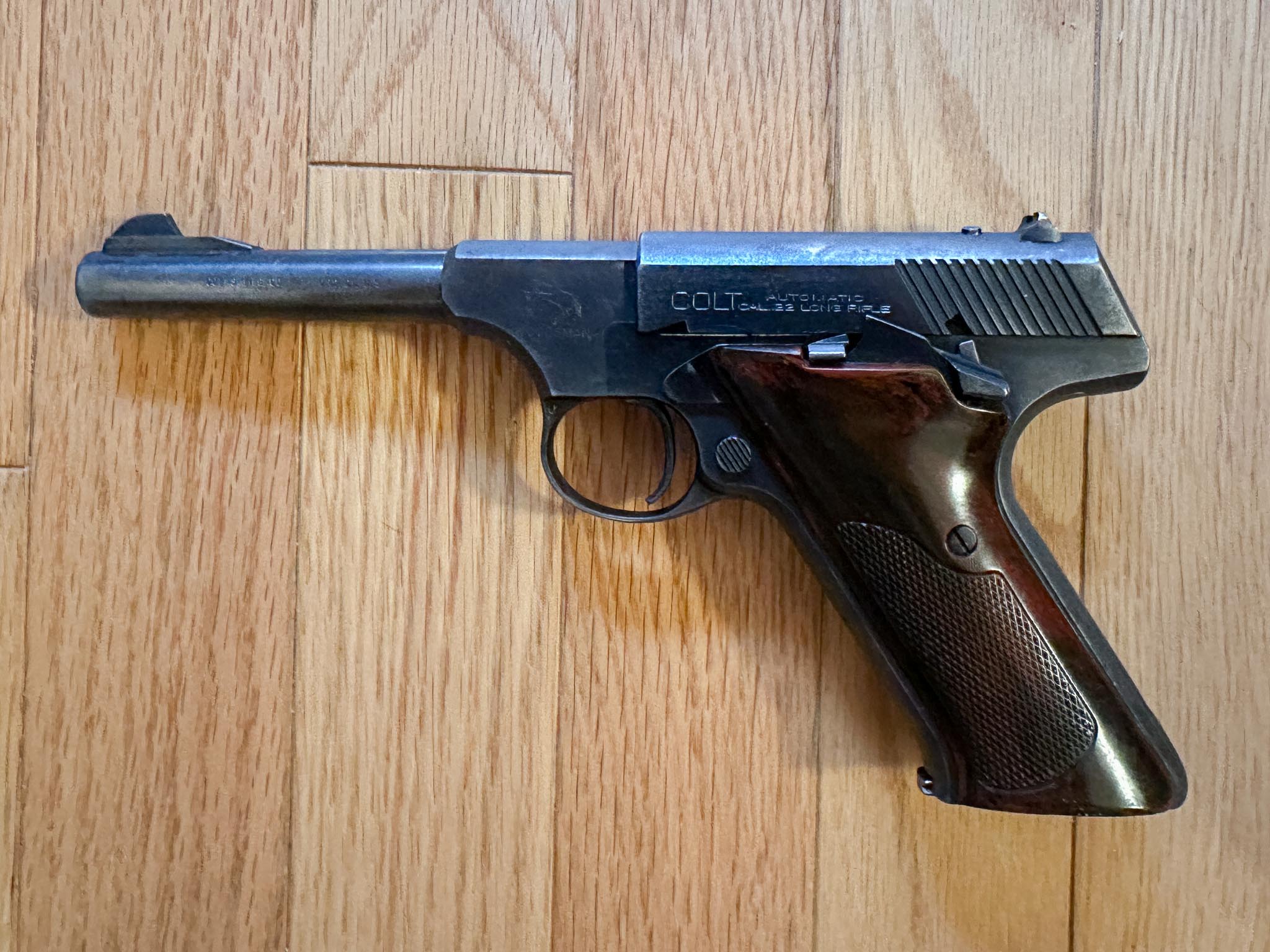
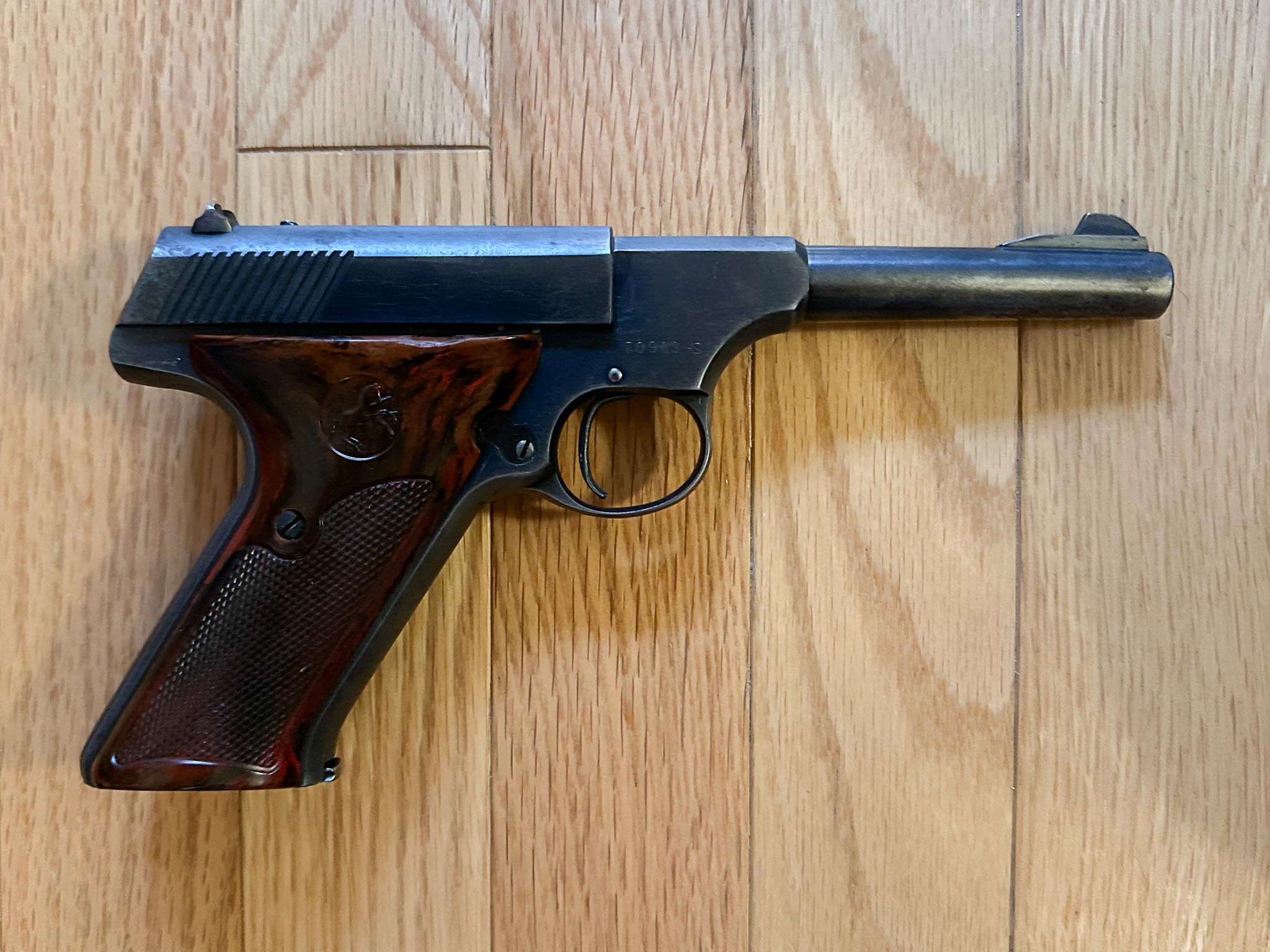
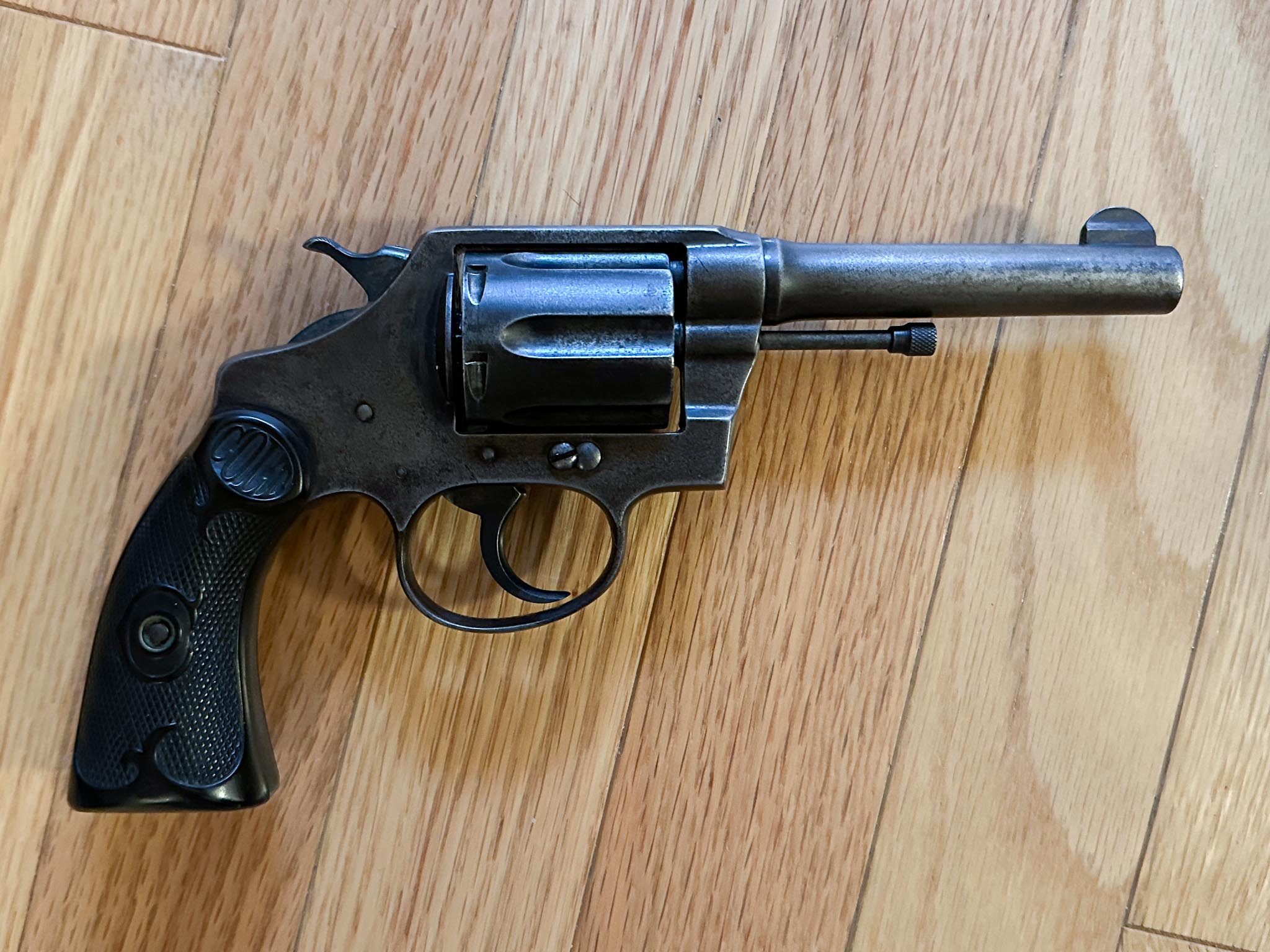
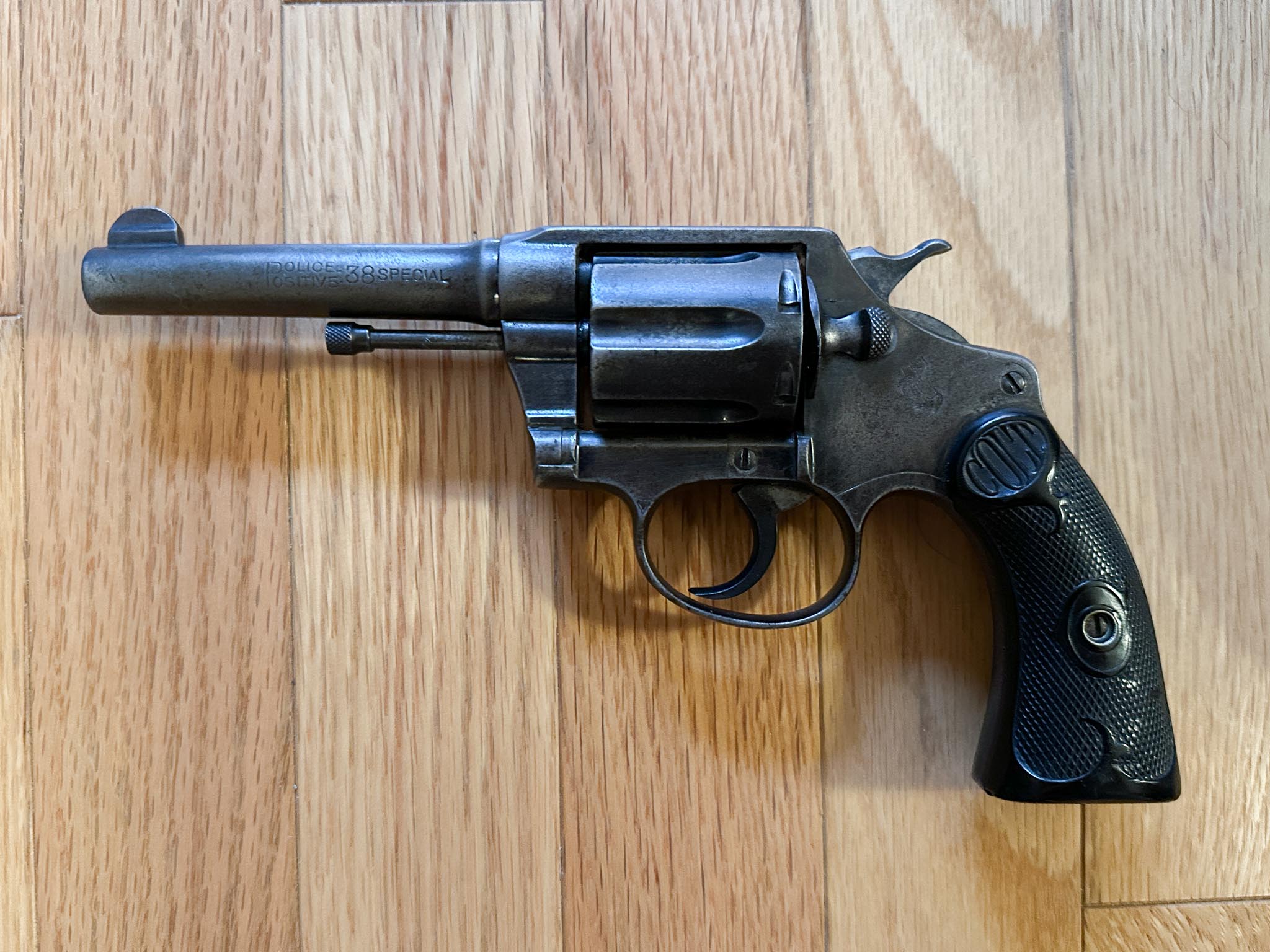
These handguns are a bit of a mystery. Both were manufactured by Colt in Hartford, Connecticut, and appear to be in good condition. The first is a Colt Woodsman Series 2 semi-automatic pistol, .22LR caliber; according to [unverified] online sources, the serial number indicates it was made in 1950. The second—my personal favorite—is a Colt Police Positive revolver, .38 Special caliber; the serial number indicates it was made in 1913.
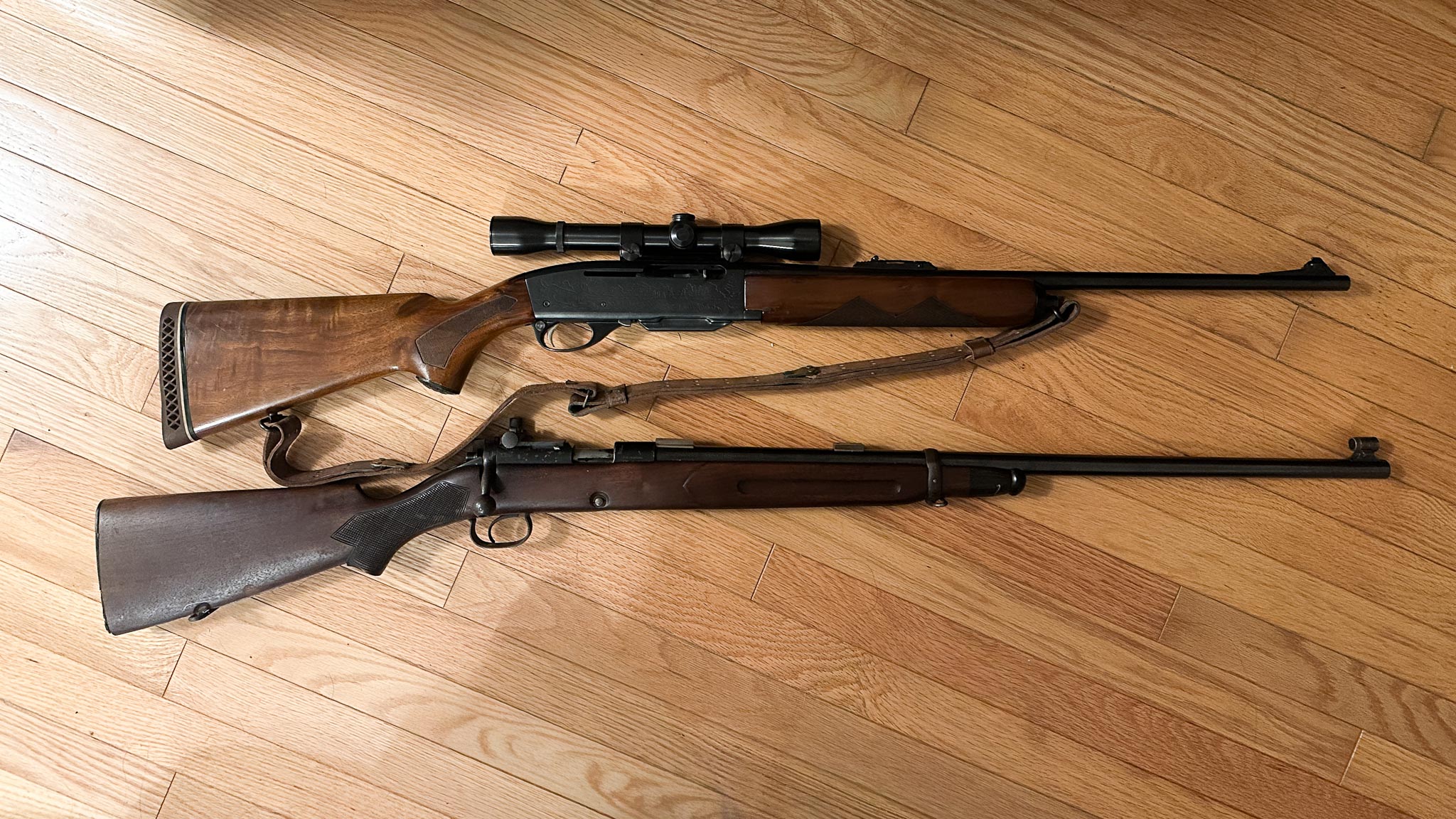
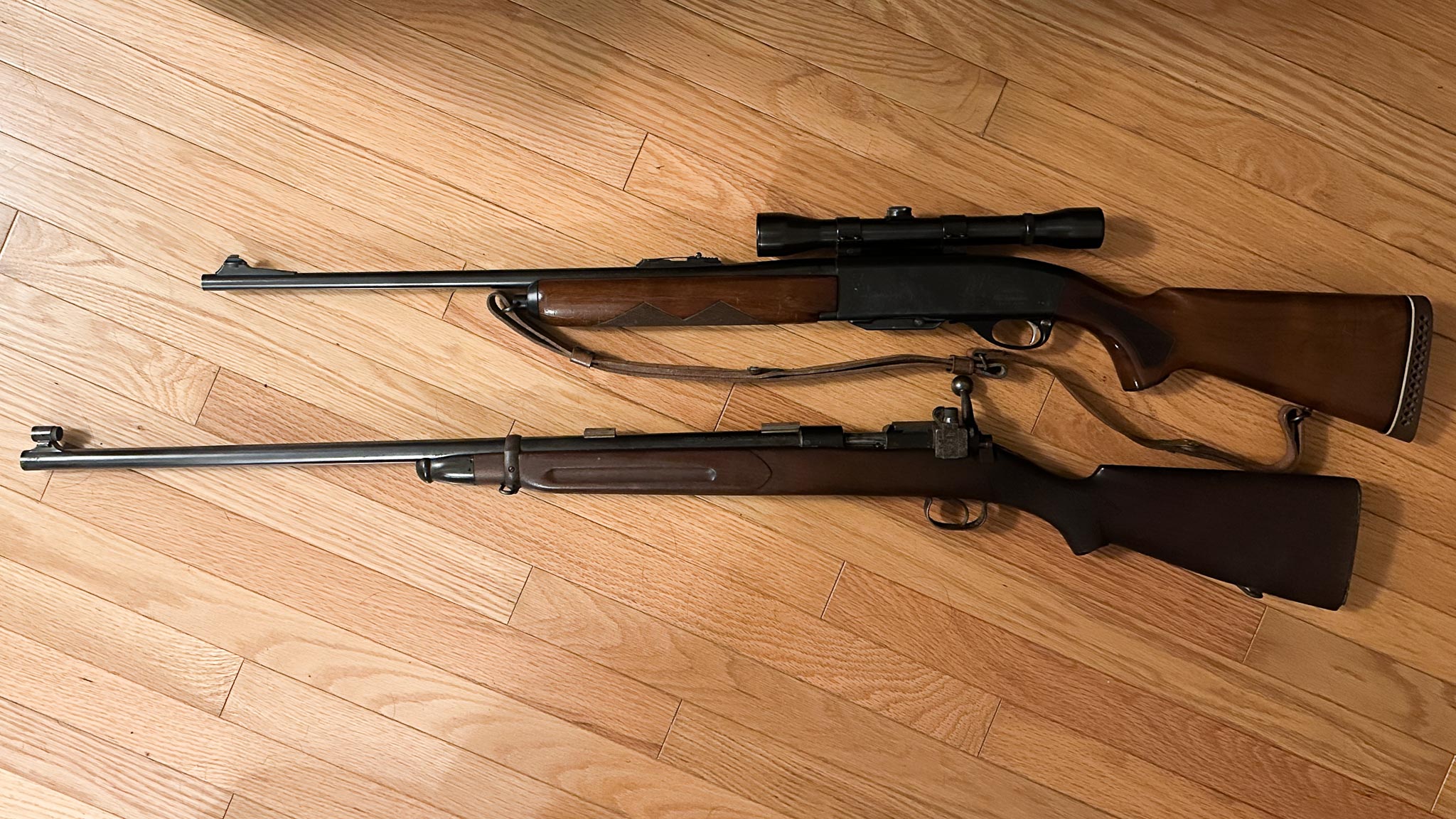
As to their history . . . well, after my maternal grandmother passed away in 2019, as my parents and other family members were going through her things, they found these (and the rifles described below) packed away under her bed. We believe they had been there since at least 1996 when my grandfather passed away. None of us knew they were there. We don’t know if Grandma even knew they were there. I suspect they got handed down to my grandfather by one of his relatives, but we really don’t know.
Remington and Winchester Rifles
These two long guns have the same story as the handguns above, and also seem to be in good working order. The one on top is a Remington 742 “Woodsmaster” semi-automatic rifle chambered in 6mm Remington; based on the serial number, it was probably manufactured in Ilion, New York, in 1963. The bottom one is a Winchester Model 52 bolt-action rifle chambered in .22LR; based on its serial number, it was likely manufactured in New Haven, Connecticut, in 1934.
Springfield Breech-Loading Rifle
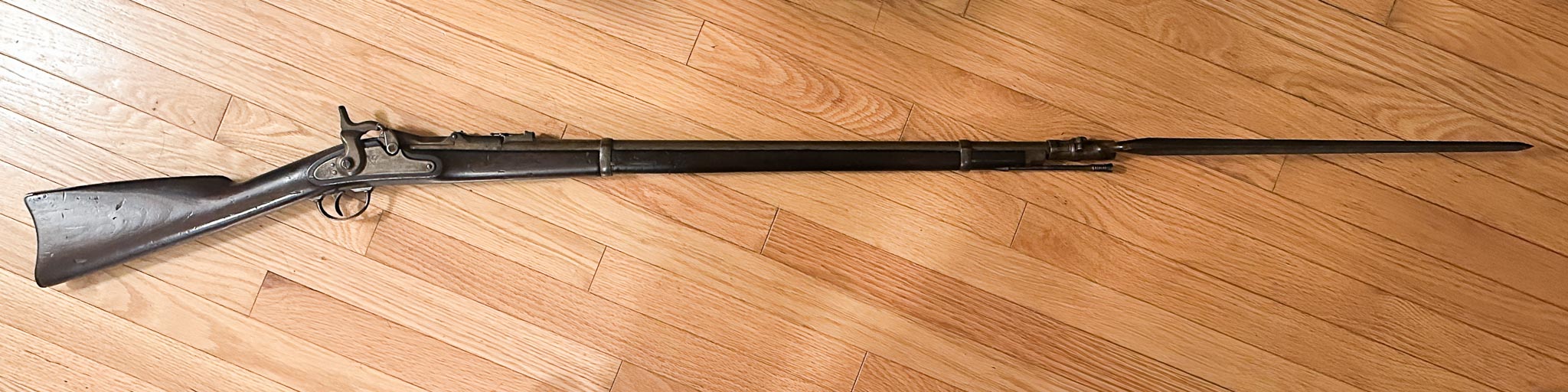
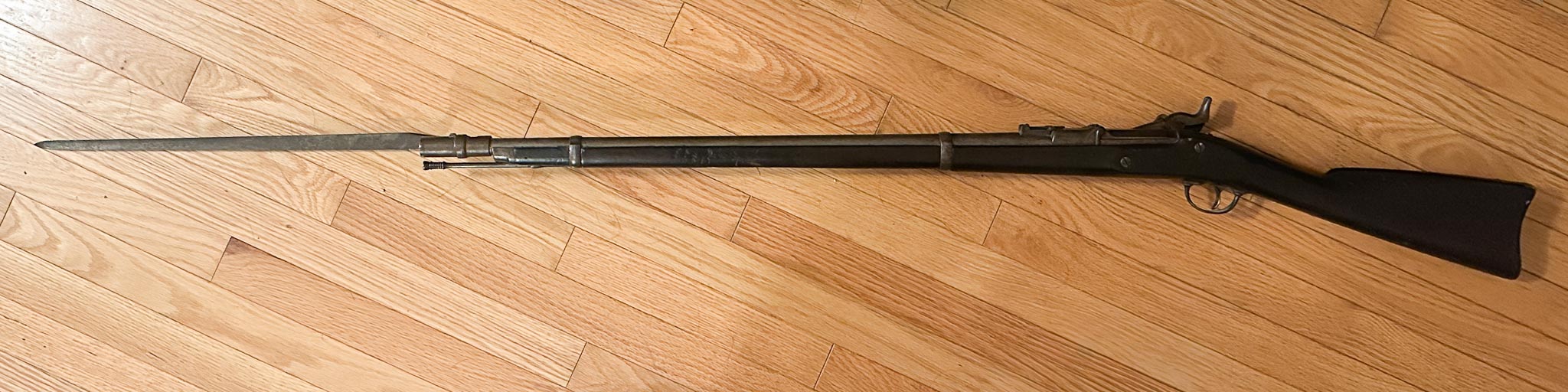
This is the most interesting gun among these acquisitions. It was displayed on a wall at my maternal grandparents’ house since before I was born, and after grandma died in 2019 it went to a similar location in my parents’ house. From a combination of “family lore” and a professional appraisal, here’s the story . . . as best as we can tell:
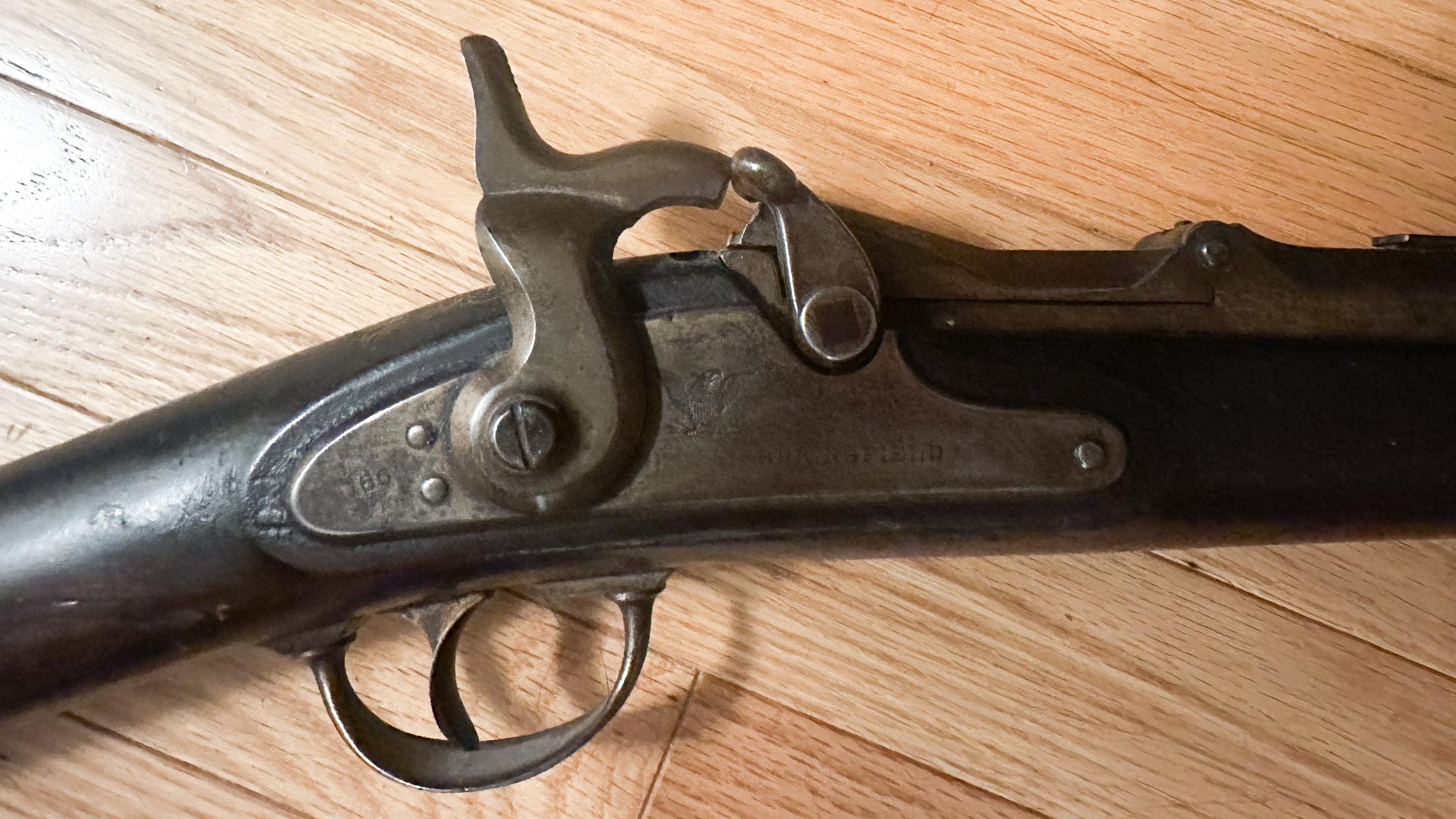
This is a Springfield Model 1868 breech-loading rifle chambered in .50-70 Government caliber (black powder). It was manufactured by Springfield Armory in Springfield, Massachusetts. It’s stamped with a manufacture date of 1870, but it also has a serial number (24) that isn’t right for 1870 and the barrel length isn’t correct for the Model 1868 at all. According to the appraiser, “It most likely was put together with some salvage parts from previous models.”
A bunch of Model 1868s were sent to France, and possibly other countries in Europe, during the Franco-Prussian War (1870-1871). We believe this was probably one of them . . . but it has no proof marks from the French (or any other) military. All we know for sure is that, in the aftermath of the war, it belonged to my great-great grandfather—an Austrian Army soldier named Joseph Wonsky. When he immigrated to the United States around 1889, he brought it with him.
I have a theory about the rifle’s travels; I’ve included it at the bottom of this post.
Slide Rules
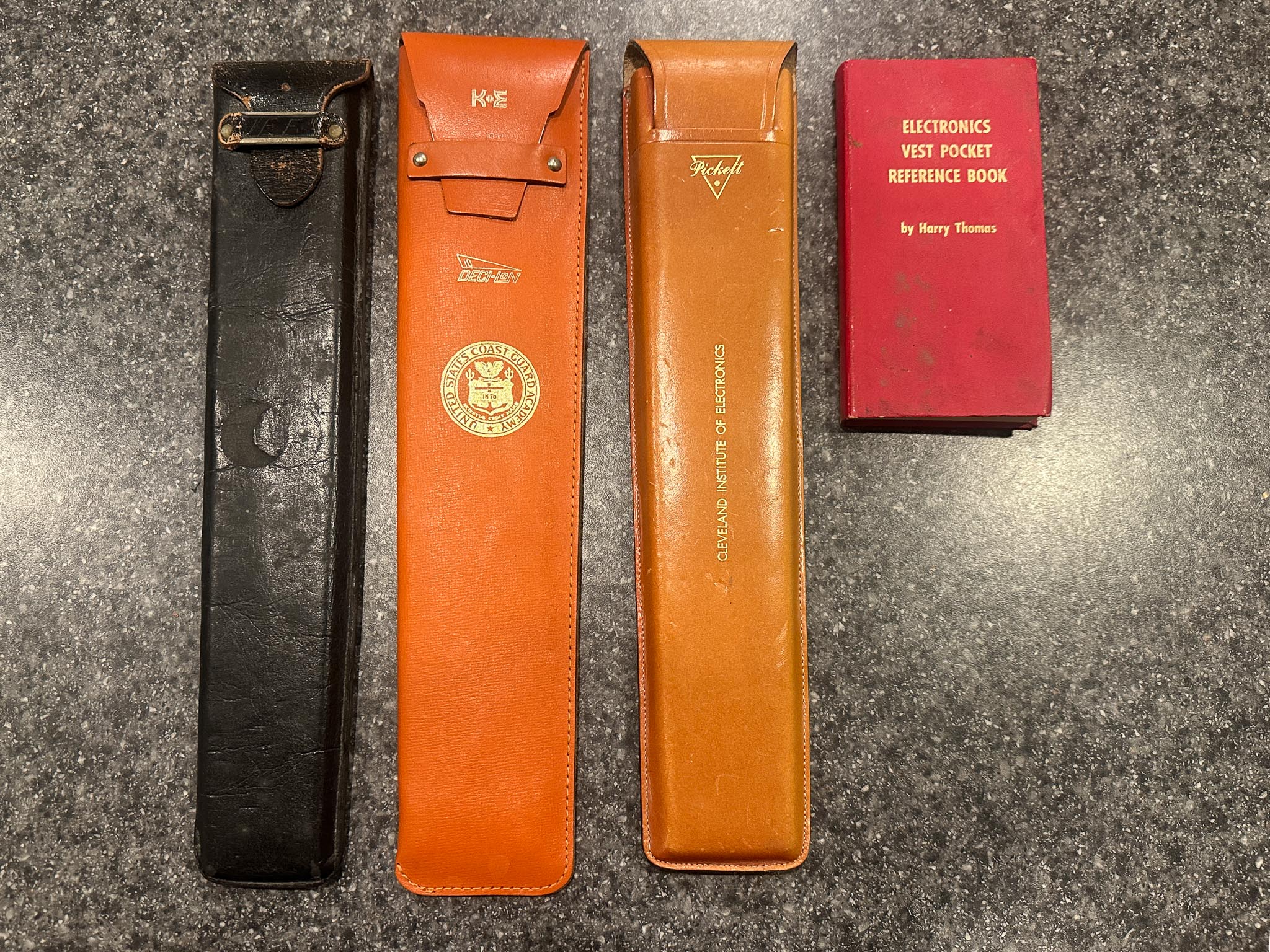
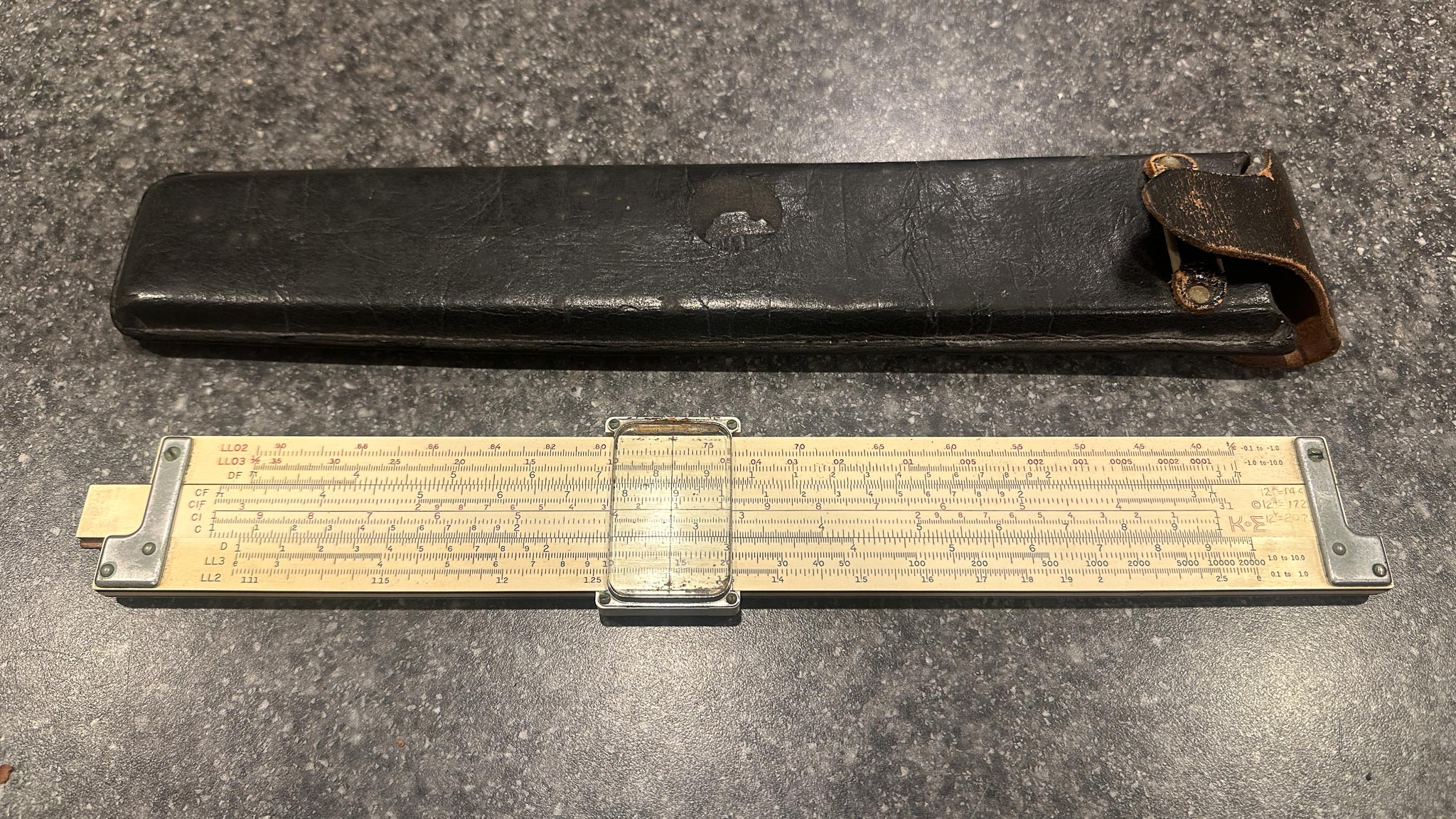
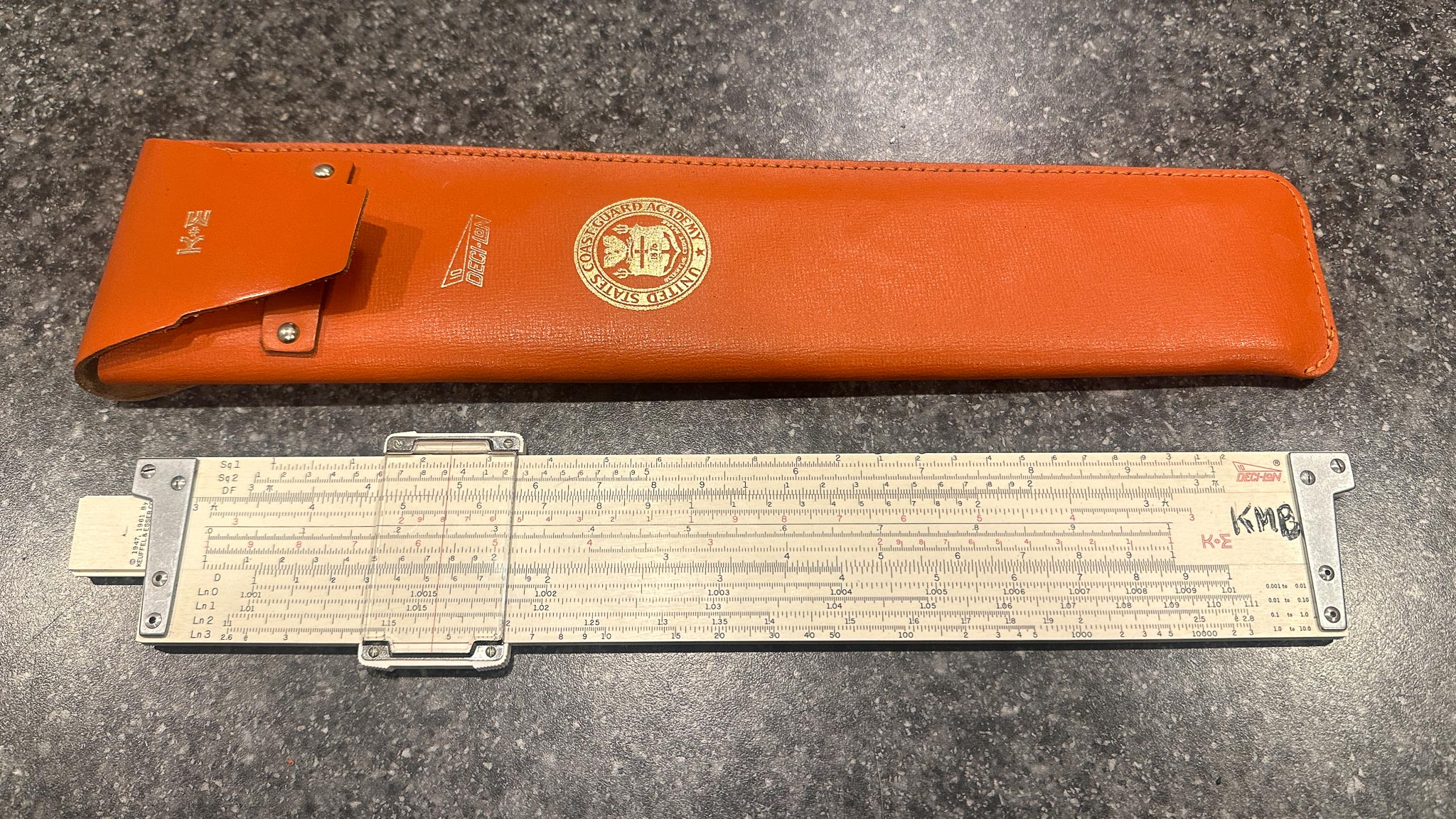
I grew up in the electronics and computer era, so I’ve pretty much always known electronic calculators, quartz watches, personal computers, and digital music. But for some reason I’ve always been fascinated by the mechanical and analog devices that people used in the “before times.” I have an irrational attraction to—and have built collections of—mechanical watches, typewriters, and other weird, “archaic” things. Before we invented calculators (and way before we invented smartphones), students, scientists, and mathematicians used slide rules to perform computations. Here are three of them, including two that were used by two generations of U.S. Coast Guard Academy (USCGA) cadets.
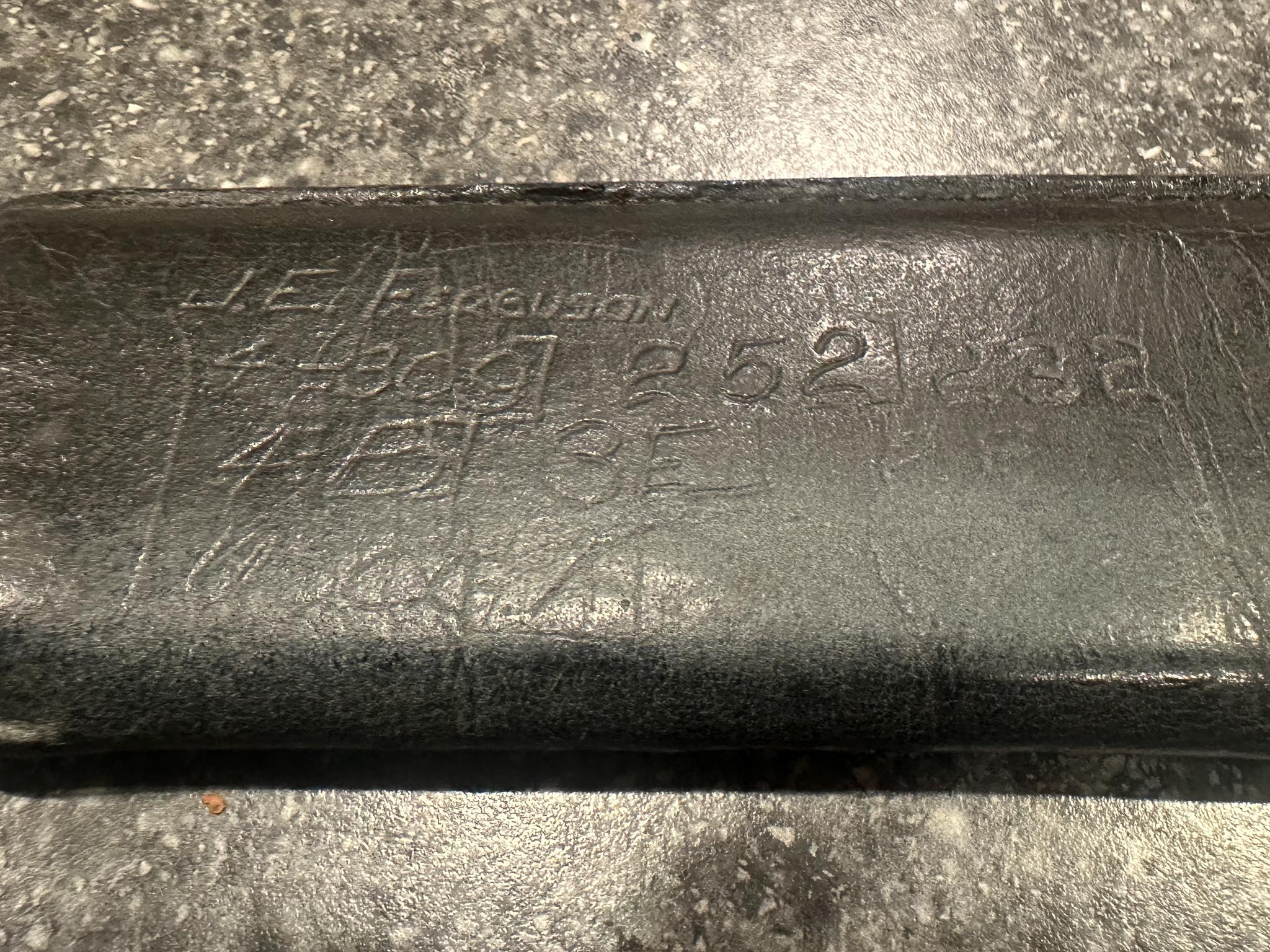
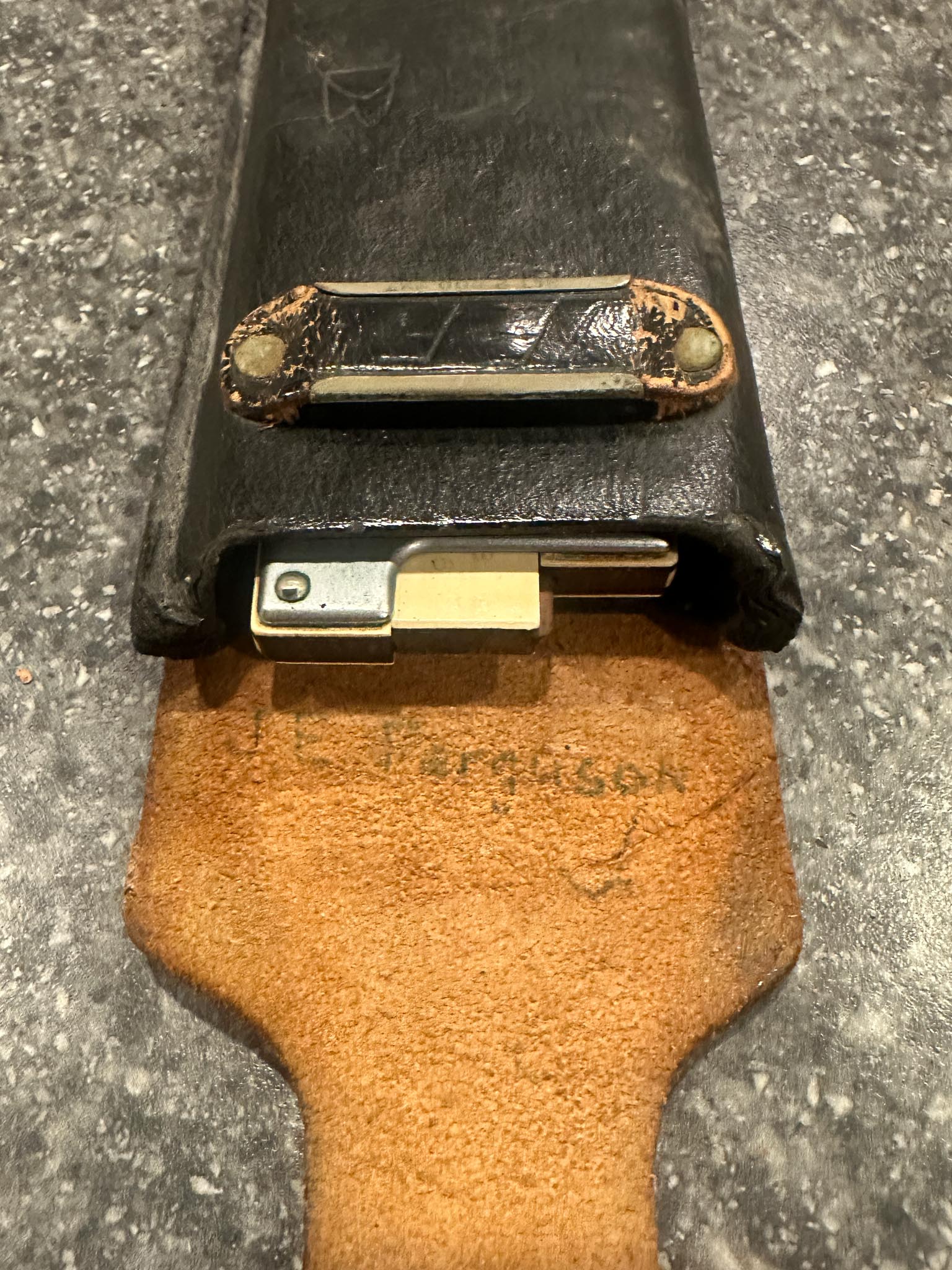
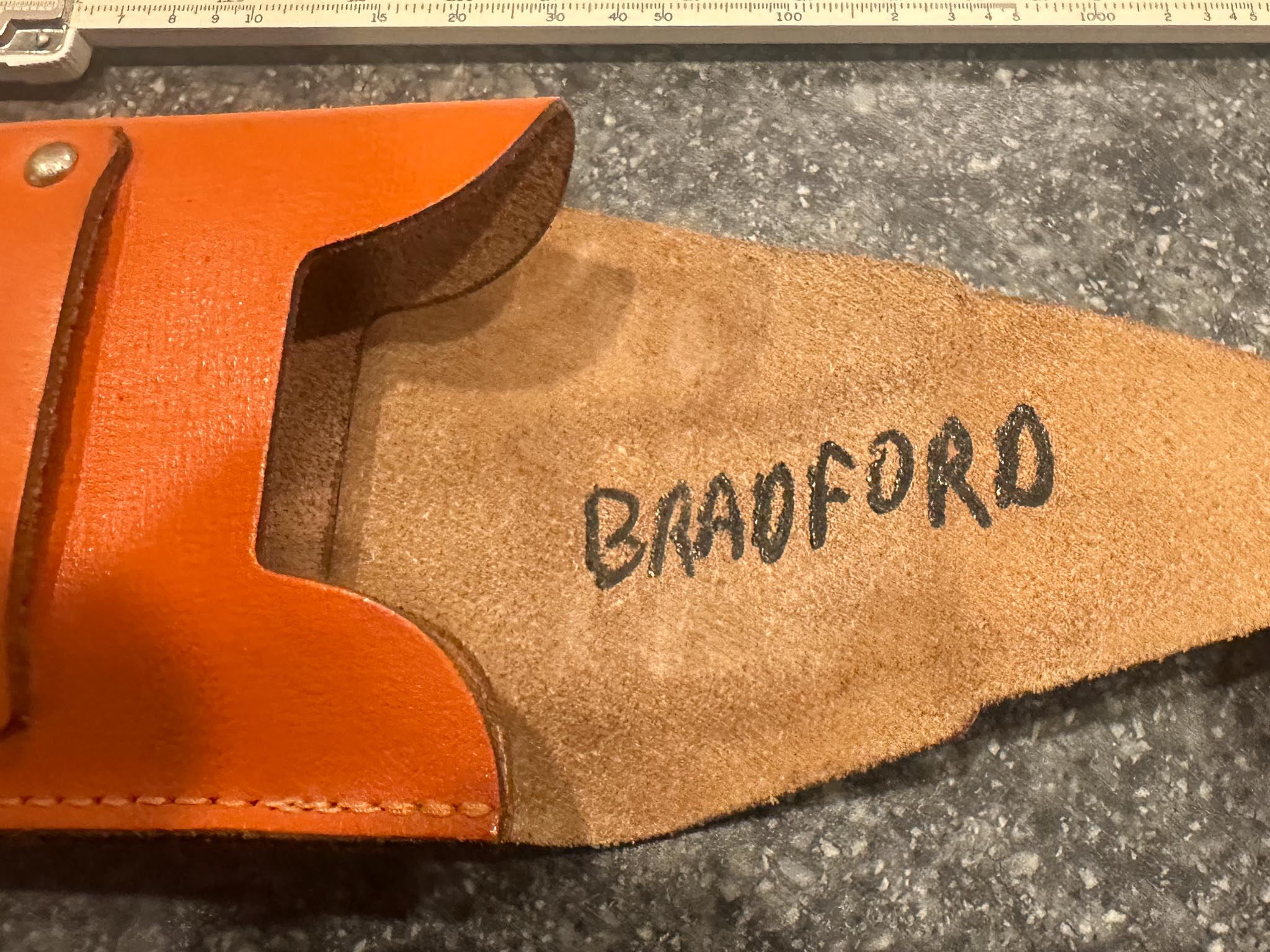
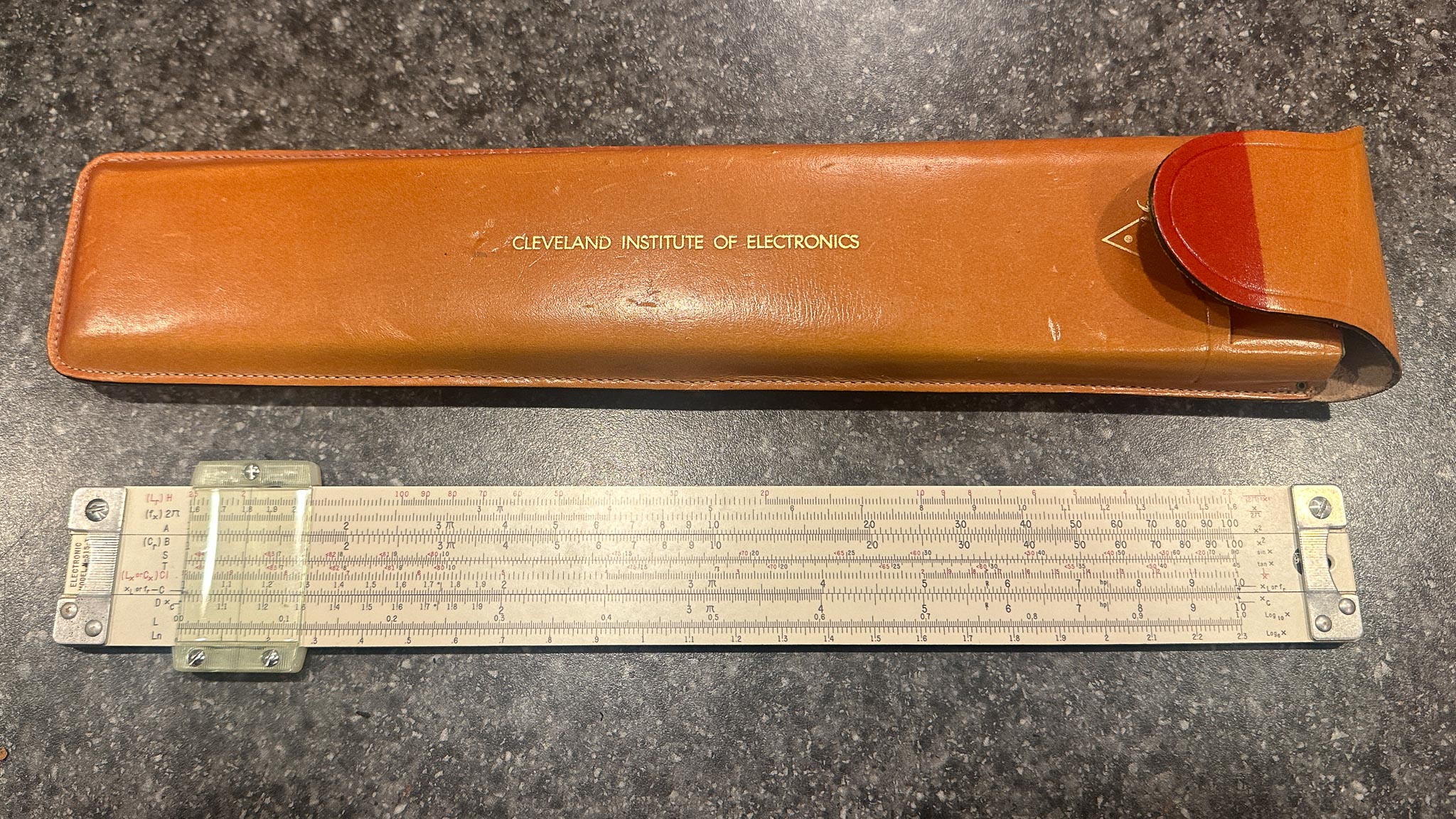
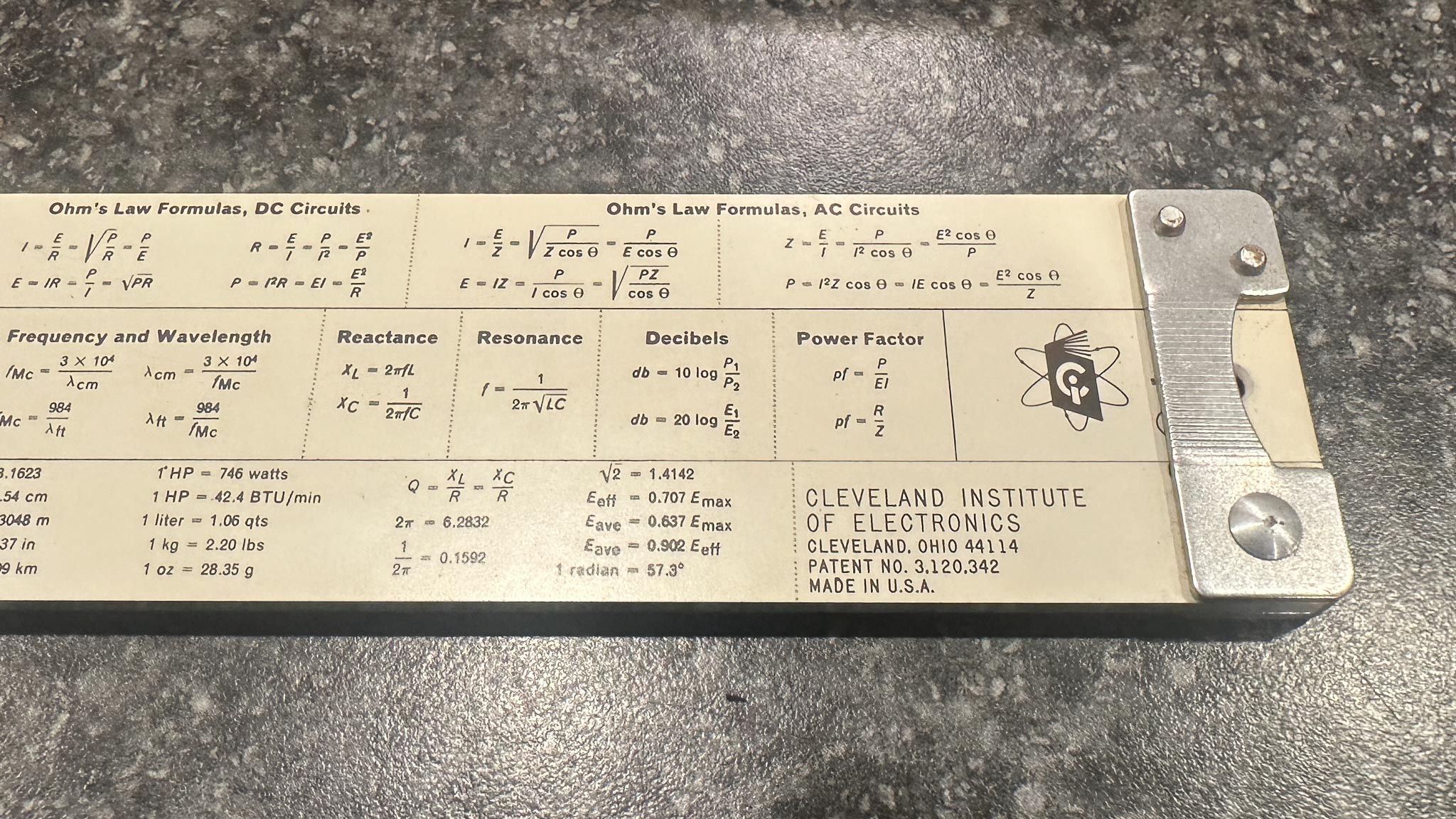
The first, in a black case, is a Keuffel and Esser (K&E) Log Log Duplex Decitrig N4081-3 manufactured around 1951; it belonged to my maternal grandfather during his time at the USCGA. The second, in a brown case with the Coast Guard Academy seal, is a Keuffel and Esser (K&E) Decilon 68 1100 manufactured around 1973; it belonged to my father during his time at the USCGA. The third, in a brown case marked “Cleveland Institute of Electronics” (CIE), is a Pickett Electronic Model N-515-T manufactured around 1962 in partnership between Pickett and CIE; it likely belonged to my aforementioned grandfather.
Three Old Bibles
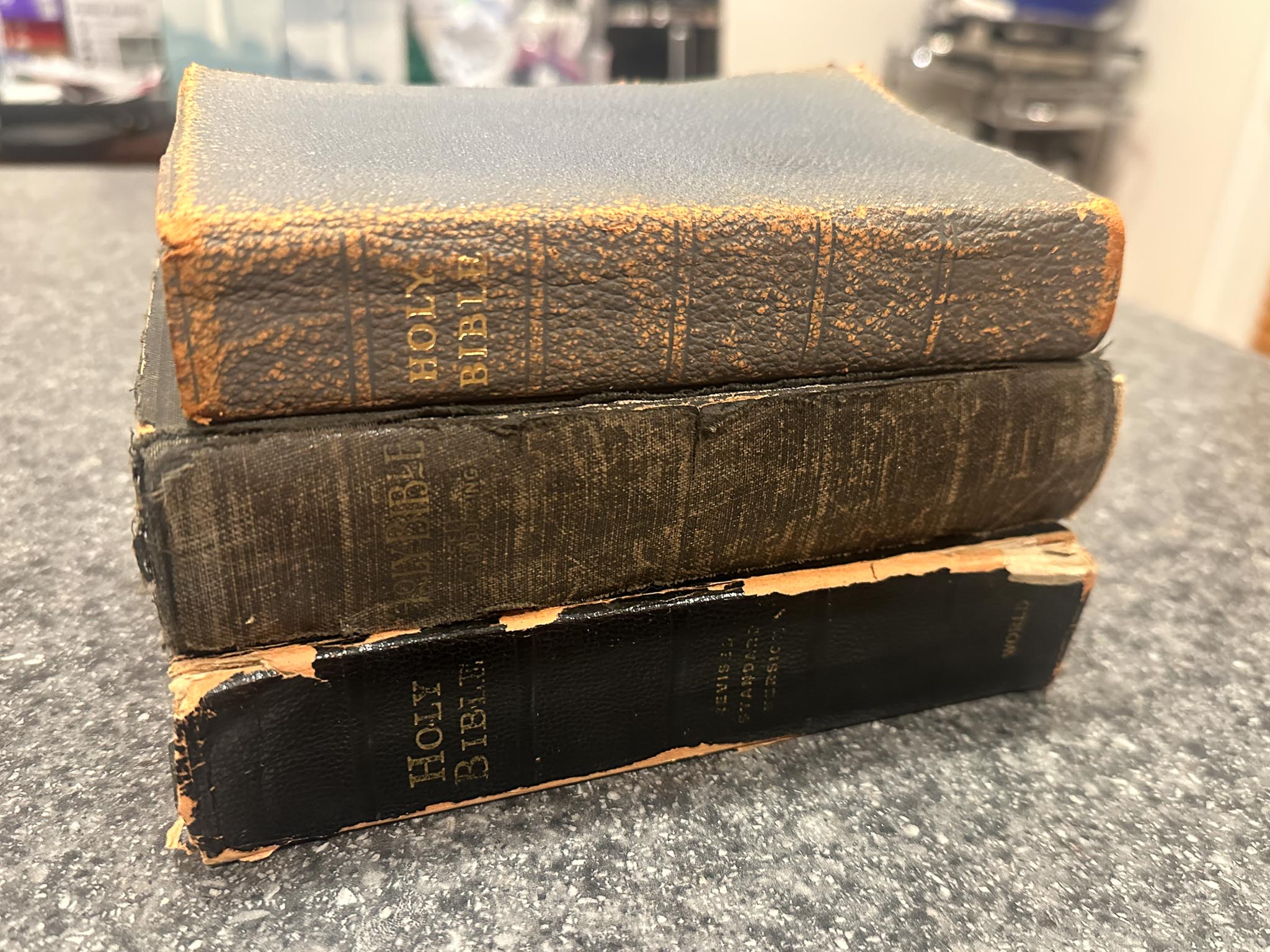
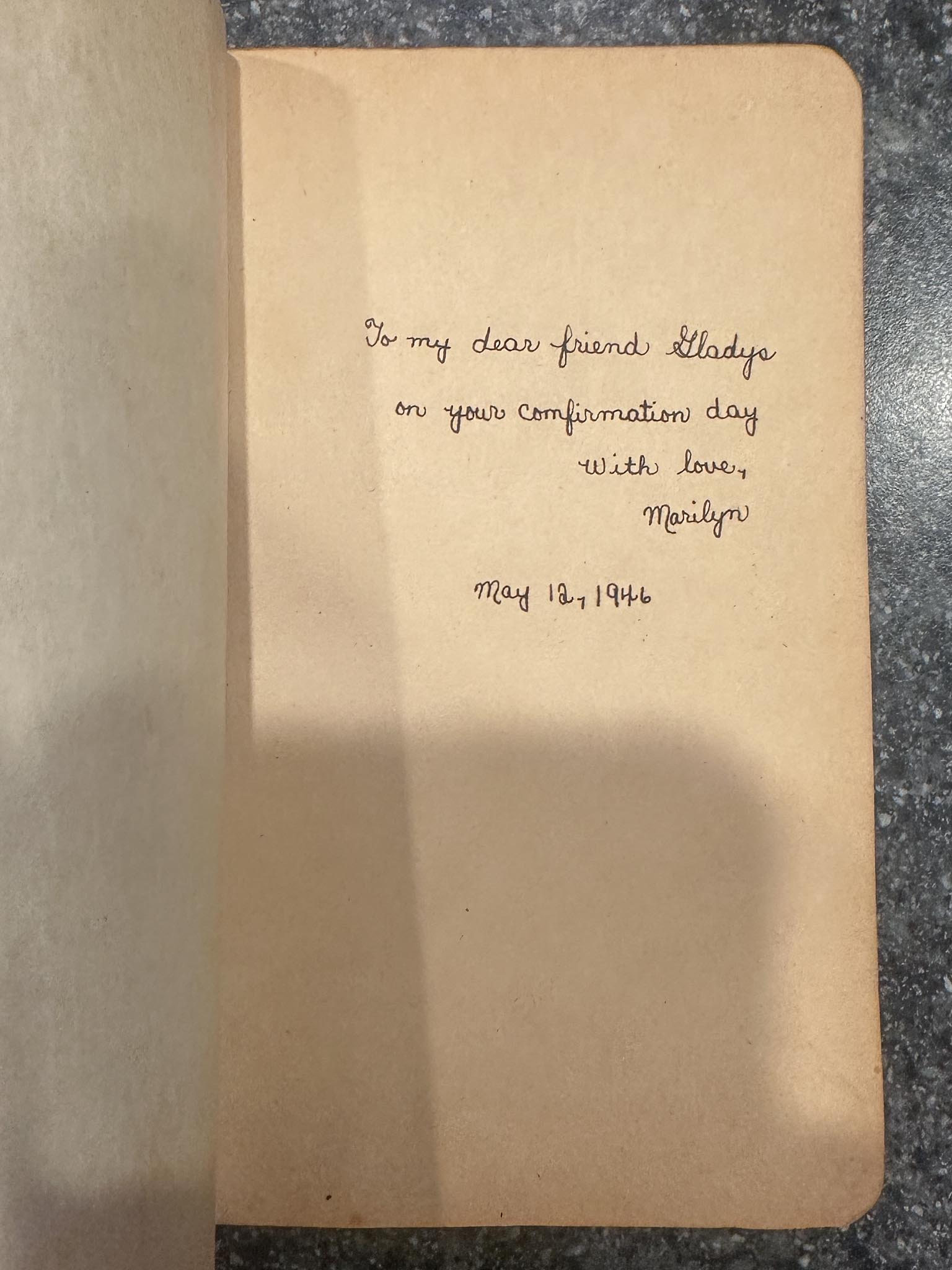
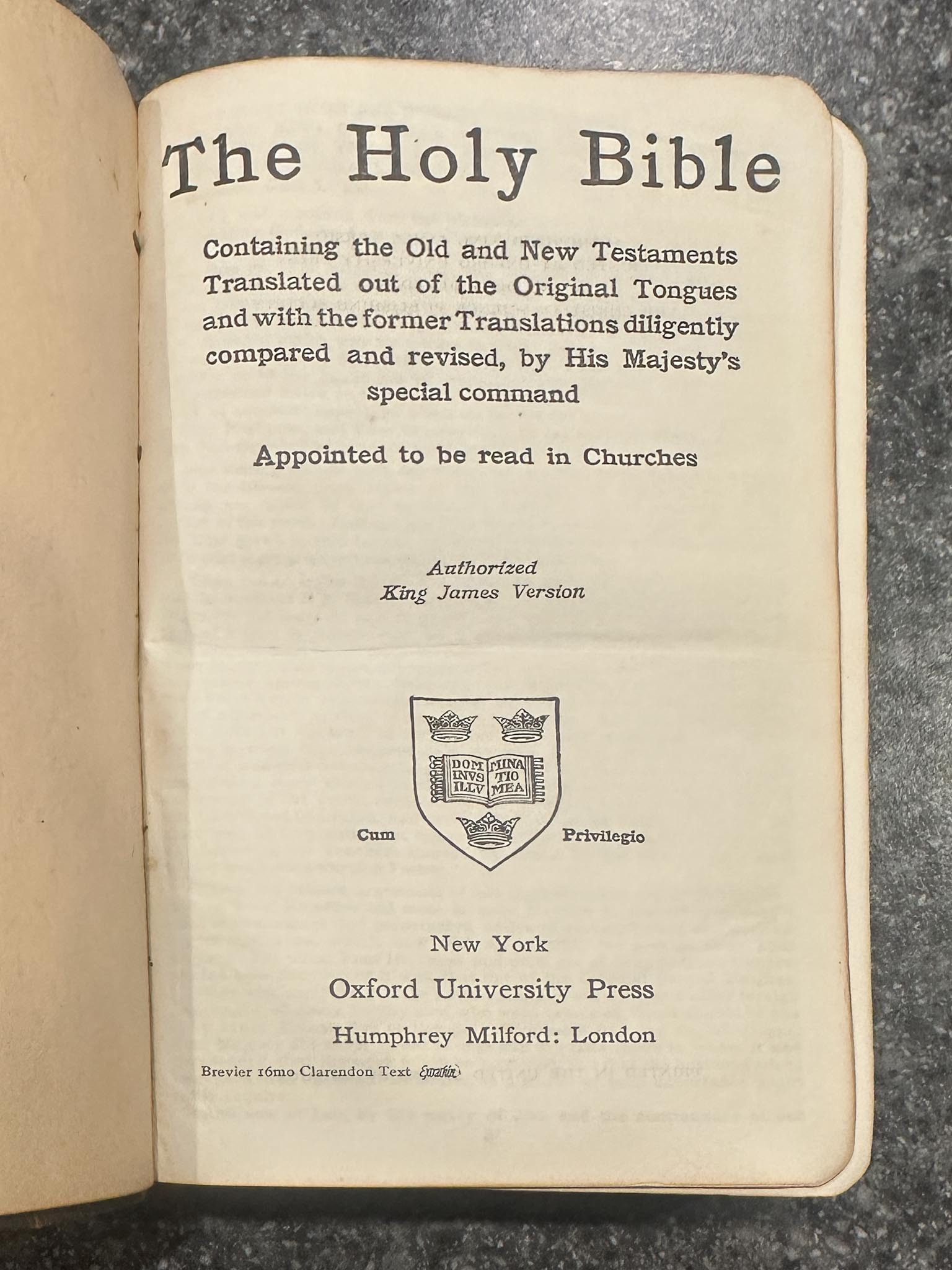
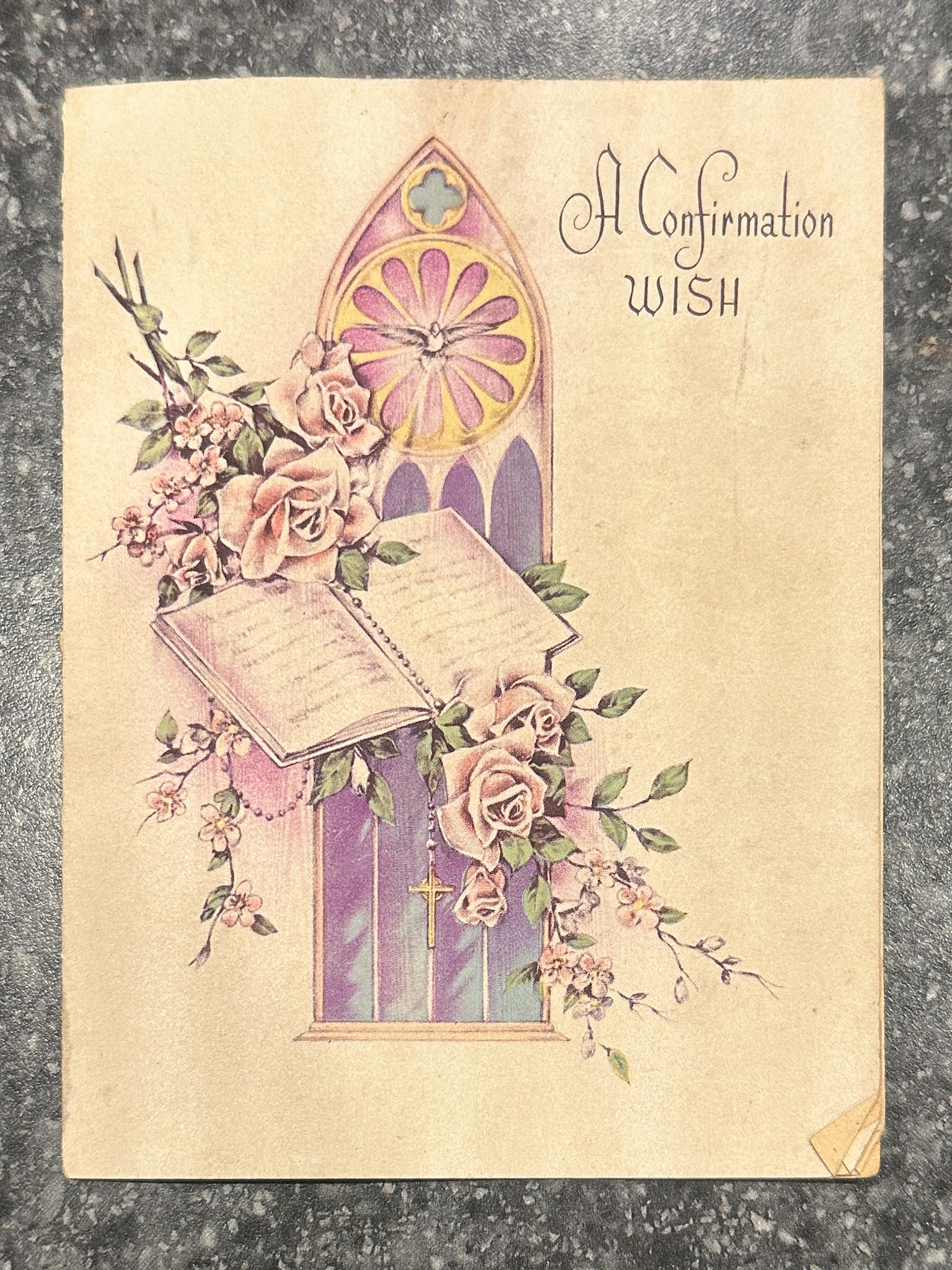
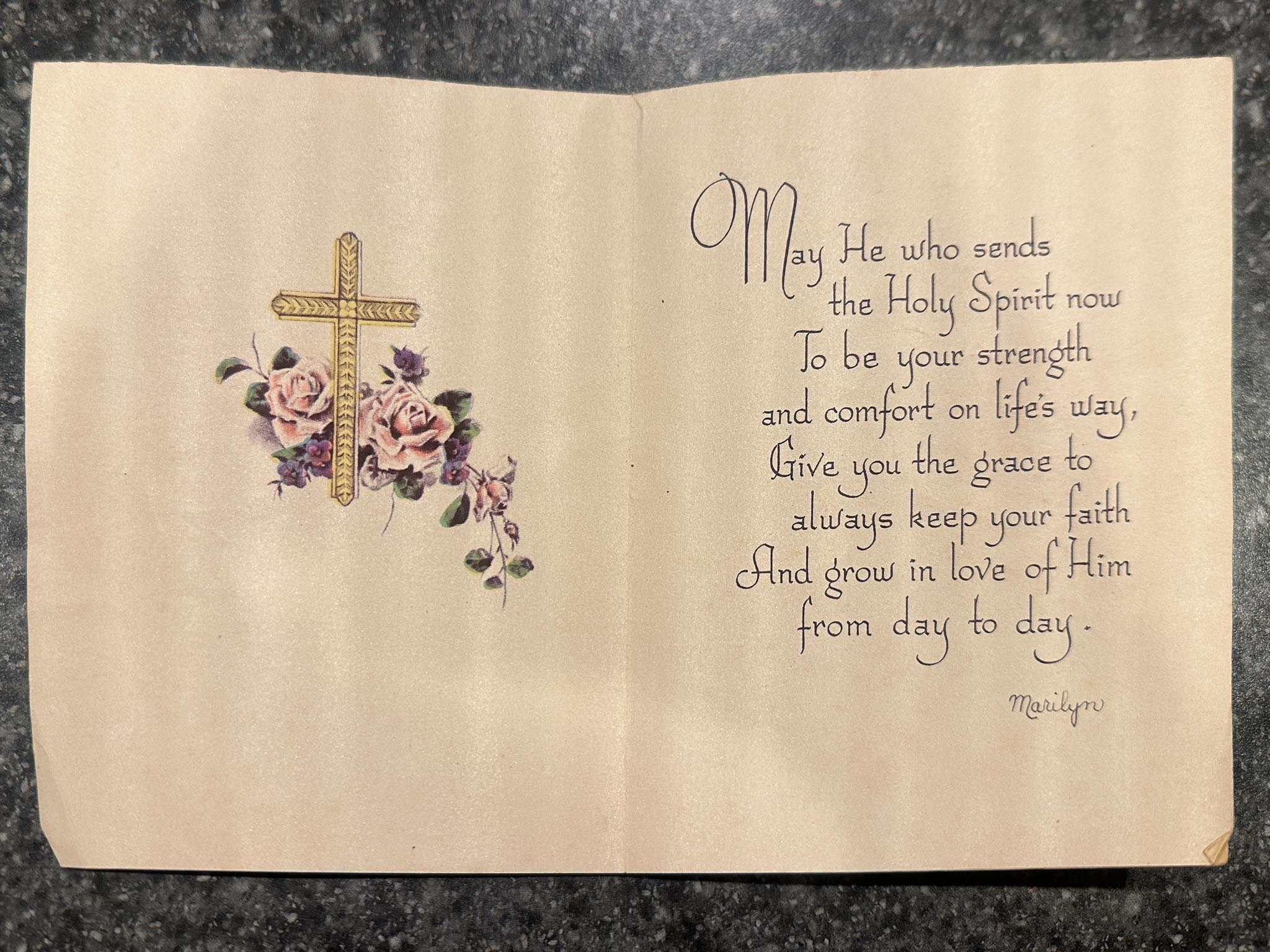
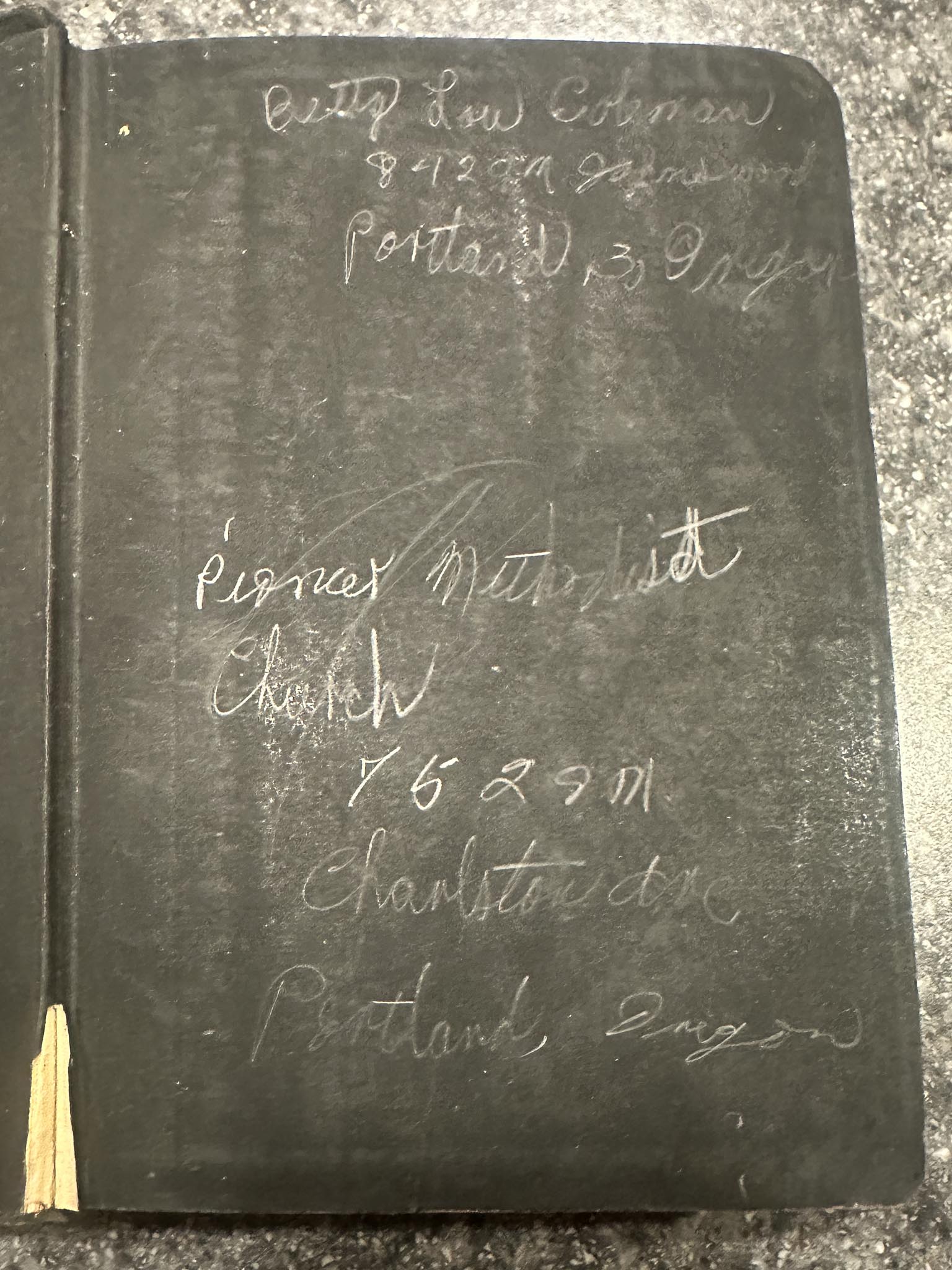
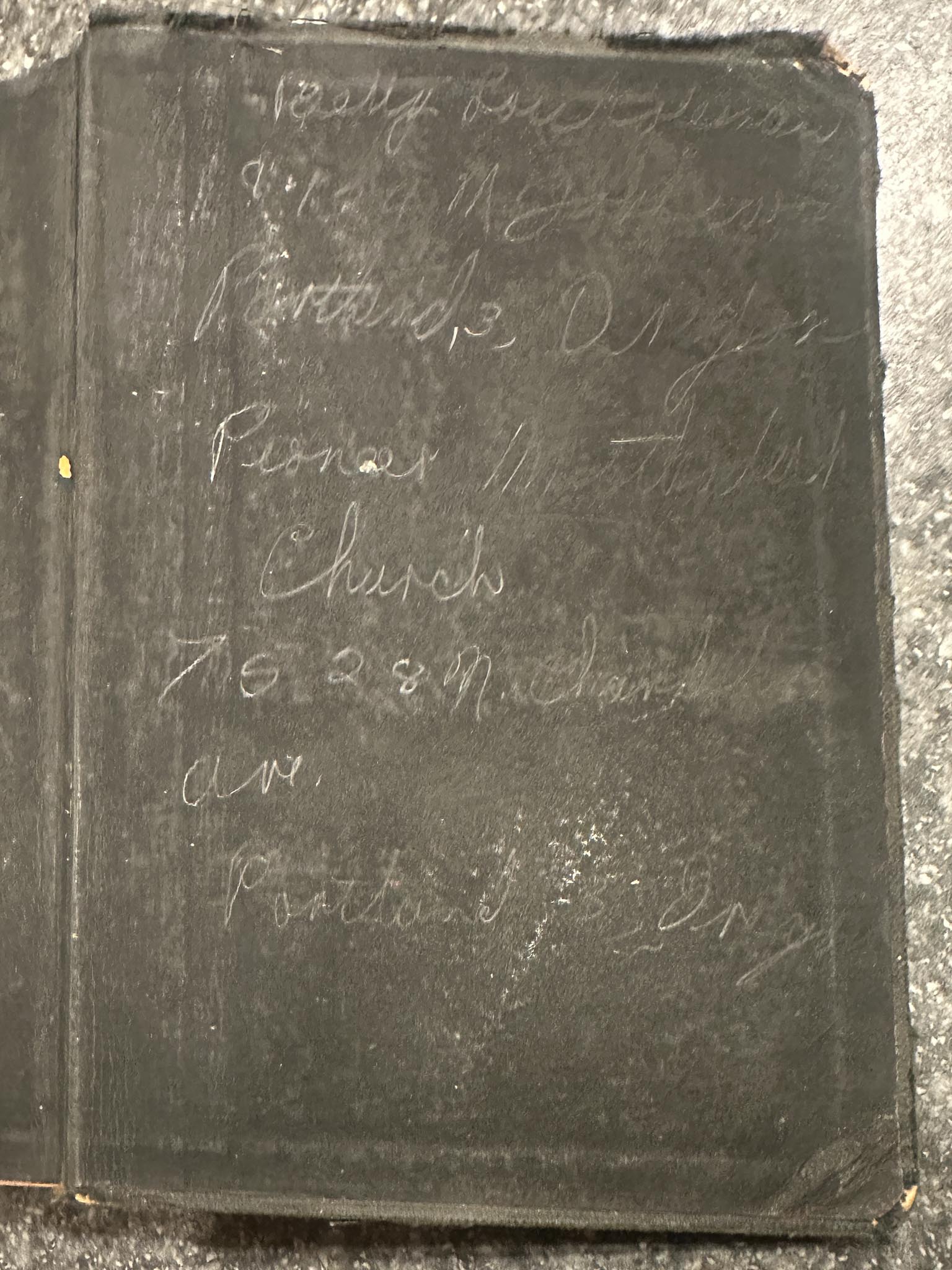
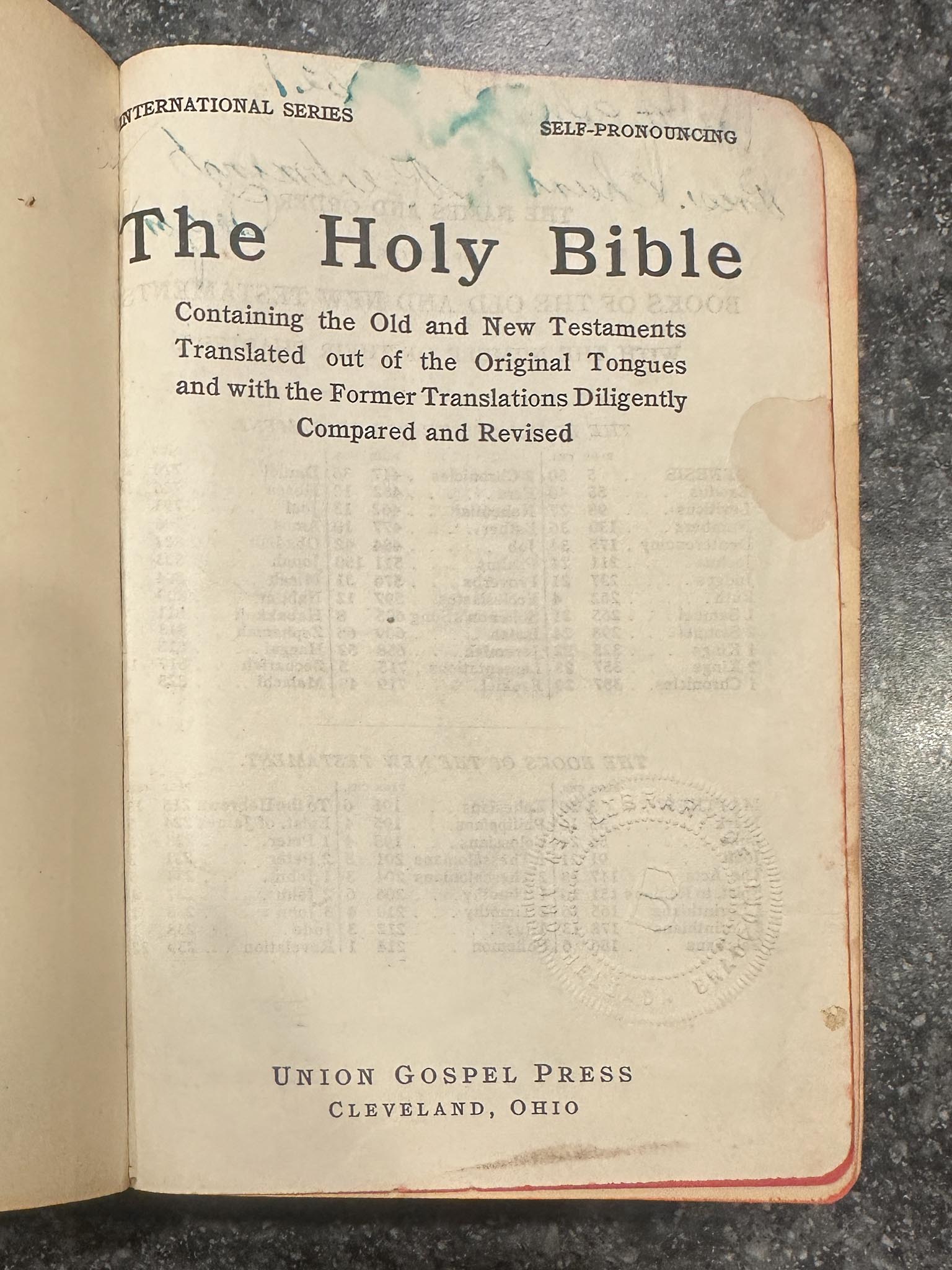
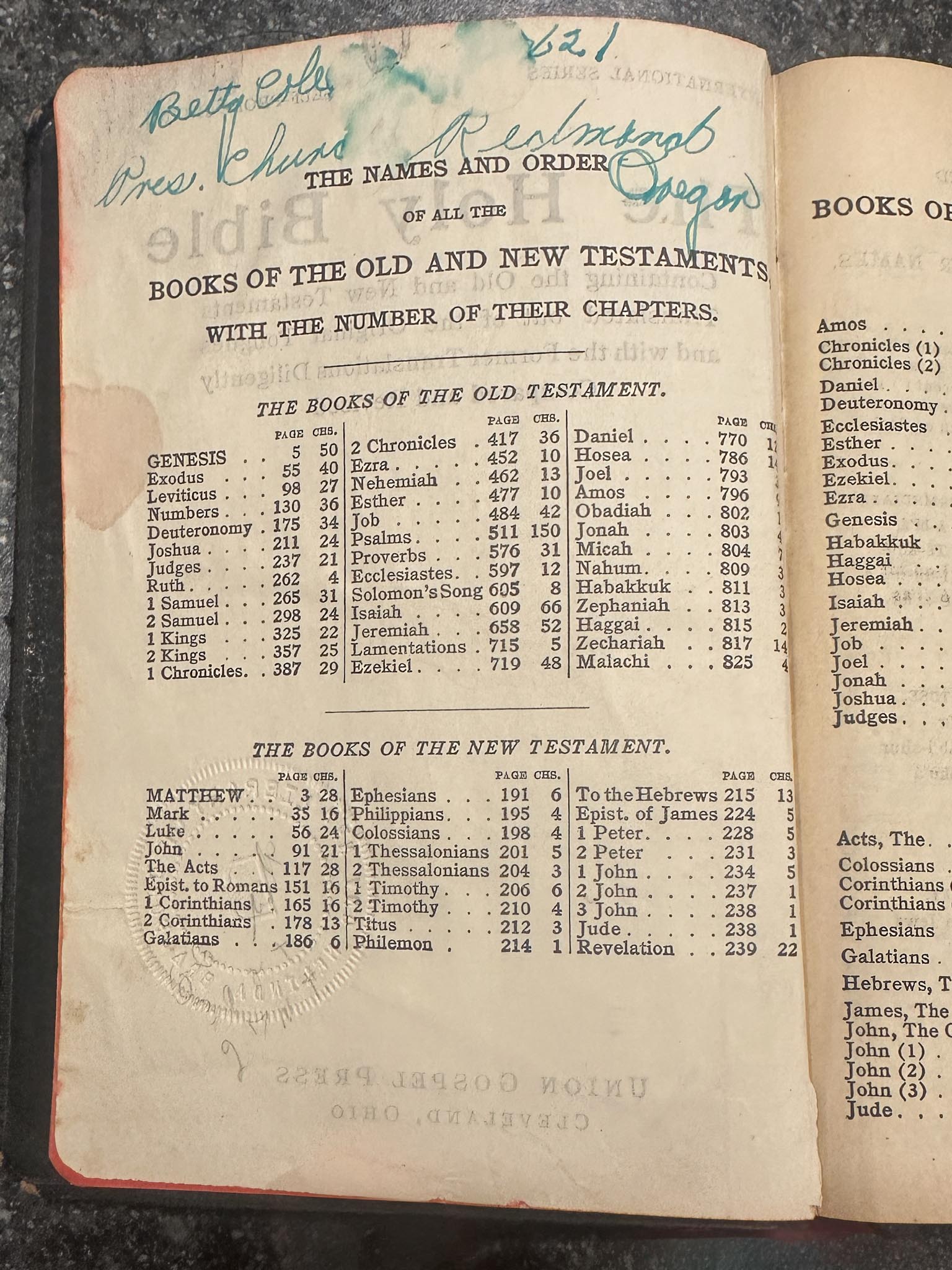
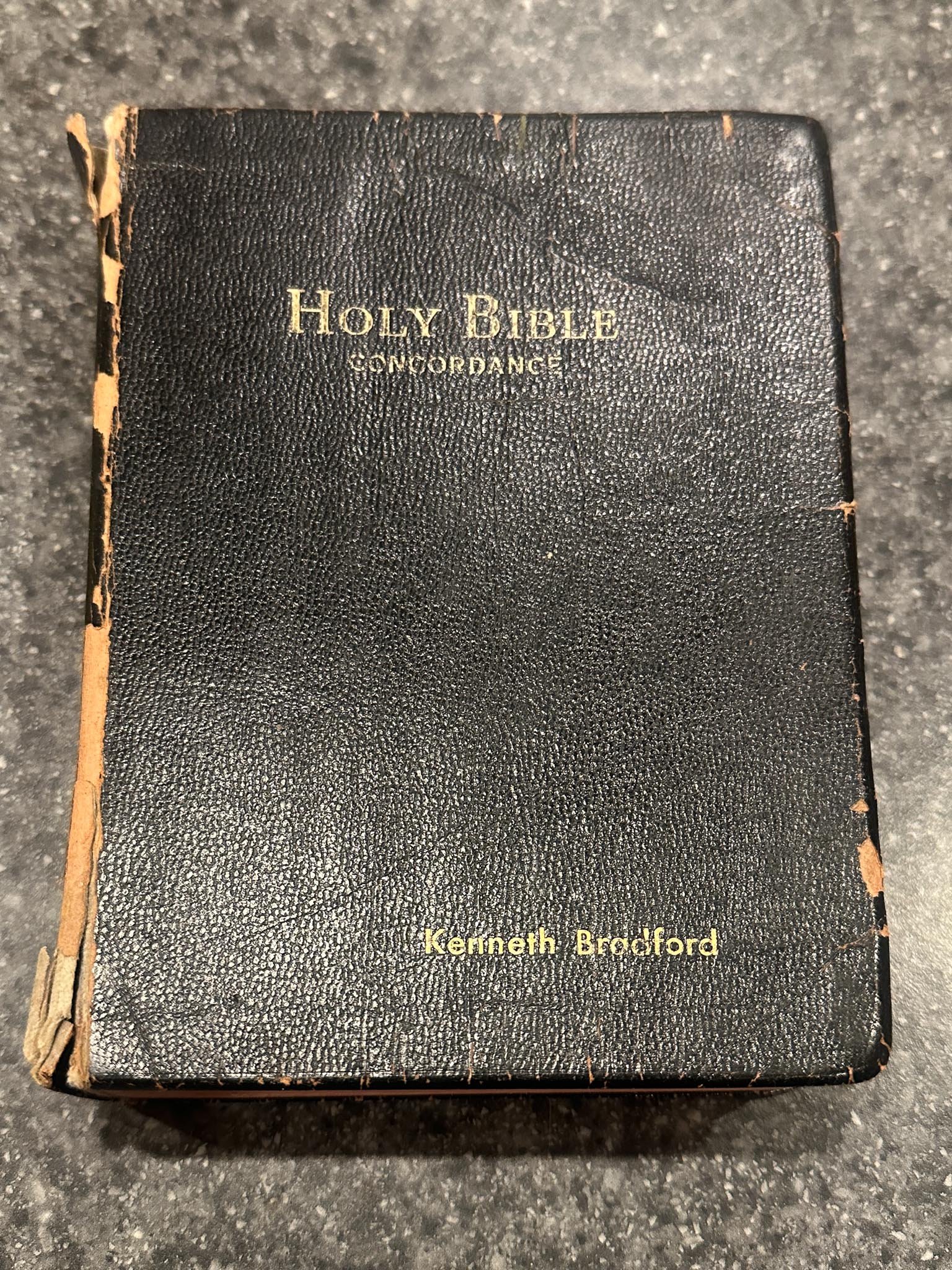
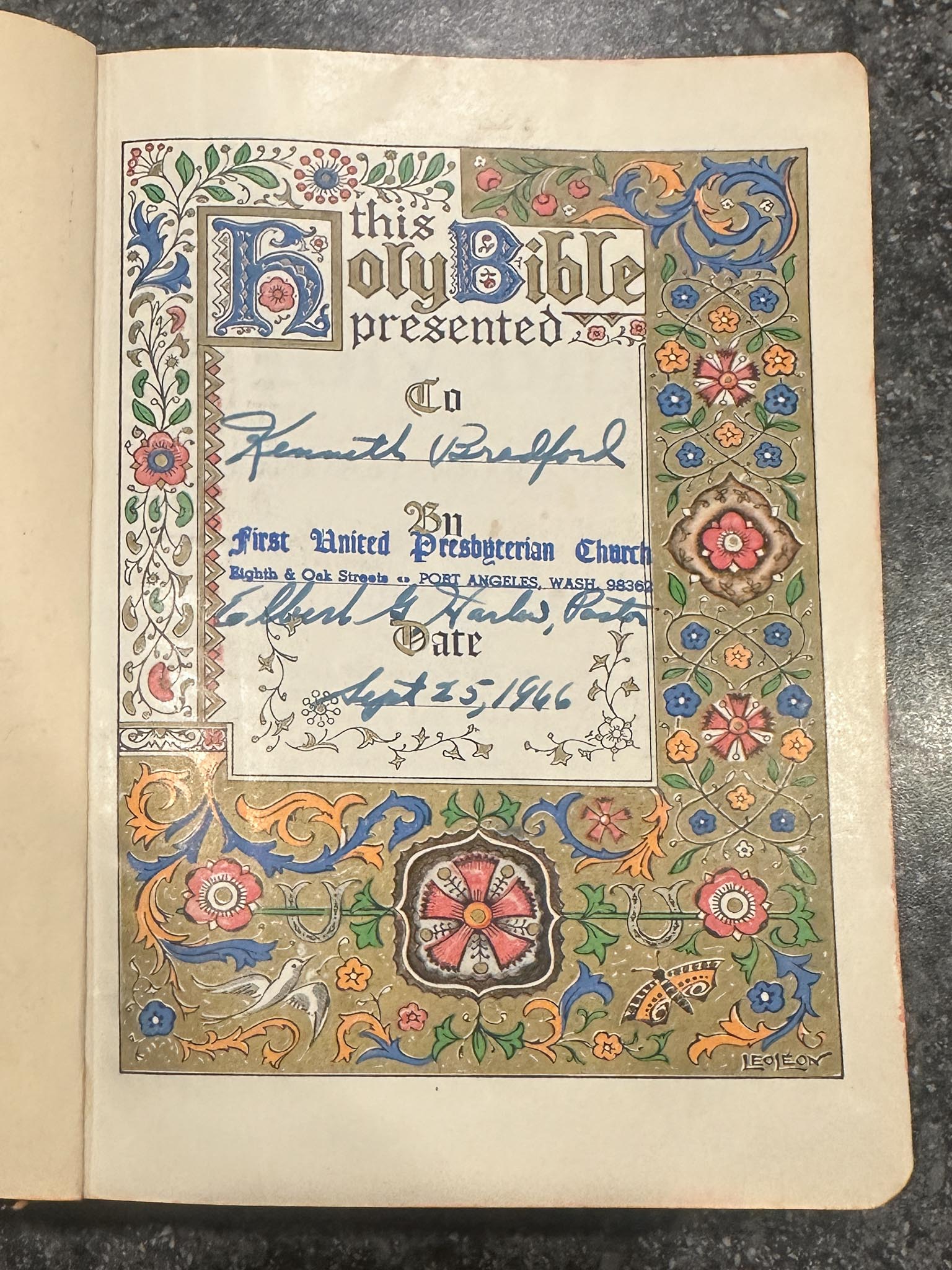
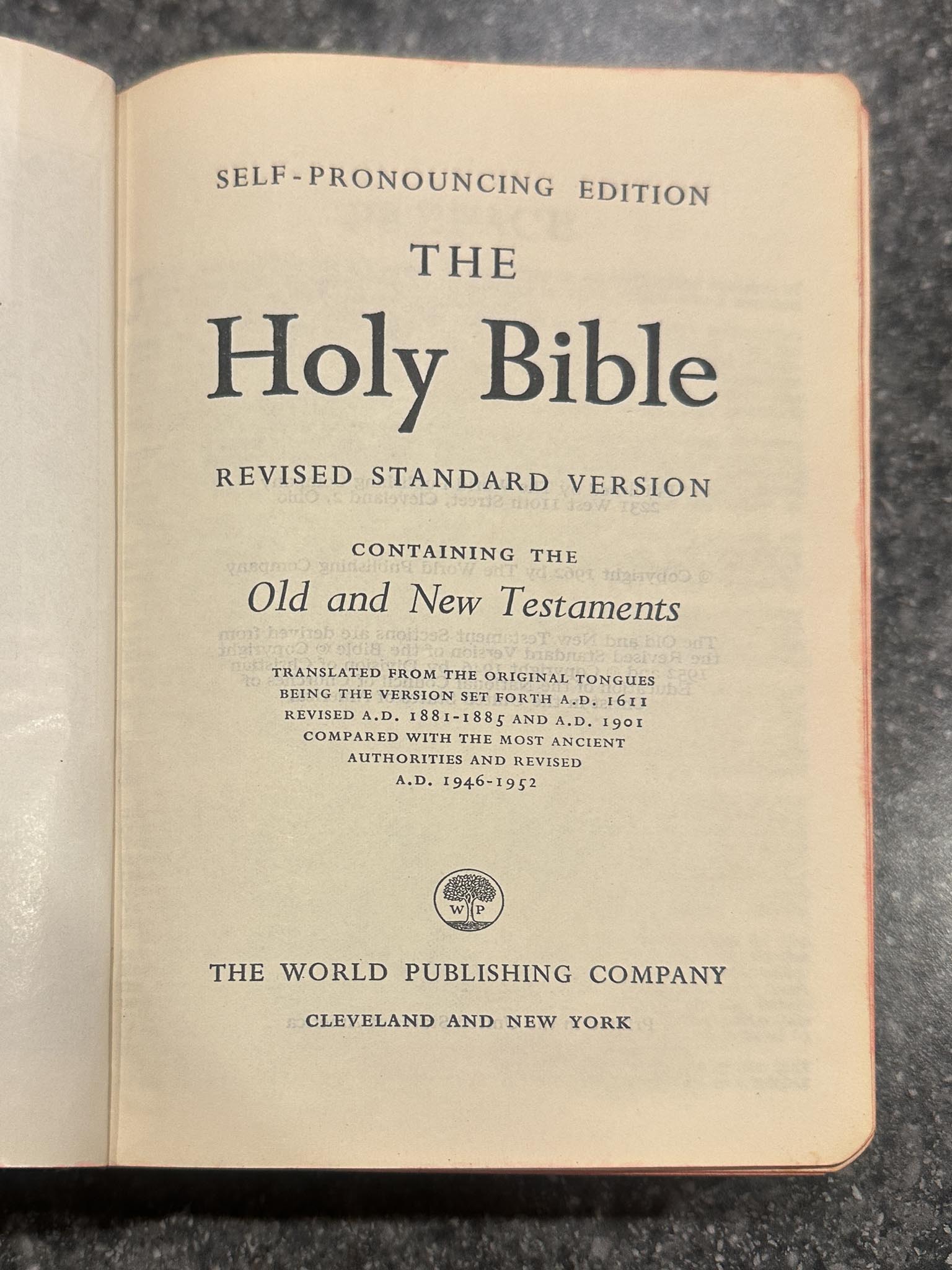
These are three old family Bibles. The first was a gift to my maternal grandmother when she was confirmed in the Episcopal Church in 1946 (along with a card that came with it). The second belonged to my paternal grandmother, possibly from the 1950s (I can’t date it definitively); it is marked with her name and address and the name of her church, Pioneer Methodist Church in Portland, Oregon. The third was a gift to my father from the First Union Presbyterian Church in Port Angeles, Washington, in 1966.
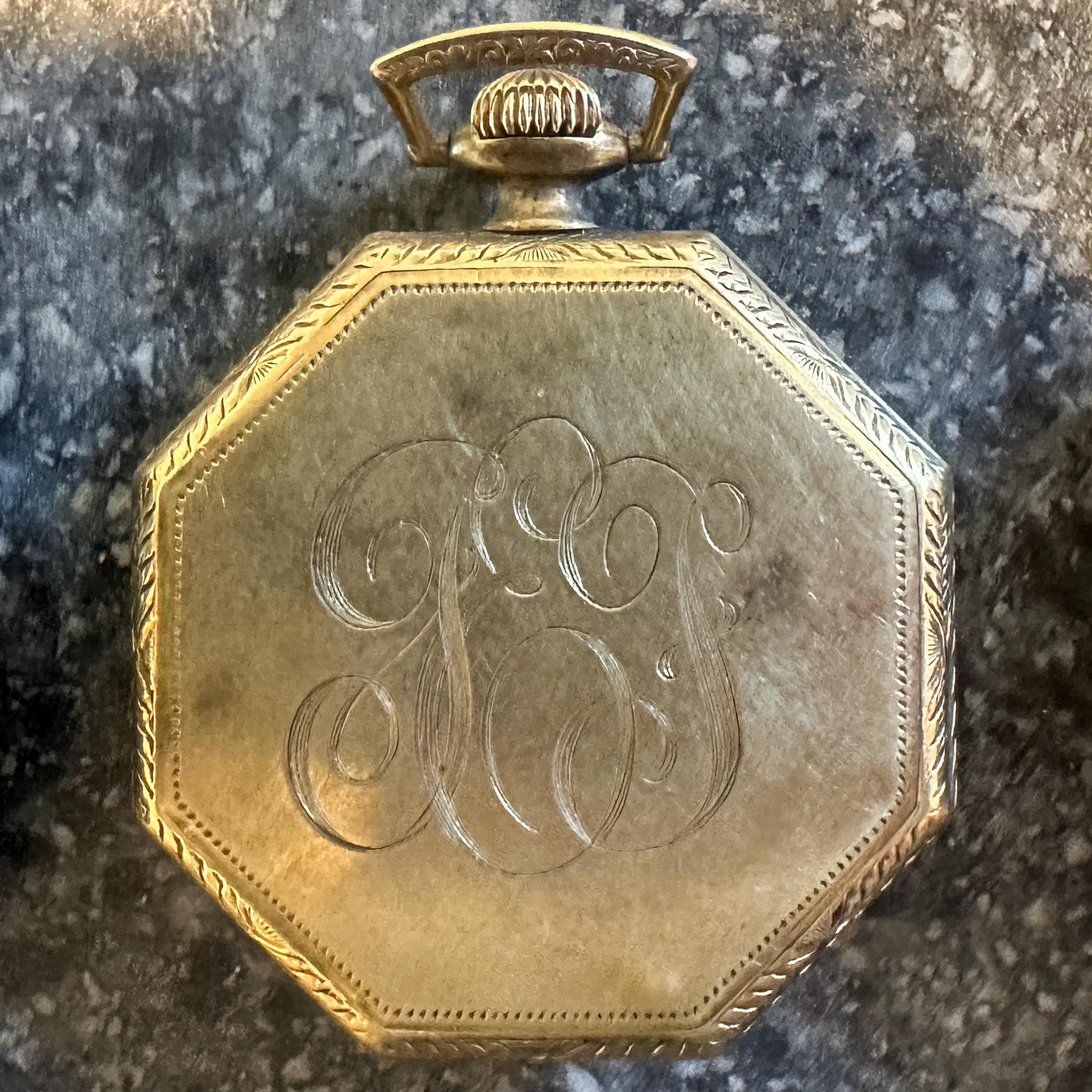
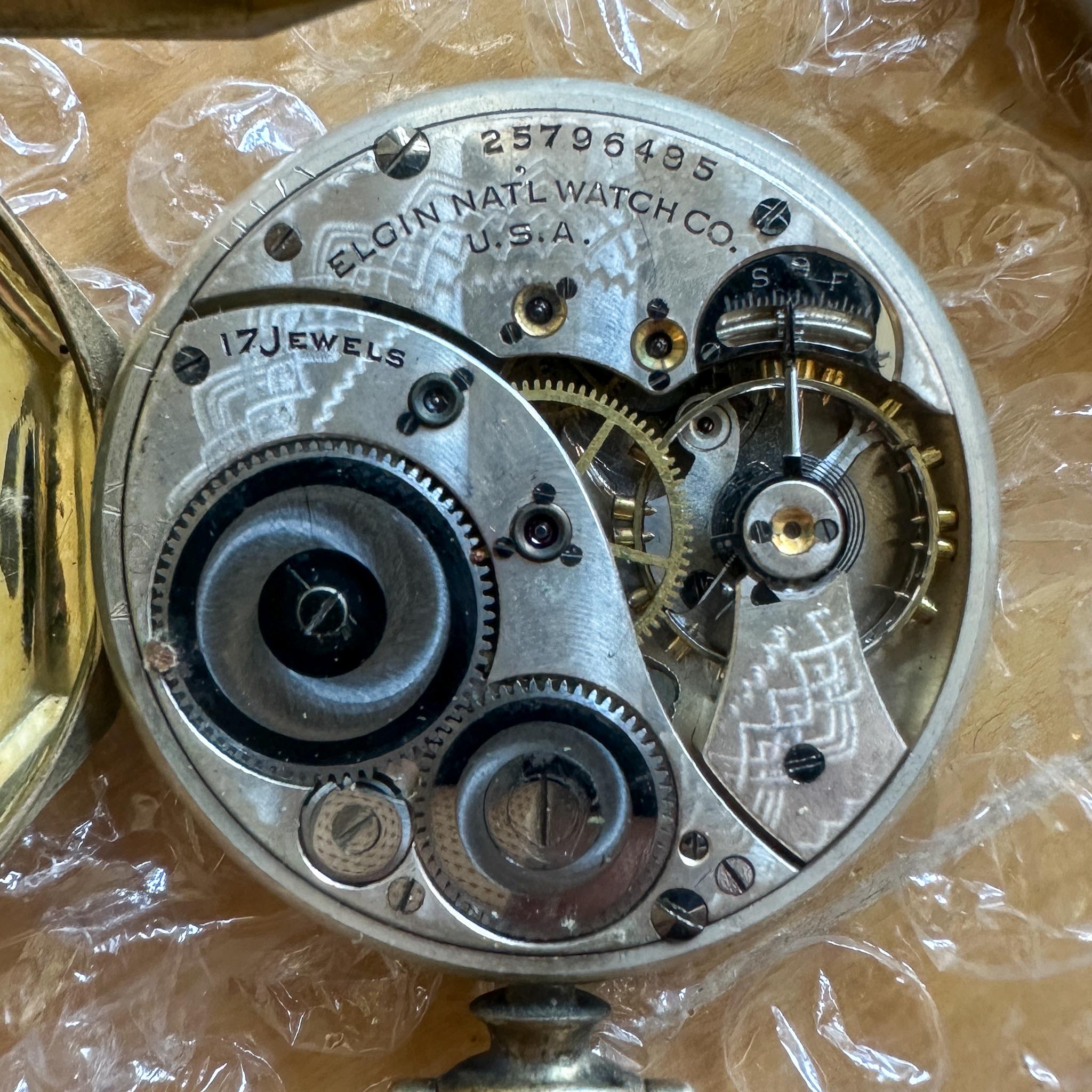
Three Pocket Watches
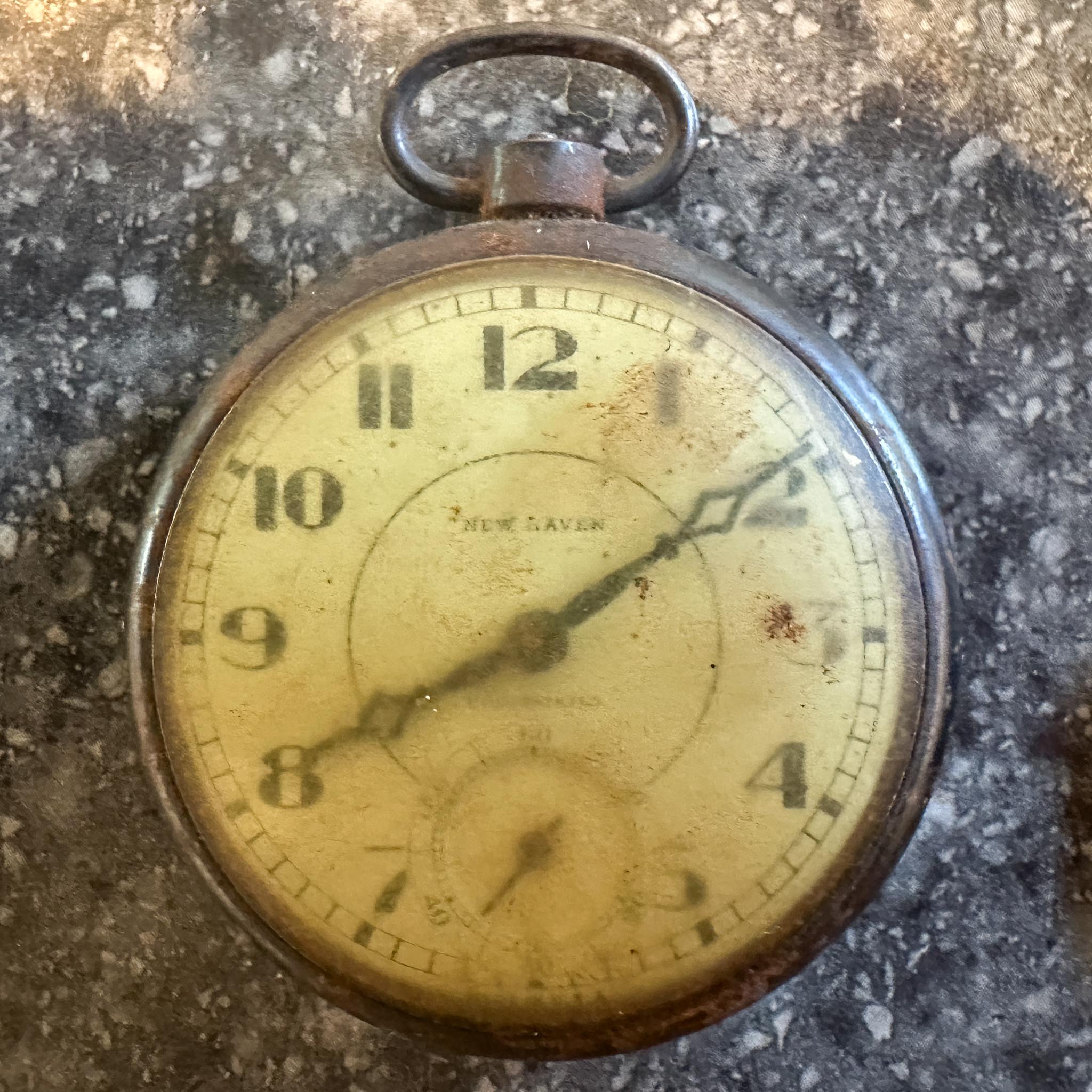
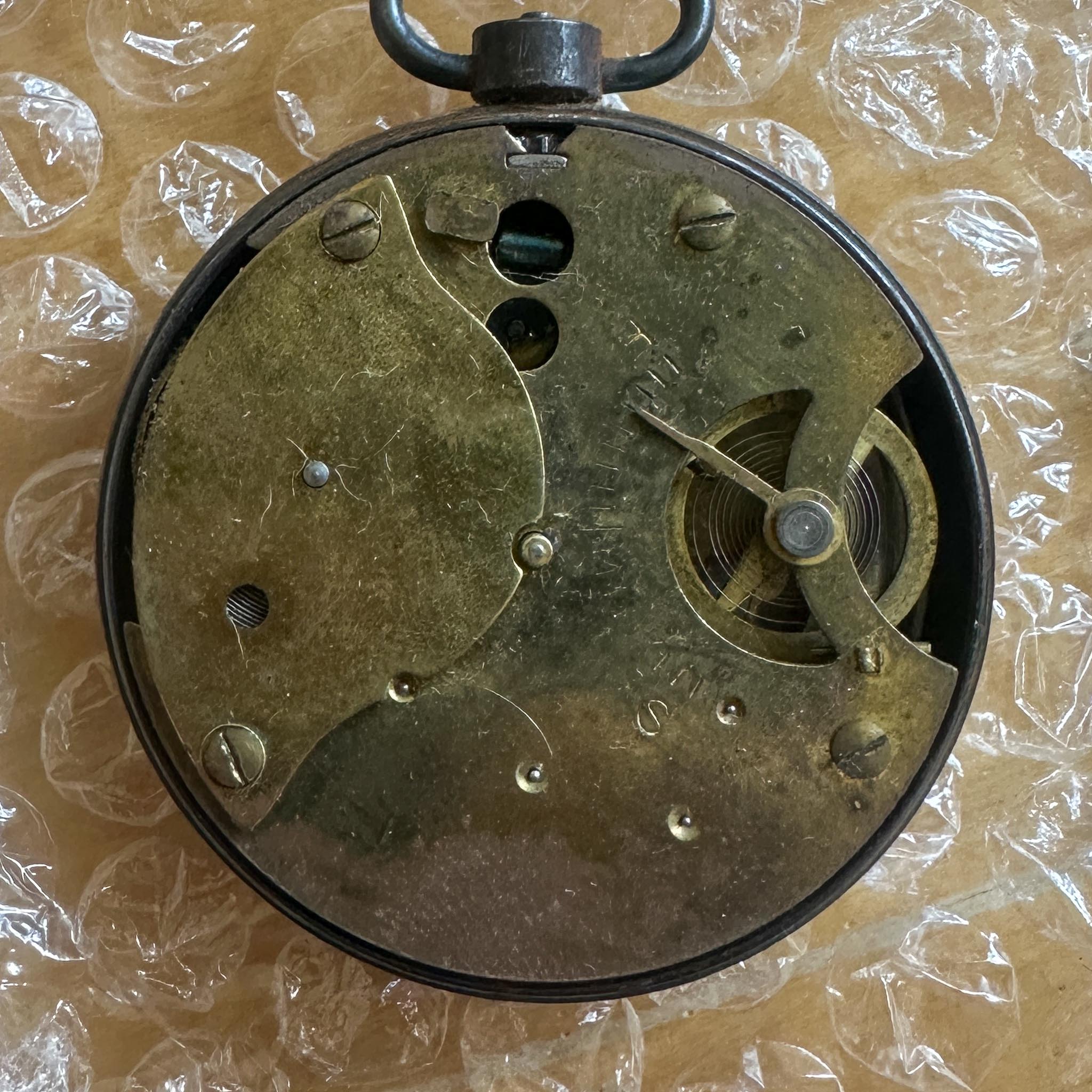
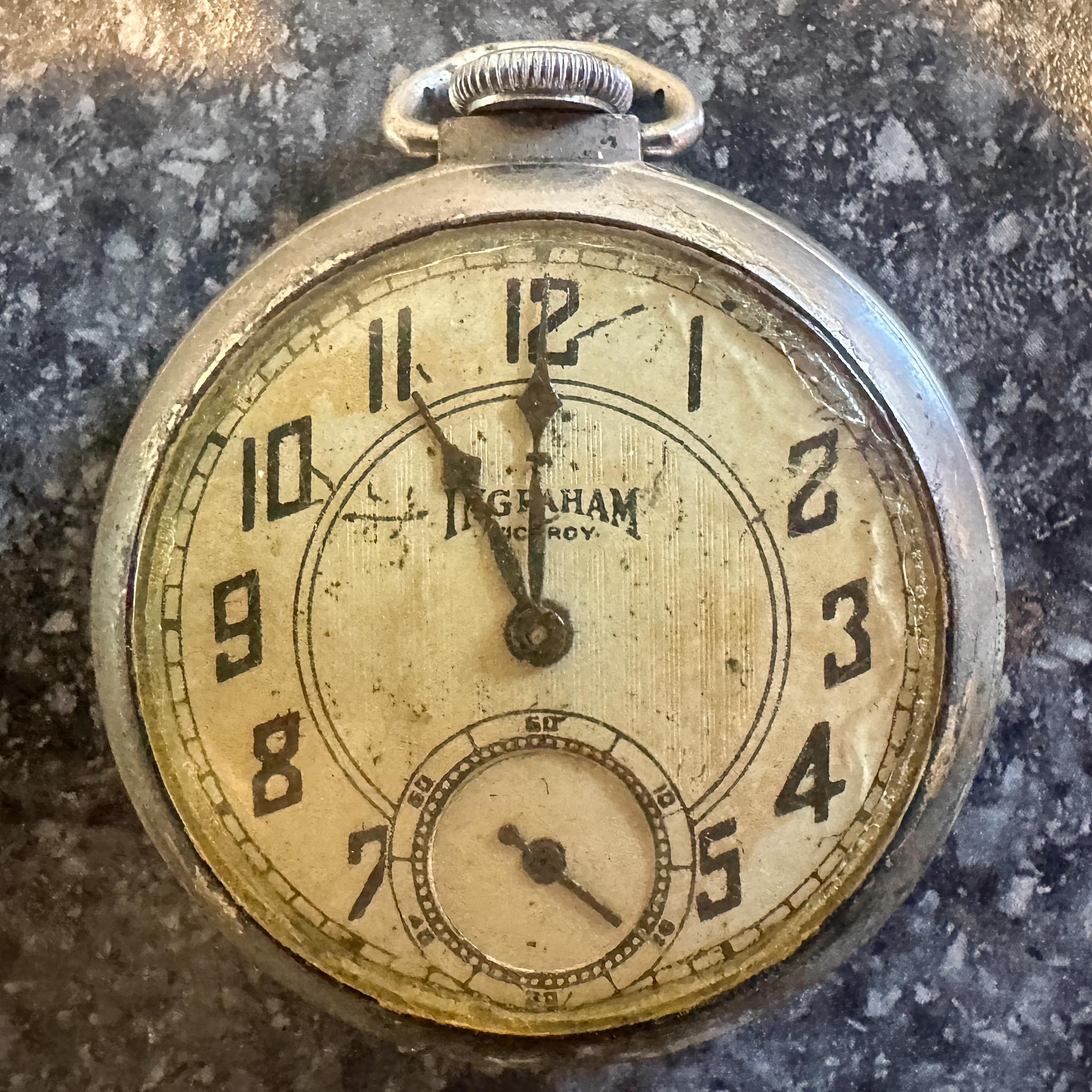
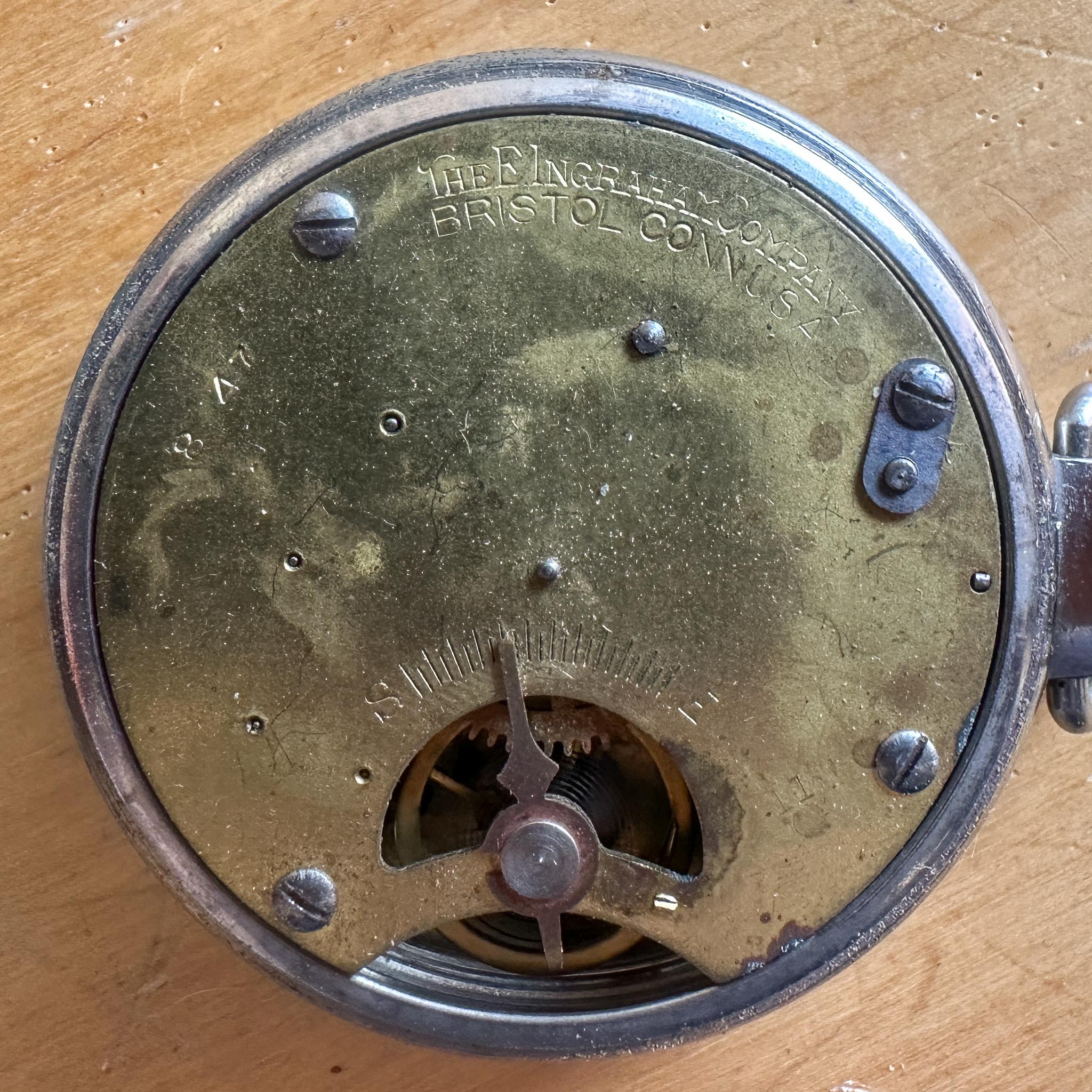
These are three old pocket watches, which I present in order from crappiest to coolest. The first is a compensated watch made by New Haven Clock & Watch Company in New Haven, Connecticut; it is in very poor condition, doesn’t run, and has no date codes or serial numbers, so my best guess in that it was made in the 1940s. The second is a Viceroy watch made by the E. Ingraham Company in Bristol, Connecticut; it looks rough but it runs! It’s not serialized but has an August 1947 date code stamped on the movement.
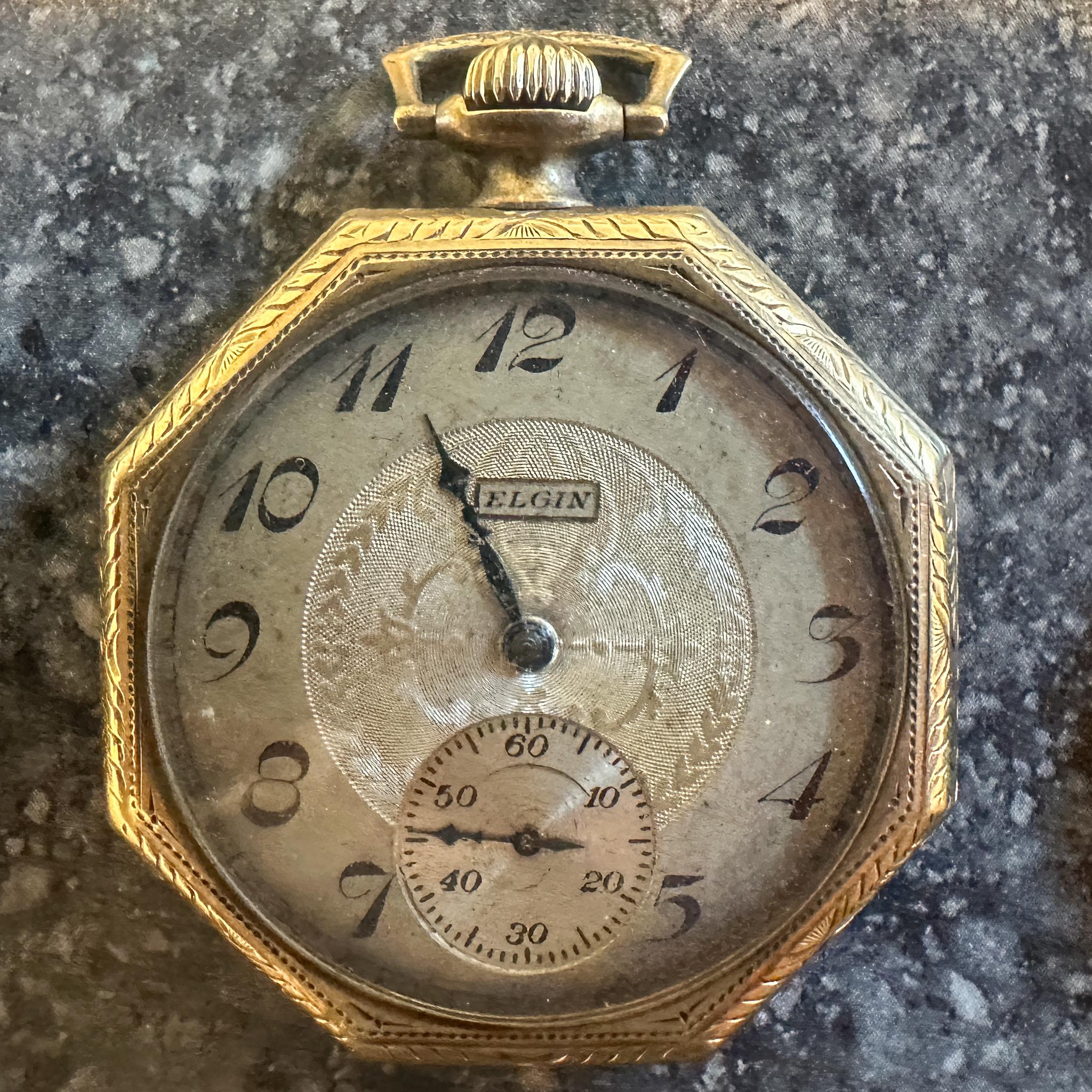
The third one is the really neat one: an Octagon watch made by the Elgin National Watch Company in Elgin, Illinois. It doesn’t run, and the hour and minute hands seem to be stuck together in that position . . . but the exterior looks pretty good and the 17-jewel movement inside it is gorgeous. This belonged to my great grandfather and is decorated with his initials on the back. It was likely manufactured around 1923.
A Springfield Rifle Theory
The history of the Springfield Model 1868 breech-loading rifle I shared above doesn’t make a lot of sense. The rifle itself and the known parts of its story are . . . unusual. The serial number and barrel length are wrong for the model, and though Springfield Armory sent many rifles to France during the Franco-Prussian War, this one ended up with Joseph Wonsky . . . a Polish guy serving in the Austrian Army.
Between the parts of the story we know (or think we know) and what I’ve learned about what was happening in Europe around 1870, I’ve pieced together a completely unproved, speculative theory about how this particular American-made rifle ended up with one of my European ancestors.
First of all, why was my Polish great-great grandfather serving in the Austrian Army? This part is easy . . . Poland didn’t really exist in 1870, and the part of modern Poland that this wing of my family came from was part of the Austrian Empire (and later the Austro-Hungarian Empire). Austria was not a combatant in the Franco-Prussian War; they didn’t want to get involved, mainly because they were badly defeated by better-armed and better-organized Prussian forces in the Austro-Prussian War of 1866.
That devastating loss would still be a recent memory, and, while France and Prussia were distracted with fighting each other, the Austrians would probably be working to re-arm and re-equip their military. If the Austrian Army was looking for some new, modern rifles, I assume they would come up with a set of requirements and solicit some bids from manufacturers. They might even order small runs from three or four different companies so they could trial the rifles before choosing one.
France had adopted the Springfield Model 1868 during their war and imported a bunch of them, so they were “known” to some degree in Europe. It’s possible that the Austrian Army was considering them for its own purposes, so they ordered a set 50 or 100 from Springfield Armory. Maybe they specified a particular barrel length, so Springfield did a custom run with nonstandard barrels. Or maybe they didn’t specify a length, but Springfield had a bunch of wrong-length barrels from an older model or from a manufacturing error and decided to use them on the order to Austria. And maybe the Austrians asked Springfield to number the rifles consecutively starting with 1 instead of using a standard serial number.
Something like this would explain why a Springfield Armory Model 1868 made in 1870 might have a “wrong” barrel length, an otherwise inexplicable serial number of 24, and end up in Austria with no acceptance mark (because it was never actually adopted and issued by the army).
Now imagine that Springfield Armory loses the competition to some other rifle, leaving the Austrian Army with a small batch of American rifles they don’t need or want. They would probably do what lots of military services used to do when they had surplus items: let the guys take ’em home if they want. And imagine that a young Joseph Wonsky is already dreaming of going to America someday; obviously he’s going to want to take a cool American rifle home! It might even have been the first American product he ever owned.
I have no evidence for any of this . . . but something like this seems plausible, and it’s nice to imagine that there’s some connection between Wonsky obtaining the rifle and his future immigration to the United States.