As you may have seen on Melissa’s site, she was the showcase designer at Asia Store in New York City on Friday. We went up via Amtrak from Manassas, Virginia, on Thursday and then took a cab from NYC Penn Station to the hotel in Soho. We walked down to Chinatown for some shopping and then to neighboring Little Italy for some dinner. On Friday, we went to the event on the Upper East Side and, afterwards, went back to Soho for some Chinese food.
We came back yesterday (Saturday) again via Amtrak, grabbed some dinner at Cracker Barrel, then made a quick trip to Ikea before heading home. We didn’t do a lot of sightseeing on this trip, since we were really only up there for a day (not counting travel days) and were busy with the Asia Store event anyway. I still took some pictures :-). Enjoy!
While somewhat overshadowed by the royal wedding in Britain (may God bless the happy couple!), there has been some media attention directed toward the beatification of Blessed Pope John Paul II. Unfortunately, as is often the case, the media reporting on this event has been riddled with inaccuracies and half-truths about the Catholic process of canonization and the theology behind sainthood. If you are interested in understanding sainthood, pay no attention whatsoever to what you have seen and read in the secular media.
First and foremost, almost every article refers in one way or another to the Catholic Church ‘making’ people Saints. Let us be perfectly clear on this: the Saints are Saints on their own merits and by the grace of God. The Catholic Church doesn’t make anybody a Saint; the Church simply recognizes certain Saints through the canonization process as being worthy of veneration by the faithful.
So what is a Saint? Put simply, Saints are people who have died and gone to Heaven. While the universal Church has recognized many thousands of people as Saints through canonization, there are likely many billions of other Saints who have not been recognized as such. We don’t ‘make’ anybody a Saint and, on the contrary, we know that there are countless Saints that haven’t been recognized as such by the Church. Sainthood doesn’t flow from the Church an Earth, but from God in Heaven. I wish that some of the reporters writing about these matters would take a five minutes off from studying Kate Middleton’s dress to read the first three paragraphs on the Catholic understanding of Sainthood at Wikipedia and report accordingly.
Of course, I don’t expect secular media outlets to endorse our theology on this—a theology that, despite its provenience in the very earliest days of Christianity, has since been rejected even by many Christians—but they could at least add a brief explanation of what we believe is happening. I seem to remember learning in Journalism 101 that accuracy and completeness were important parts of reporting. Shame. Read on for the truth about the history of the veneration of the Saints, and the process by which people are canonized today.
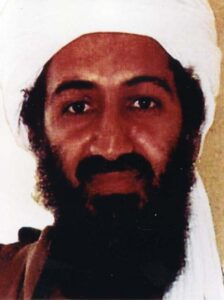
Osama bin Laden, head of al-Qaeda and mastermind of the September 11, 2001, terrorist attacks, is dead and his body is in possession of the United States government. His death was confirmed late this evening by President Barack Obama (D) in a hastily organized press conference at the White House around 11:35pm EDT.
According to Obama, bin Laden was killed in a U.S. operation at a compound outside of Islamabad, Pakistan earlier today. No Americans were harmed in the operation, but bin Laden was killed in a firefight before he could be brought into custody. His body was taken into U.S. possession and confirmed to be that of the terror mastermind. He had been hiding out in a mansion compound near the Pakistani capital at least since August of last year, not in the tribal areas between Afghanistan and Pakistan as previously believed. Cooperation with the Pakistani intelligence agencies was instrumental in finding and killing bin Laden.
Bin Laden was head of al-Qaeda, a radical Islamic terrorist group responsible for countless acts of mass murder, including the September 11 attacks, the attack on the U.S.S. Cole, embassy bombings, train bombings in the U.K. and Spain, and more.
Hundreds of people have already gathered at the White House in Washington, DC, in jubilant celebration with American flags and chants of, “U.S.A.”
I’ve just launched a minor revision to the site, which brings the version to 22.2. This update brings a number of minor tweaks and improvements to Website 22. Here are some of the things that have changed:
Better Social (Facebook) Integration: I have established an Off on a Tangent page on Facebook, which you can find at this link. Click ‘like’ (either on the Facebook page itself, or in the right sidebar of the site) to follow the site. In addition to being notified of new Off on a Tangent content on your wall, you’ll also get a stream of interesting articles and stuff worth sharing.
Mobile Improvements: I’ve made some improvements to the mobile site. First, you’ll notice that the title bar now has photos behind it just like the desktop site. Second, your font size settings will now be shared between the desktop and mobile sites (in case you like to switch back and forth). Third, if you visit the desktop site on a browser with a small screen (like a mobile phone), it will give you a more obvious link to the mobile version. You can choose to dismiss the message, or set the site to always redirect that browser to the mobile site automatically. It’s up to you.
Improved Quotes Widget: The quotes widget in the right sidebar has seen some big improvements. You now have controls (back, pause, next) to flip back and forth through the quotes at-will, or stop on one you really like. The widget will also follow you down the screen as you scroll. You can turn this off in the settings by turning the ‘Pin Menu & Quotes’ option to ‘false.’
Browser Support Changes: The major change is that now, since Microsoft Internet Explorer 9 has been officially released, I have dropped official support for Internet Explorer 7 (I generally support only the most recent two versions of IE). If you are still using IE7 (or, God forbid, IE6) please upgrade to a newer IE version or to Chrome, Firefox, Safari, or Opera.
Miscellaneous: There have been a number of other little changes, bug-fixes, and improvements throughout. If you use Internet Explorer you will probably notice less weirdness with dynamic content because I’ve fixed an AJAX request bug, there have been some adjustments to the default font list to make things look better on more OS’s default configurations, the holiday list on the site policies page now shows the dates for each holiday, and so on.
As always, keep an eye out for any problems and let me know if you find any!
I’m not one of those radical right-wingers who thinks President Barack Obama (D) is a Kenyan-born Muslim bent on the destruction of America. No. It is possible that Obama is accelerating our national destruction, but he is doing so with failed Keynesian economic policies and his own apparent lack of historical knowledge. I do not believe he is doing it on purpose, or that there are any diabolical conspiracies behind it all.
But the festering claims that circle through the far right—that he was born in Kenya and is thus ineligible to be president, and that he is a Muslim—just won’t go away. I have ignored these two controversies, for fear of giving them any additional attention, but they have continually boiled near the surface anyway. It is time to address them head-on. Here are the facts:
Is Obama a ‘Natural Born Citizen’?
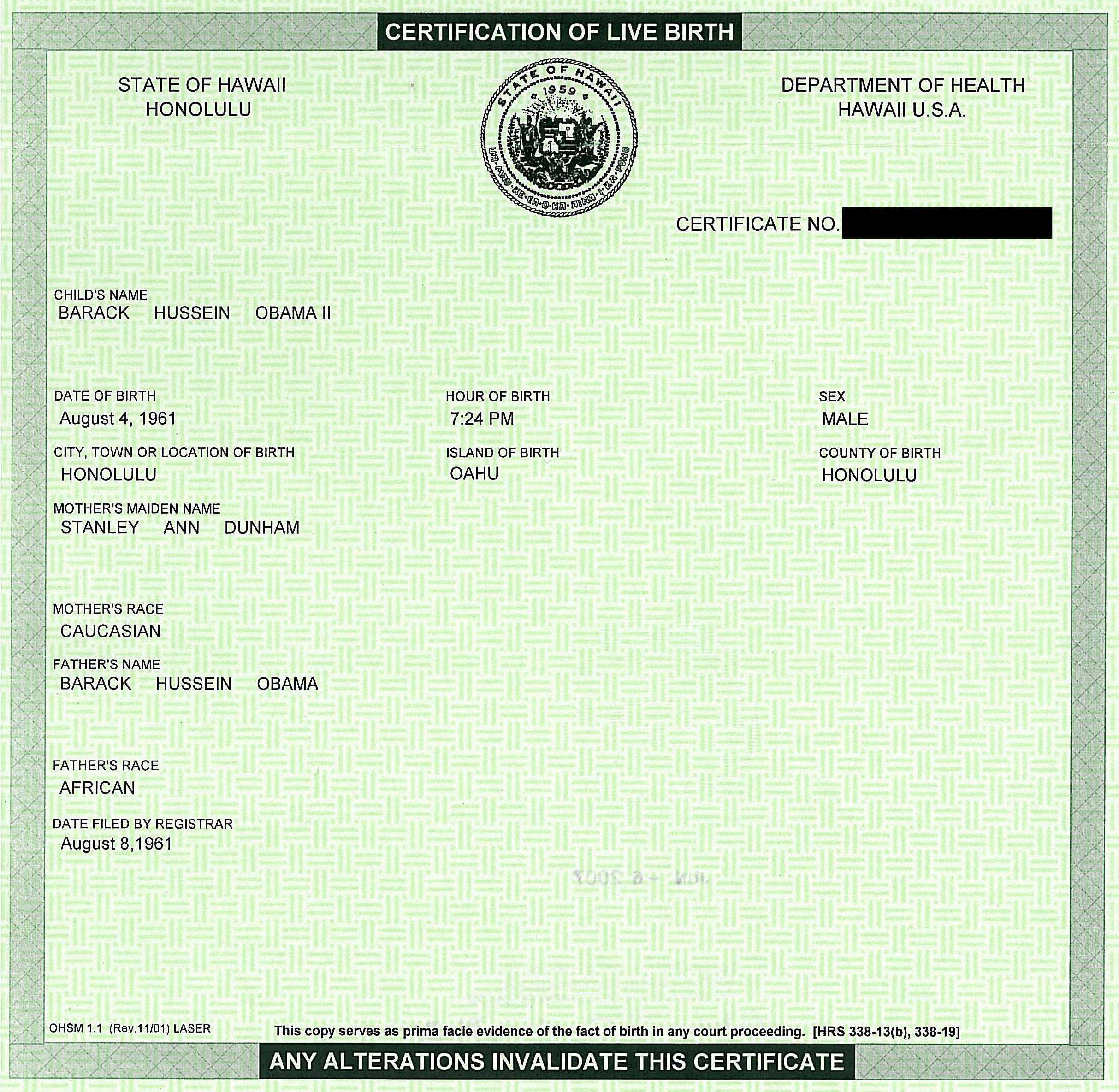
The State of Hawaii, through its official process, has certified that Barack Hussein Obama II was born on August 4, 1961, in Honolulu, Hawaii. While the U.S. Constitution never specifically addresses what level of faith the federal government must place in the decisions of the states, it does require that states trust one another’s documents: “Full Faith and Credit shall be given in each State to the public Acts, Records, and judicial Proceedings of every other State” (Article IV, Section 1). Considering that the states are the keepers of birth records, it stands to reason that the citizenship requirement is satisfied when one of the states certifies it as being satisfied. Hawaii’s official certification of Obama’s place of birth is the final word on the matter unless accusers can present some kind of indisputable proof that Hawaii’s records are in error.
In June 2008, the Obama campaign produced a copy of his Hawaii ‘Certification of Live Birth’ document. This is the kind of document that is usually provided when people request a copy of their birth certificate from their respective state authorities; it is not an original, but an official document stating that the original exists and providing its most important information. This document is good enough to certify your citizenship for the purposes of getting a U.S. passport, so I don’t see why it shouldn’t be good enough for anything else.
Scott Bradford is a writer and technologist who has been putting his opinions online since 1995. He believes in three inviolable human rights: life, liberty, and property. He is a Catholic Christian who worships the trinitarian God described in the Nicene Creed. Scott is a husband, nerd, pet lover, and AMC/Jeep enthusiast with a B.S. degree in public administration from George Mason University.
X
Site Information
Off on a Tangent Website 26.0 “Sarah”
Theme: 26.0.83
Plugin: 6.0.165
Scribentes veritatem ab anno Domini MCMXCV
(Writing the truth since A.D. 1995)
Official Time:
Keyboard Shortcuts
Just type these sequences on the keyboard, or enter them in the search bar!