
I’m sorry.
Election 2022 Results (Final)
Ballot Races
| U.S. House, VA-10th | |
|---|---|
| Hung Cao (R): | 46.65% |
| Jennifer Wexton (D): | 53.15% |
| Other: | 0.19% |
Ballot Issues
| Loudoun School Bonds | |
|---|---|
| Yes: | 70.91% |
| No: | 29.09% |
| Loudoun Pub. Facility Bonds | |
|---|---|
| Yes: | 78.63% |
| No: | 21.37% |
| Loudoun Transp. Bonds | |
|---|---|
| Yes: | 77.66% |
| No: | 22.34% |
I Voted; Final Thoughts

Today is the “Tuesday next after the first Monday in the month of November,” and it is time again for Americans to cast their ballots.
Across the nation we are voting to select members of the U.S. House of Representatives. In about two-thirds of states, but not in Virginia this year, we will be selecting members of the U.S. Senate. Many states are also selecting governors, and there are countless local races and ballot issues.
These races may lack the pomp-and-circumstance of presidential elections, but the “midterms” are just as important in charting our national course. They are an opportunity for the public to either endorse how things are going, or demand a change.
If you are an eligible voter, go vote today.
But first, do some research. Read my endorsements, which explain why I voted the way I did. Read other peoples’ too. Read the candidates’ websites. Read opinion articles and editorials. Talk to your friends. And don’t pay too much attention to party lines and hyperbolic ads. Use your head and make your own choices.
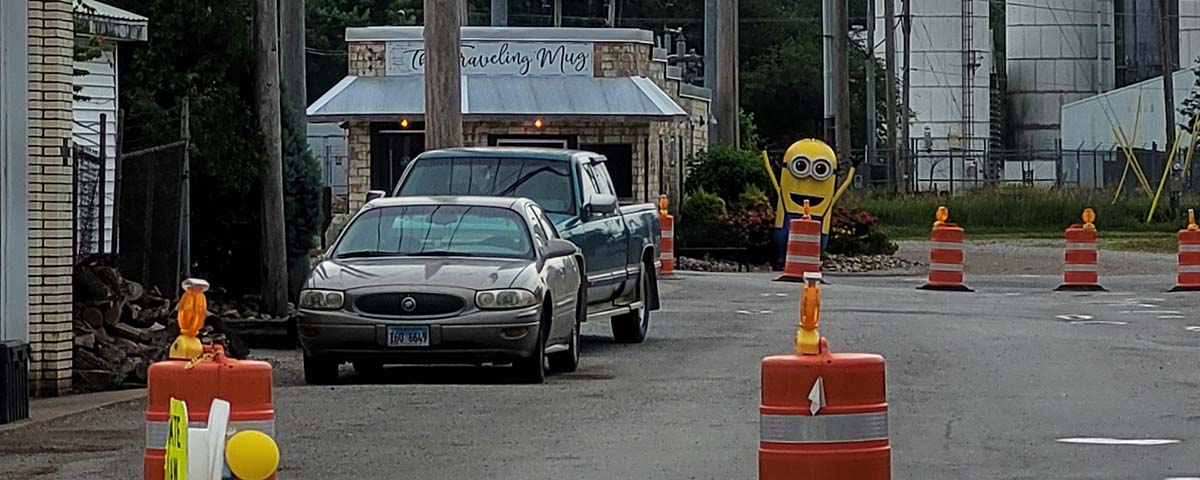
It’s time for another bunch of random photos. I’m going to try to post these every six months or so, depending on how many pile up. They’re mostly just the weird or interesting things I come across while I’m “out and about” . . . or pet photos. Enjoy!
U.S. House, Virginia, 2022

All seats in the U.S. House of Representatives are up for election every two years. There are 435 seats, representing each of the fifty states in rough proportion to their population as recorded in the most recent national census. There are six non-voting delegate seats representing U.S. territories and the District of Columbia.
This is the first congressional general election since the 2020 Census. In the reapportionment, one state gained two seats (Texas), five states gained one seat each (Colorado, Florida, Montana, North Carolina, and Oregon), and seven states lost one seat each (California, Illinois, Michigan, New York, Ohio, Pennsylvania, and West Virginia). These and most other states, including Virginia, also realigned their district boundaries.
The Democratic Party currently holds a 221-212 majority over the Republican Party in the House. Two seats are vacant. Virginia has eleven seats in the House, with seven held by Democrats and four held by Republicans.
Scott Bradford is a writer and technologist who has been putting his opinions online since 1995. He believes in three inviolable human rights: life, liberty, and property. He is a Catholic Christian who worships the trinitarian God described in the Nicene Creed. Scott is a husband, nerd, pet lover, and AMC/Jeep enthusiast with a B.S. degree in public administration from George Mason University.