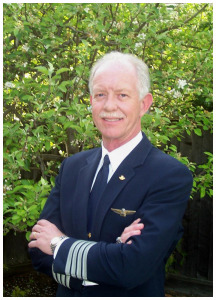
Kudos to Chesley B. “Sully” Sullenberger, III

0115093hero1Lots of people owe Chesley B. “Sully” Sullenberger III a profound ‘thank you’.

Sullenberger was at the controls of U.S. Airways Flight 1549 which took off from New York’s LaGuardia Airport headed for Charlotte, North Carolina, earlier today. Within a few minutes after the flight began, the Airbus A320 airliner collided with a flock of geese which damaged both engines and crippled the craft.

Sullenberger attempted to return to the airport, but it soon became clear that the plane—with no power and little altitude—would not make it. Faced with very, very limited options, the pilot made the decision to ditch the aircraft into the Hudson River between New York and New Jersey.

Miraculously, every single one of the 155 passengers and crew survived. There were some minor injuries, and some who were exposed to the frigid water had to be treated for hypothermia, but every last soul aboard was rescued and will live.

While ditching in water is, indeed, a part of every commercial pilot’s training, it is a ‘last resort’ maneuver. People have survived these kinds of landings, but until today it had never been done in a commercial jet airliner without a loss of life. Circumstances were on Sullenberger’s side—proximity to the river when the event occured, and relatively calm conditions on the river—but there is no doubt that his consummate skills as a pilot saved lives today. God bless you, Capt. Sullenberger.

As for the bird strike itself, it’s not uncommon for birds to collide with aircraft. It is, however, very rare for bird strikes to completely disable a multi-engine aircraft. Geese are big, mean-spirited birds that travel in packs though, so it’s not too surprising.

Software Licensing and Consumer Rights

One of the most controversial issues in the technology field is the issue of software licensing. As you may be aware (though I’m sure many of you are not aware), software companies claim that when they sell you a piece of software they’re not actually selling you anything except a license to use that software. That’s why you get prompted when installing most software to agree to its license terms—often called an End-User License Agreement (EULA)—and these companies claim those license terms equate to a binding contract and you cannot use that software in any way that goes against those terms.

Of course, things aren’t that simple.

The problem for software companies is that there is little or no precedent for their argument. Software is copyrighted work—just like a novel, a CD of music, or a film on DVD—and as such the author/creator of that work has certain rights under copyright law. They have a sole right to the ‘first sale’ of that work or to license that work to others for sale. They have a sole right to create ‘derivative works.’ They have a right to prohibit others from copying and selling (or giving) that copy to others. This is all without serious dispute.

But the recipient of a copyrighted work—the consumer—has rights under copyright law too. They can make as many copies as they want for personal use (e.g., you can photocopy a fragile book to read the copy instead of the original or ‘rip’ a CD to MP3 format to listen to it on your computer) as long as you aren’t selling or distributing the copies. This is called the ‘fair use’ doctrine. They also have a right to sell the original copy of the work under something called the ‘first sale’ doctrine. The author of a work has the right to profit from its sale, but you can then re-sell that work to somebody else later if you want. Of course, if you sell the original copyrighted work, you cannot retain your copies! No selling the CD and keeping the MP3s you made! Getting rid of the copy that gave you the ‘fair use’ rights in the first place terminates your ‘fair use’ rights!

Fairfax County Board of Supervisors, Chairman, 2009 (Special Election)

Citizens of Fairfax County, Virginia will be voting in a special election on February 3, 2009, to choose a new Chairman of the Fairfax County Board of Supervisors. Chairman Gerald “Gerry” Connolly (D), who was in his fourth term as a member of the Board and second term as Chairman, won election to the U.S. House of Representatives (VA-11th) in the November general election and left an open seat on the Board. Two County Supervisors—Sharon Bulova (D-Braddock) and Pat Herrity (R-Springfield)—are vying for the seat, joined by Carey Campbell (IG) and Christopher DeCarlo (I).

Inaugural Insanity

Stuff happens in Washington, DC, all the time. That’s part of what makes the DC metro area such an interesting place to live. We have political events—presidential inaugurations, State of the Union addresses, and more—as well as international events like IMF and World Bank meetings, protests, ‘Million Man Marches’, etc. We’ve grown accustomed to it. We don’t bat an eye at a motorcade going by, or Secret Servicemen milling around, or the metallic clang of the recessed, automated road blocks in the roads as we drive around the district—they’re designed to spring up and physically halt all traffic in an emergency. This is part of living near/in Washington.

But every once in a while, the whole place goes absolutely nuts—irrationally, stupidly nuts. The inauguration of President-elect Barack Obama (D) on the 20th—next Tuesday—is one such example.

Don’t believe me? Take a look at the list of planned road closings. Obviously, some road closures are normal and expected for a Presidential inauguration or other major event in the heart of the city. But don’t you think we’re going a bit overboard? Every single Potomac River bridge leading into the city of Washington from Virginia will be closed—the 14th Street Bridge, the Roosevelt Bridge, the Memorial Bridge, the Key Bridge, and the Chain Bridge. Many (but, curiously, not all) of the bridges from the Maryland side of the Anacostia River will be closed too. The entire northern half of the George Washington Memorial Parkway—a major commuter route in Virginia—will be closed. Interstate 66 and Interstate 395, both major commuter routes leading from the outer Virginia suburbs into Arlington, Alexandria, and the District, will all be closed inside the beltway.

In other words, every single major freeway serving Arlington and Alexandria—Virginia areas that shouldn’t have to shut down for an event in DC—will be closed.

Even further out where I live, a solid 25 miles from DC, things are getting all mixed up. The Dulles Toll Road and Interstate 66 will each have HOV restrictions in place from the evening before until 3am on inauguration day, and then from 3am through to 6pm only buses will be permitted to use the HOV lanes that are usually open to all traffic outside of rush hour.

I know they’re expecting a lot of people, but isn’t it a bit overkill to shut down the entire metro region—effecting residents miles and miles and miles away from the city—for a major event downtown? Seriously people. Calm down.

Palm: Back From the Brink?

As I’ve mentioned before, I have had a lot of frustrations about smartphones. Most of them are kludges with major usability or extensibility problems. I finally settled on a BlackBerry Bold as my new phone, which I am very happy with so far, but I’ve had a long-running soft spot for Palm and the long-neglected Palm OS operating system.

Palm lovers like me though have had a rough few years. First, the old Palm Inc. (which made the hardware and the software) lost its way and its original founders left to start a new company called Handspring. Handspring made some great devices which ran the Palm OS made by Palm (under license), including my beloved old Handspring Visor Pro and the original Tréo smartphone.

Then Palm, for reasons nobody really understands, split itself in two. PalmSource was the company that would build the software, and PalmOne would build the handhelds and phones themselves. Both would have legal right to use the name ‘Palm’. PalmOne quickly merged with Handspring (bringing Palm’s original founders back in-house) and embarked upon some of their best hardware devices ever, including the groundbreaking Tréo 600 and Tréo 650 phones that set the course of the smartphone market for years to come.

Scott Bradford is a writer and technologist who has been putting his opinions online since 1995. He believes in three inviolable human rights: life, liberty, and property. He is a Catholic Christian who worships the trinitarian God described in the Nicene Creed. Scott is a husband, nerd, pet lover, and AMC/Jeep enthusiast with a B.S. degree in public administration from George Mason University.