
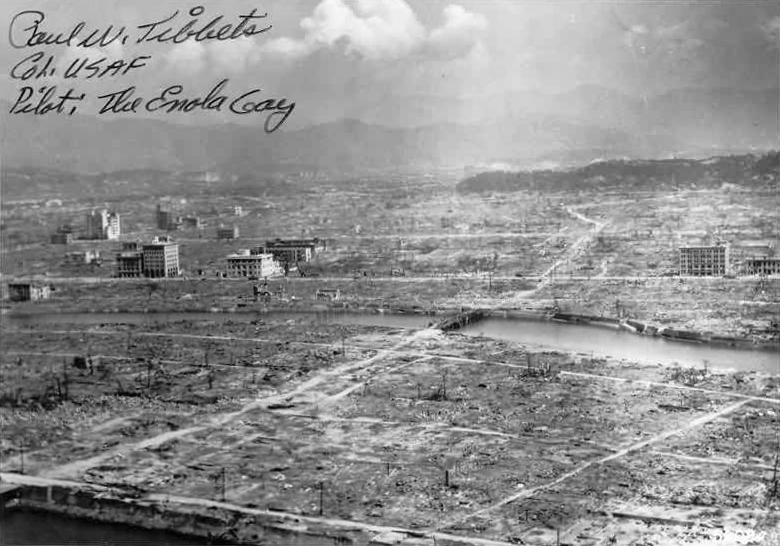
Earlier this month, the world recognized the seventieth anniversary of the atomic bombings of Hiroshima and Nagasaki, Japan, by the United States military during World War II. And back in May, President Barack Obama (D) participated in a wreath laying ceremony at the Hiroshima Peace Memorial. Both events brought the 1945 atomic bombings back to the fore, and ignited a renewed debate about whether they were justified.
The answer is no. They were not.
I’m a patriotic American. I’m normally inclined toward a positive view of American foreign policy, and especially toward the actions of our military. But part of why I am a patriotic American is because the United States has been, more often than not, a moral actor on the world stage. In the recent conflicts in Iraq and Afghanistan, for example, we went to great lengths to reduce the likelihood of civilian casualties, and consistently obeyed the laws of war. When it was discovered that some soldiers were violating these principles—like the prisoner abuse at Abu Ghraib in Iraq—we prosecuted and punished them.
War is a regrettable reality of human existence, but it is incumbent upon warring nations to act according to some basic norms. Among these is an understanding that only military targets may be targeted, and that all parties must make every reasonable attempt to minimize civilian casualties. When one of the belligerent nations violates these norms, it does not authorize the others to do the same. ‘Two wrongs do not make a right.’ The principle of ‘total war’ that took hold on both sides during World War II was not, and is still not, morally defensible.
![Hillary Clinton (Gage Skidmore [CC BY-SA 3.0])](https://www.scottbradford.us/wp-content/uploads/2016/07/Hillary_Clinton_by_Gage_Skidmore_2.jpg)
![Donald Trump (Gage Skidmore [CC BY-SA 3.0])](https://www.scottbradford.us/wp-content/uploads/2016/07/Donald_Trump_by_Gage_Skidmore.jpg)