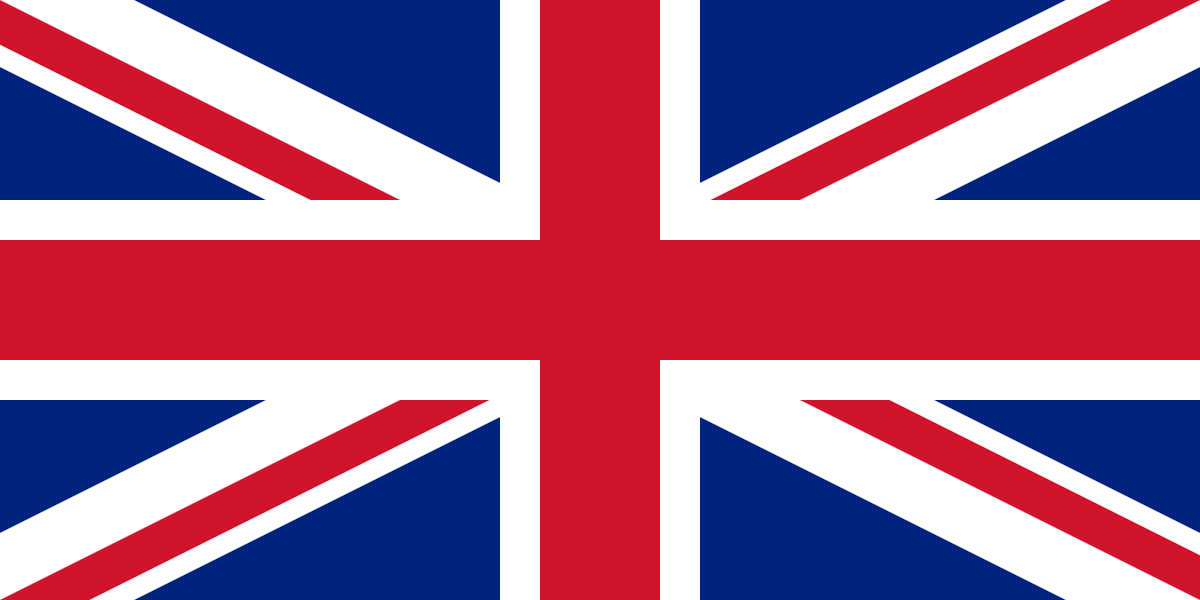
If you’ve been reading the news lately, you might think that the apocalypse is upon us. The recent referendum vote by the people of the United Kingdom (U.K.) to leave the European Union (E.U.) is just one of the latest signs.
The fear-mongers are in full-swing telling us that the ‘Brexit’ will destroy the economies of the U.K. and E.U., that millions of immigrants and workers abroad will be rounded up and sent home, that trade will grind to a halt, and a new world war will break out. Young Britons, the majority of whom wanted to stay in the E.U., are accusing their elders of destroying their futures in the name of racism and antiquated notions of national pride.
Of course none of this is true . . . but what does the truth have to do with anything these days?
It is true that the ‘Brexit’ may have negative consequences for the U.K. and the remaining nations of the E.U., although even that much is not guaranteed. It may, on the contrary, have a number of benefits—not least of which being that the people of the U.K. will get to manage their own affairs through their own democratic processes. National self-determination, in and of itself, is a valuable end. Indeed, that principle is supposedly affirmed by all members of the United Nations (U.N.).
Former Secretary of State Hillary Clinton (D) is now the presumptive Democratic Party presidential nominee. After a hard-fought primary campaign against Senator Bernie Sanders (I-VT), Clinton cinched the nomination as delegates were awarded from the weekend primaries in the U.S. Virgin Islands and Puerto Rico. According to the Associated Press, Clinton has earned the necessary 2,383 majority of delegates to the Democratic National Convention, however that number includes a survey of ‘superdelegates’ that Off on a Tangent cannot independently verify.
Clinton served as a law professor in Fayetteville, Arkansas, before her husband, former President Bill Clinton (D), was elected Arkansas Attorney General in 1976. The couple then moved to Little Rock and Hillary took a position at the Rose Law Firm and later became a partner. She also served on a number of boards, including six years on the Board of Directors of the Arkansas-based retail giant WalMart.
Bill Clinton was elected Governor of Arkansas in 1978 and served two years before being defeated in a reelection campaign. He was elected again in 1982, and this time held the office until his resignation in 1992. He was elected President of the United States in 1992 and served two terms. Hillary, in her role as First Lady of Arkansas and then First Lady of the United States, became more and more politically involved during this period. Most notably, she was heavily involved in an ill-fated health care reform effort that was abandoned in 1994 after it failed to gain the support of the Democratic majorities in Congress.
As Bill Clinton prepared to leave the White House, Hillary embarked on a campaign to become a U.S. Senator from New York. She was elected in 2000, and then reelected to a second term in 2006. She ran for the Democratic Party nomination for President of the United States in 2008, but lost to now-President Barack Obama (D). After Obama was elected, he nominated his erstwhile opponent to be his Secretary of State. Clinton served in that role until her resignation in 2013. Clinton is currently under federal investigation for using an insecure private email server for official Department of State business during her time as Secretary of State, an arrangement that likely violated federal open-records and security-classification laws.
If elected in November, Hillary Clinton would be the first woman, and the first spouse of a former president, to serve as President of the United States.
The delegates to the Libertarian Nominating Convention in Orlando, Florida, have officially nominated former Governor Gary Johnson (R-NM) as the Libertarian Party candidate for President of the United States. He will stand in the November general election against presumptive Republican nominee Donald Trump (R) and the yet un-selected Democratic nominee.
The Libertarian Party is the largest ‘third party’ in the United States, and will likely be the only party other than the Democrats and Republicans to appear on all fifty states’ ballots.
Johnson started a small construction company, Big J Enterprises, in 1976, less than a year after graduating with a bachelor’s degree from the University of New Mexico. He grew the company into a multi-million dollar corporation with over a thousand employees, and when he sold the business in 1999 it was one of the largest construction firms in New Mexico.
With the slogan, “People before politics,” Johnson ran a partially self-funded campaign to narrowly win the Republican nomination in the 1994 New Mexico governor’s race. He then defeated incumbent Governor Bruce King (D-NM) in the general election by a ten point margin. He won reelection in 1998 by a similar margin.
Johnson vetoed nearly half of the bills that came across his desk, and quickly became known as a leading ‘small-l’ libertarian. Since leaving office in 2002, Johnson formally left the Republican Party and became a member of the Libertarian Party. He stood as the Libertarian presidential nominee in 2012, earning about 1% of the popular vote. This was slightly less than Ed Clark’s (L) 1.1% showing in 1980, but represented the highest raw vote total in Libertarian Party history—over 1.27 million votes cast.
Johnson will be joined on the Libertarian ticket by his vice presidential running mate, former Governor William Weld (R-MA). Weld is another former Republican who was elected—and then reelected—in a state that normally leans strongly Democratic.
The Libertarian Party is the first of the three ‘fifty-state’ parties to officially select its presidential and vice presidential nominees. The Republican Party will select its nominees at the Republican National Convention in Cleveland, Ohio, on July 18. The Democratic Party will select its nominees at the Democratic National Convention in Philadelphia, Pennsylvania, on July 25. The Green Party, which is the largest of the ‘non-fifty-state’ parties, expects to be on the ballot in at least twenty states and will select its nominees at the Green Party Presidential Nominating Convention in Houston, Texas, on August 6.
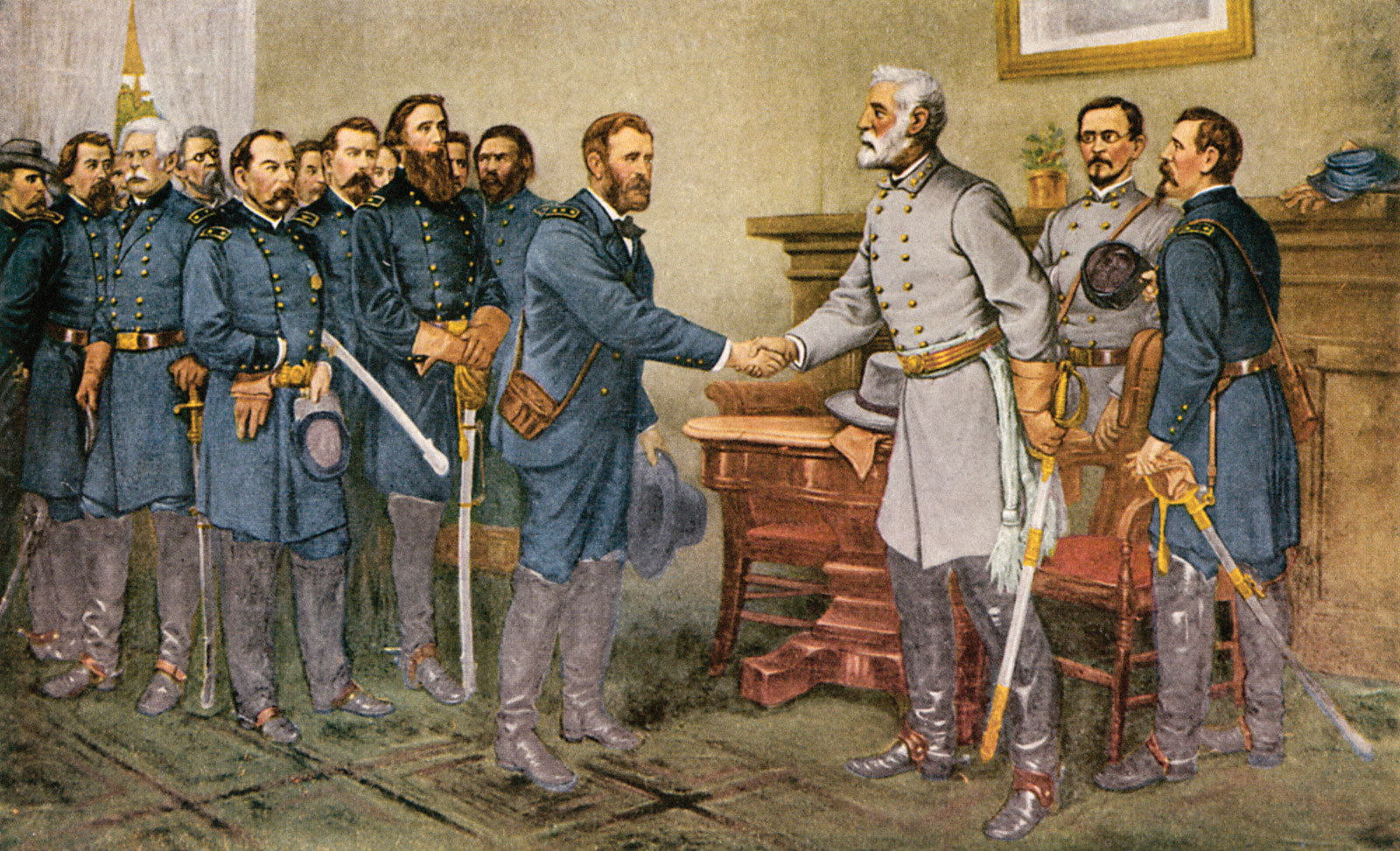
At dawn on April 9, 1865, there was a small battle near the village of Appomattox Court House, Virginia. The Second Corps of the Army of Northern Virginia, representing the Confederate States of America, attacked and forced back the United States of America’s Union lines. About 500 Confederate and 164 Union soldiers were killed or wounded in the skirmish.
But after reaching the crest of a ridge, Confederate soldiers saw thousands and thousands of Union troops lined up for battle. It was immediately clear to everybody present that the Confederates were doomed. The tattered and tired Army of Northern Virginia, with about 28,000 troops, faced about 100,000 well-rested and well-fed soldiers from the Union Armies of the Potomac, the James, and the Shenandoah.
General Robert E. Lee, commander of the Army of Northern Virginia, resigned himself to defeat. “Then there is nothing left for me to do but to go and see General Grant and I would rather die a thousand deaths.”
Lee sent word to General Ulysses S. Grant, commander of the Army of the Potomac, that he wished to meet to discuss surrender. They corresponded for some time, establishing a cease fire and choosing the Appomattox Court House home of Wilmer McLean as the location for their meeting.
Real-estate mogul Donald Trump (R) is now the presumptive Republican Party presidential nominee. Although Trump has yet to attain the necessary 1,237 delegates to the Republican National Convention, his last two opponents—Senator Ted Cruz (R-TX) and Governor John Kasich (R-OH)—suspended their campaigns after Trump’s landslide win in Tuesday’s Indiana primary.
The meteoric rise of Trump—a brash, center-left outsider with virtually no connection the Republican Party machine—has baffled political observers in the United States and abroad. His campaign has successfully tapped into widespread popular frustration both within and outside of the Republican Party, particularly revolving around illegal immigration and the economy. He has received more primary votes than any Republican candidate in history, a statistic partly driven by his ability to draw new voters into the primary process. Many Trump supporters had never voted in a presidential primary before.
Trump is the chairman and president of The Trump Organization, a ninety-three year old conglomerate with interests in—among other things—real estate, investing, and property management. It is composed of more than five hundred subsidiaries, the majority of which are named for Trump. The Trump Organization is based in New York City and employs about 22,000 people. It is owned entirely by the Trump family. Forbes Magazine estimates that Trump’s net worth is about $4.5 billion.
The Trump Organization also owns a television production company that produces The Apprentice for the National Broadcasting Company (NBC). Trump himself starred in the show from 2004 to 2015. It now stars former Governor Arnold Schwarzenegger (R-CA).
Scott Bradford is a writer and technologist who has been putting his opinions online since 1995. He believes in three inviolable human rights: life, liberty, and property. He is a Catholic Christian who worships the trinitarian God described in the Nicene Creed. Scott is a husband, nerd, pet lover, and AMC/Jeep enthusiast with a B.S. degree in public administration from George Mason University.
X
Site Information
Off on a Tangent Website 26.0 “Sarah”
Theme: 26.0.83
Plugin: 6.0.170
Scribentes veritatem ab anno Domini MCMXCV
(Writing the truth since A.D. 1995)
Official Time:
Keyboard Shortcuts
Just type these sequences on the keyboard, or enter them in the search bar!