The War on Terror Continues, Like It or Not

For many years, I have warned of the threat of Islamic terrorism and the need for strong measures to combat it. Obviously there are limits to what we should do; I have stood against the National Security Agency’s nationwide surveillance efforts and the Transportation Security Administration’s nude scanners and water-bottle-seizures, along with other policies that trample civil liberties without any significant positive effects. But, generally speaking, I support government action—domestically and internationally—to fight against the Jihadists.

Many Libertarians, along with their ‘small-l’ libertarian, paleo-conservative, and peacenik peers in both the Republican and Democratic Parties, believe that Islamic terrorism has its roots in western involvement in the middle east, and think that if we stopped interfering in their affairs they would leave us and the rest of the world alone. This is nonsense. To believe it, we would have to ignore the traditional Qur’anic teachings of Islam, the history of the religion’s spread throughout the world, and how modern Jihadists understand and act upon their faith.

For example, when Israel ended its occupation of the Gaza Strip, the Palestinians in Gaza put Hamas in charge and increased their terrorist and rocket attacks on Israel. When the United States and our allies pulled out of Iraq, the Islamic State of Iraq and Syria (ISIS) took control of large swaths of the country and went on a terrorist rampage, abducting and murdering western journalists, expelling Iraqi Christians from their homes, and calling for sympathizers in the west to attack and kill as many westerners as they can. If the peaceniks are right and all the Jihadists want is for us to leave them alone, well, they sure have a funny way of showing it. Every time the civilized world pulls back, they turn around and hit us harder.

While al-Qaeda preferred massive acts of terrorism like the September 11, 2001, suicide hijackings, other groups call for less spectacular actions at the grass-roots levels, and many individual Jihadists have planned and executed ‘lone wolf’ attacks on their own. Here are just a few notable examples:

Canadian Parliament Building Attacked

An armed man attacked the area surrounding the Canadian Parliament in Ottawa, Ontario, this morning. In the first stage of the attack, a man fired a shotgun at least twice at a ceremonial military guard at the National War Memorial, mortally wounding him. The guard was taken to a nearby hospital but succumbed to his injuries. Witnesses described the attacker as as short, long-haired man dressed in black with a mask or kerchief over part of his face.

The shooter then apparently hijacked a car, drove to the nearby Parliament Building, and stormed through an entrance reserved for members of the legislature. He fired at least two shots in the building’s main foyer before he was shot and killed by Kevin Vickers, the Sergeant-at-Arms of the House of Commons of Canada, along with other security officials. The Globe and Mail has released video from inside the Parliament Building that shows an attacker firing, and then security officials returning fire and killing him.

A hospital in Ottawa has received three patients with injuries related to the attacks, two of whom are listed in ‘serious’ condition, but no details have been made available.

Police officials earlier stated that another shooting had taken place near Rideau Centre, a shopping mall in the area, but it now appears that this attack did not happen. An Ottawa Police spokesperson also earlier confirmed that at least two or three shooters were involved with these attacks, but it now appears more likely that there was only one actual shooter. Police officials have, however, stated that they believe more than one person was ‘involved.’

Canadian Prime Minister Stephen Harper (Conservative) was evacuated immediately after the event began and was taken to a secure location. In addition, many government buildings, schools, and offices in the Ottawa city center went on lock-down. Local police officials instructed people nearby to lock their doors, pull their shades, turn off their lights, and stay away from windows. A spokesperson for North American Aerospace Defense Command (NORAD) announced that they increased their alert posture as a precaution, and that they kept in close contact with Canadian authorities throughout the event.

The Canadian government increased their terror alert level from ‘low’ to ‘medium’ last week, citing a worrying increase in terrorist chatter. On Monday, a Montreal-area Muslim Jihadist named Martin Rouleau killed one soldier and injured another by running them down with his car in a ‘lone wolf’ terror attack. Rouleau was later killed by police.

Update, October 22, 2014, 6:32 p.m.: Canadian officials have identified the deceased shooter as Michael Zehaf-Bibeau, a Canadian-born Muslim convert and Jihadist who is suspected of having ties to the Islamic State of Iraq and Syria (ISIS). Zehaf-Bibeau had recently had his passport seized, as had the perpetrator of Monday’s attack on two other Canadian soldiers, because Canadian authorities suspected that they intended to travel to Iraq or Syria to participate in the fighting there. The murdered soldier in today’s attack has been identified as Nathan Cirillo, a twenty-four year old military reservist.

U.S. Senate, Virginia, 2014

Seal of the U.S. Senate

In the race to represent the Commonwealth of Virginia in the United States Senate, incumbent Senator Mark Warner (D-VA) is challenged by Ed Gillespie (R) and Robert Sarvis (L). Warner was first elected to the Senate in 2008 and is serving his first term. He had previously served one term as Governor of the Commonwealth of Virginia.

Each of the fifty states have two seats in the Senate, for a total of one hundred seats. There is no representation, voting or non-voting, for U.S. territories or the District of Columbia. Senators serve six-year terms, and elections are held on a staggered schedule with roughly one-third of the Senate up for election every two years. This year, thirty-six seats are in contention.

The Democratic Party currently holds a 53-45 majority over the Republican Party in the Senate. Two seats are held by independents who caucus with the Democratic Party, giving the Democrats an effective 55-45 majority. Currently, both of Virginia’s Senate seats are held by Democrats.

U.S. House of Representatives, Virginia’s 10th District, 2014

Seal of the U.S. House of Representatives
Seal of the U.S. House

In the race to represent Virginia’s Tenth District in the United States House of Representatives, five candidates—Diane Blais (IG), Delegate Barbara Comstock (R-VA 34th), Brad Eickholt (I), Fairfax County Supervisor John Foust (D-Dranesville), and William ‘Bill’ Redpath (L)—are vying for an open seat. The Tenth District encompasses Clarke County, Frederick County, Loudoun County, the cities of Manassas and Winchester, and parts of Fairfax and Prince William counties. It is currently represented by seventeen-term Representative Frank Wolf (R-VA 10th), who was first elected in 1980 and is the longest serving congressional representative from Virginia. Wolf announced in December that he would retire at the end of this term.

All seats in the House of Representatives are up for election every two years. There are 435 seats, representing each of the fifty states proportional to their population as recorded in the most recent national census. There are an additional six non-voting delegate seats that represent U.S. territories and the District of Columbia.

The Republican Party currently holds a 233-199 majority over the Democratic Party in the House, and three seats are vacant. Virginia has eleven seats in the House, with eight held by Republicans and three held by Democrats.

Virginia and Loudoun Ballot Issues, 2014

Yes or No
Yes or No

Citizens of Virginia will be voting on one statewide ballot issue in this year’s general election, which would change and add text to the Constitution of the Commonwealth. The state constitution permits the state Senate or the House of Delegates to propose amendments, and, after having been approved by a majority vote in both houses, they are then presented to the people for approval. If a majority of voters vote ‘yes’ in the referendum, the state constitution is amended as specified.

Additionally, citizens of Loudoun County, Virginia, will be voting on three bond referendums in this year’s election. Virginia’s local governments are required to hold a referendum to get the voters’ permission to issue bonds on behalf of the city or county. Bonds are usually used by governments to raise money for large capital expenditures when particular projects cannot be funded through general funds and tax revenues.

Bonds are debt. When they are sold, the issuing government receives an immediate influx of cash from the purchasers. But, like a bank loan, all of that money must be repaid over time (plus interest). As such, bonds should be used sparingly, and only for large, unusual projects where funding them directly from the general fund is not possible.

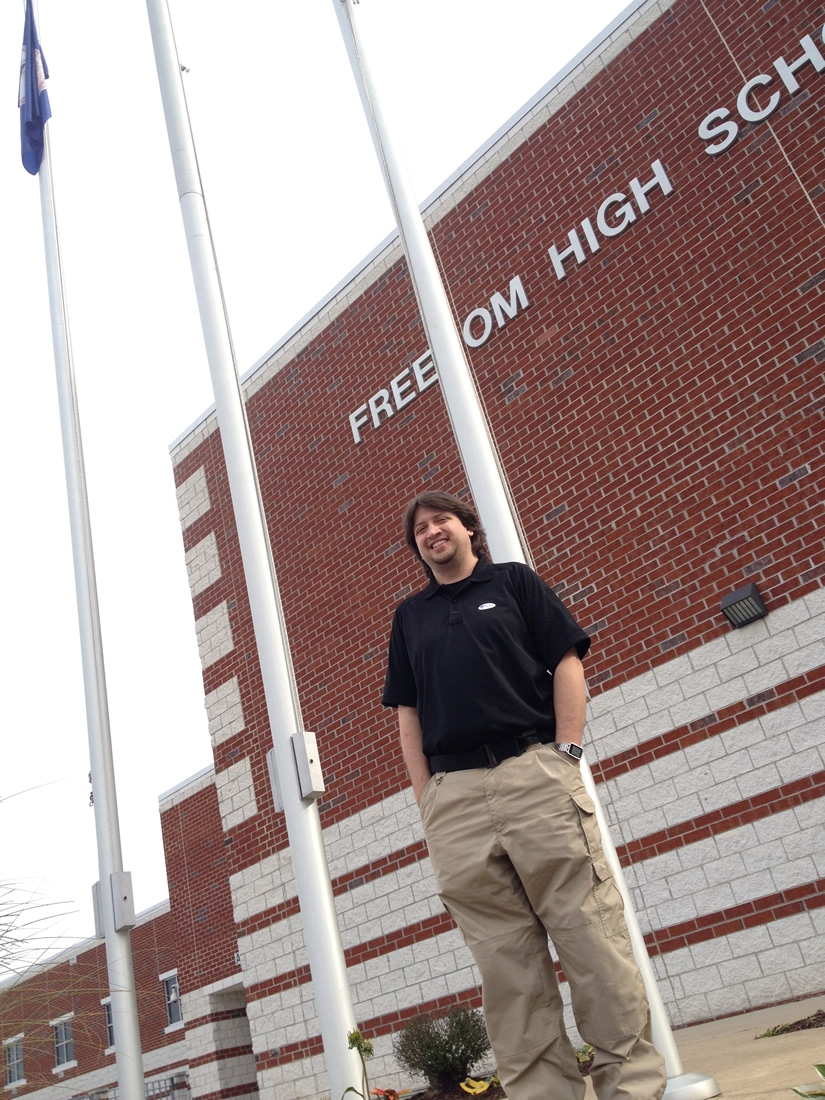
Scott Bradford is a writer and technologist who has been putting his opinions online since 1995. He believes in three inviolable human rights: life, liberty, and property. He is a Catholic Christian who worships the trinitarian God described in the Nicene Creed. Scott is a husband, nerd, pet lover, and AMC/Jeep enthusiast with a B.S. degree in public administration from George Mason University.