Some of the Dumbest Music Lawsuits

The music industry is rife with money, egos, and legal ambiguity, and it stands at the nexus between technology, business, and creativity. Every recording you hear on the radio has its ownership split a myriad of different ways. The song itself is typically owned by the songwriters who wrote it, while the recording of that song is owned by the performers who performed it, but one or the other (or both) have generally signed some or all of their rights away to one or more record companies.

And, of course, the companies are always merging, bands are always switching companies, people are joining and leaving bands, and all the big egos involved with all of this are always trying to push their rights to the limit for their own benefit. All of this makes for some of the dumbest lawsuits in history. Here are five of my favorites.

Rob Thomas Steals His Own Song

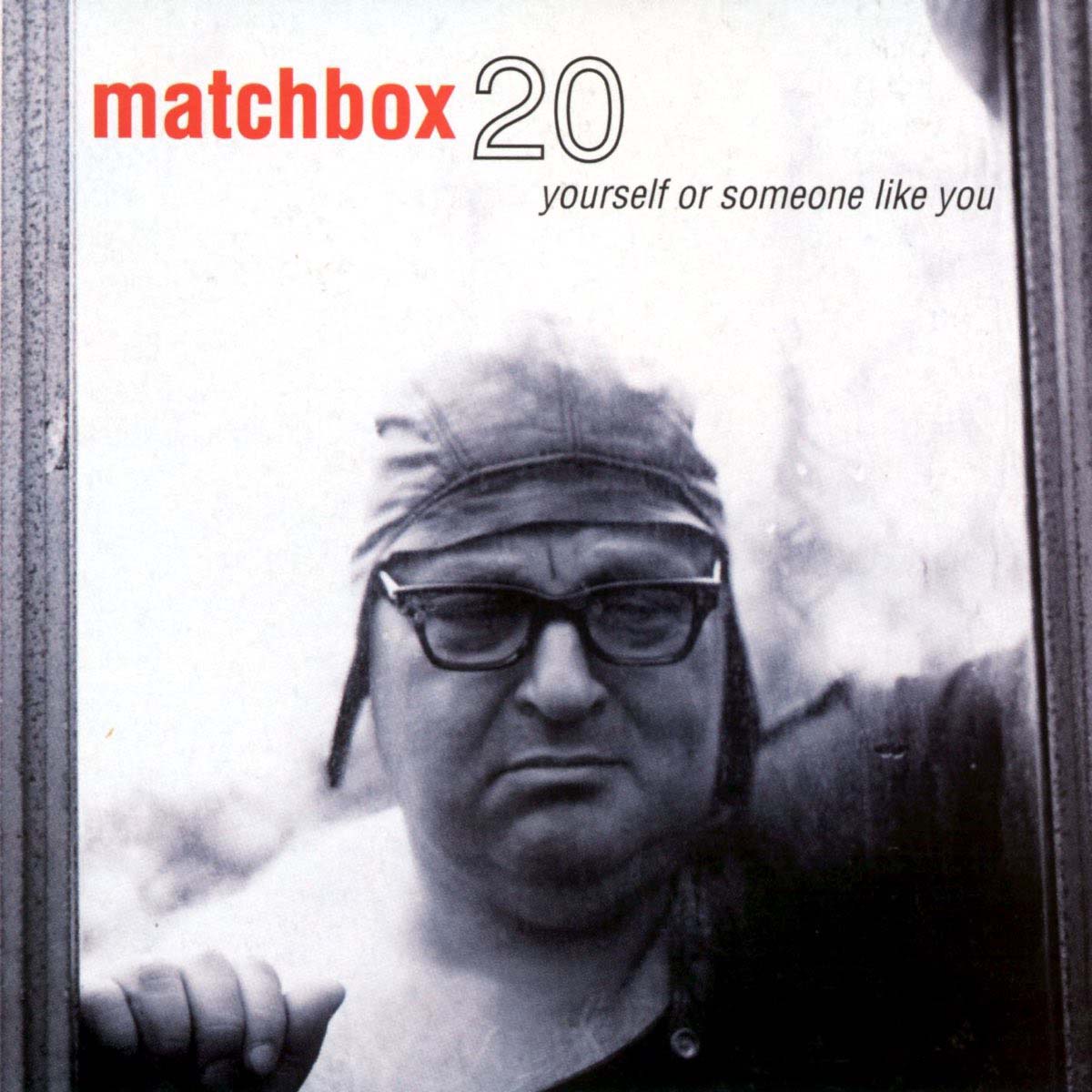
Yourself or Someone Like You

Before Rob Thomas rocketed to fame as the lead singer and songwriter behind Matchbox Twenty, he was part of an Orlando-based band called Tabitha’s Secret. One of the group’s best known tracks was called ‘3 a.m.,’ which was a Thomas composition about the frustration and loneliness he experienced when his mother was fighting life-threatening cancer. Needless to say, Thomas considered it to be a very, very personal song, and it is still a staple of his live performances today.

Tabitha’s Secret broke up when two of its members, Jay Stanley and John Goff, decided not to accept a record deal from Matt Serletic’s Melisma, a company associated with Atlantic Records. Rob Thomas and two of the band’s other members, Brian Yale and Paul Doucette, accepted the record deal and soon re-formed with two new members—Adam Gaynor and Kyle Cook. The new band was christened Matchbox Twenty and its debut album, Yourself or Someone Like You, went on to become one of the best selling albums of the 1990’s (and one of my personal favorites). One of the tracks on the new album was the aforementioned ‘3 a.m.,’ which Thomas re-recorded with his new band.

Breaking the Internet (and Liberty)

The Reichstag Fire (courtesy Wikimedia Commons)

On February 27, 1933, Marinus Van der Lubbe—an unemployed bricklayer from the Netherlands with Communist sympathies—set fire to the Reichstag (Parliament) Building in Berlin. Most likely, Van der Lubbe was working alone . . . but that didn’t stop Adolf Hitler and his Nazi Party cabinet from using the fire as an excuse to initiate a broad anti-Communist pogrom. Even before the Reichstag Building had been extinguished, Hitler had labeled the arson a “Communist outrage” and his underlings immediately kicked-off a series of arrests and assaults on well-known Communists and Communist sympathizers all around Germany.

Technically speaking, that initial roundup of Communists was an illegal violation of the Weimar Constitution, which was still in-force. Although Hitler was the un-elected Chancellor of Germany, the Reichstag was still a multi-party body in-which the Nazis only had thirty-two percent of the seats, and Germany was still a constitutional, democratic republic (not unlike our own). Hitler was strangely concerned with maintaining an appearance of legality as he tightened his grip on Germany so, the next day, he convinced President Paul von Hindenburg to sign the emergency Reichstag Fire Decree into law. Under Article 48 of the Weimar Constitution, this was perfectly legal. The decree wiped out almost all major German civil liberties and provided a legal basis for the ongoing suppression of the Nazis’ political opposition, all in the name of national security.

The decree read, in part, “It is therefore permissible to restrict the rights of personal freedom, freedom of opinion, including the freedom of the press, the freedom to organize and assemble, the privacy of postal, telegraphic and telephonic communications. Warrants for House searches, orders for confiscations as well as restrictions on property, are also permissible beyond the legal limits otherwise prescribed.” As you might imagine, it is a real ‘red flag’ when a government begins to trample peoples’ civil liberties without any due process. It doesn’t make it any better when that government comes back later (whether 24 hours or 24 weeks or 24 months) trying to retroactively legalize that trampling.

Check Out ‘Clear Weather’ for WebOS

I ended support for my No-Nonsense Weather application for HP WebOS back in August after Hewlett-Packard announced it was terminating WebOS device operations. It is, however, open-source so it had the potential to live on.

Well, I’m happy to report that Jonathan Dale has picked up development and the application will live on as Clear Weather. He has just released his first new version, 0.7.0, which takes my application, adds some bug fixes, and adds support for the TouchPad and Pre 3. It’s off to a great start.

So if you have a WebOS device, make sure to check it out!

Corruption on the Run?

People aren’t happy with our government right now. President Barack Obama’s (D) approval rating, starting at an impressive sixty-three percent on the first day of his presidency, has nose-dived into the low-forty percent range. Our split-party Congress has fared much, much worse with an approval rating hovering around twelve percent—probably the lowest in history. Almost three-quarters of Americans think our country is on the wrong track.

But there are some tentative signs that things might be changing. Political corruption, rampant in both our dominating political parties and one of the strongest drivers of this popular dissatisfaction, appears to be on the run.

The two popular protest movements of the last three years—the Tea Party and Occupy Wall Street—are polar opposites by some measures, but they share a strong aversion to political corruption and cronyism. At the Tea Party’s height, it defeated ‘insider’ candidates for Republican nominations across the country (with mixed results in the general elections). OWS is likely to have a similar impact on the Democratic Party’s 2012 Congressional nominations.

Additionally, corrupt politicians caught in scandals are not getting away with it the way they used to. Former Governor Rod Blagojevich (D-IL), who attempted to sell an appointment to Obama’s Senate seat after he was elected president, was convicted earlier this week and sentenced to 14 years in prison. It is no wonder that some cronies are seeing the writing on the wall and choosing not to stand for reelection in 2012 at all. In one telling example, Representative Barney Frank (D-MA 4th) announced last month that he will be retiring—perhaps cognizant of the fact that his constant efforts to protect sub-prime lenders Fannie Mae and Freddie Mac from outside scrutiny helped lead to our current economic crisis.

Announcing Website 23

I’m pleased to announce the launch of a new major revision to Off on a Tangent, bringing the site to version 23.0. As always with major revisions, there have been a lot of obvious and not-obvious changes. Here’s a review of the most important updates:

  • New Look: My major revisions always come with a new look, and this one is no different. I’ve added a chunkier banner and other visual refinements to the header, and darkened the overall palette quite a bit. The site is also tightened up width-wise. I’ve also added a ‘bio’ to the bottom of each page, so users coming in from search engines can get an idea of who I am. In addition I have tweaked the advertising placements in an effort to minimize their intrusiveness (without undercutting their effectiveness). Overall, Website 23.0 is intended to be a simple, straightforward, classy site that works well on traditional desktops and laptops, as well as on tablets and smartphones.
  • Home Page ‘Features’ Area: At the top of the home page, you’ll find a new ‘feature’ areas. At launch time, this area has three ‘focus areas’: politics, faith, and liberty. Each focus area has links to the five most recent Off on a Tangent posts on that subject. This area will be changed now-and-then to reflect the site’s areas of focus as they shift, and will occasionally be replaced entirely (especially around elections) with a dedicated special-coverage area.

Scott Bradford is a writer and technologist who has been putting his opinions online since 1995. He believes in three inviolable human rights: life, liberty, and property. He is a Catholic Christian who worships the trinitarian God described in the Nicene Creed. Scott is a husband, nerd, pet lover, and AMC/Jeep enthusiast with a B.S. degree in public administration from George Mason University.