Shakey Shakey

Quake Damage

So, I was in a meeting this afternoon in an interior conference room at the office. It was running a bit longer that I expected, and I was beginning to worry that it would run over into my next meeting. The next meeting was at 2pm, and it was past 1:50 already.

I don’t remember noticing the initial vibration of the earthquake. According to media reports, it began fairly gently for 10 or 15 seconds before spiking into the strongest Virginia earthquake in over a century. Our building carries vibrations from moving furniture and such pretty easily, and we are located very close to Washington Dulles International Airport and get a lot of plane noise and vibrations, so the whole first chunk of the quake didn’t attract any attention from me or any of the other people in the room.

Then it went crazy—a violent shake that was obviously either an earthquake or something else way out-of-the-ordinary. The meeting pretty much immediately disbanded.

Being in an interior room, I had little to go on to determine whether there had been an earthquake or, say, an explosion somewhere in the building. I asked some people from my cube-row if they had seen anything outside, and they told me that they had seen streetlights and other stuff outside shaking . . . clear confirmation that we had experienced a quake. Soon Facebook lit up with tons of other people reporting the same thing, people from all around the DC metro area and (surprising to me at the time) as far away as Roanoke and Altavista. In those first moments, I felt convinced that the quake was centered in the DC area because it shook violently. I’ve felt quakes in this area before, most of them centered near where this one was (northwest of Richmond), but they had all been positively gentle compared to this one . . . more like a truck driving by or a jet taking off. This one, once it really kicked-in, was more like a truck slamming into the building.

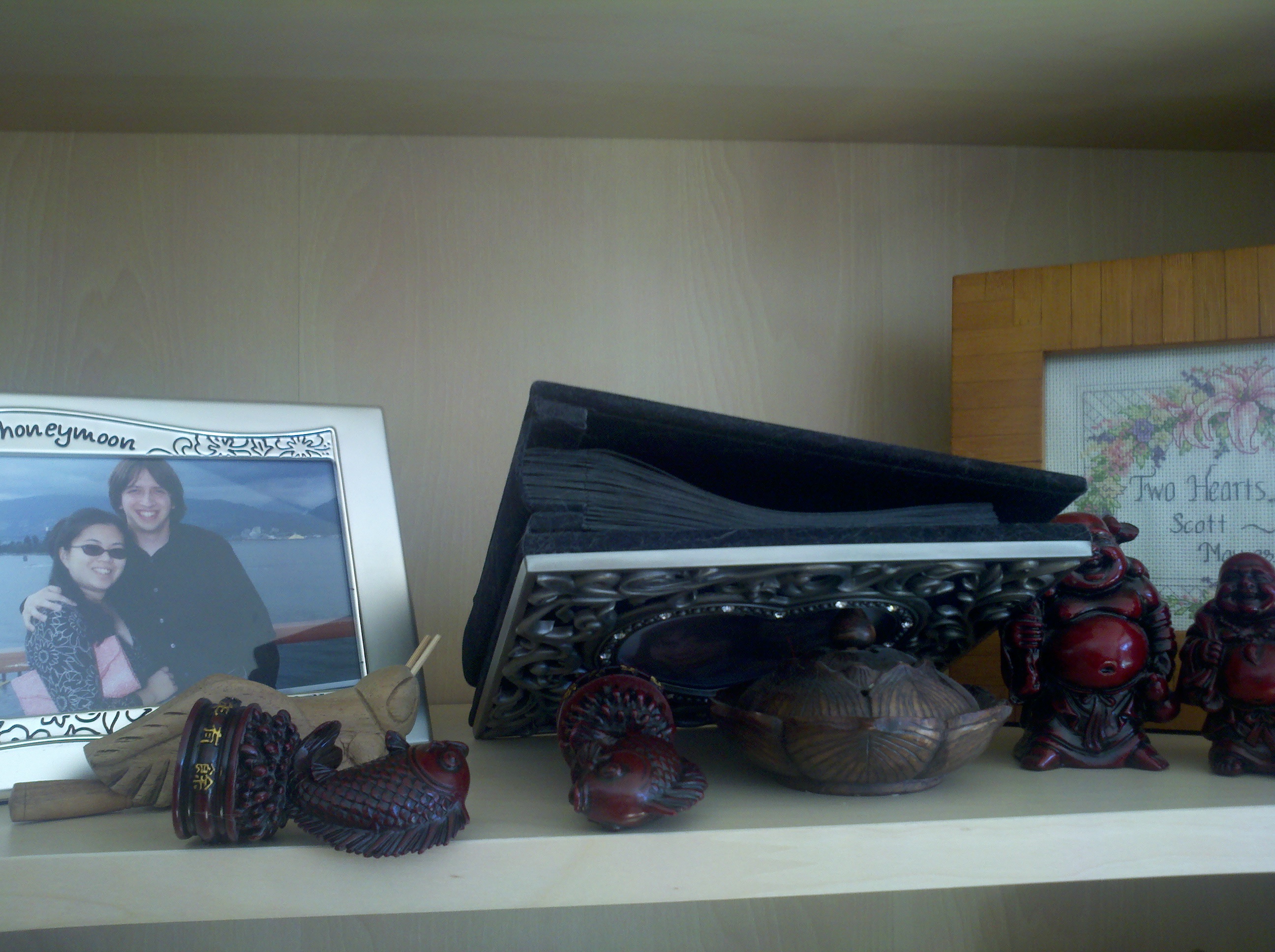
All-in-all, the quake wasn’t very serious. Californians are laughing at our unnecessarily over-the-top reaction of evacuating federal buildings and sending everybody home early. At my house, the full extent of the damage is captured in the photo above—a photo book fell over, taking a couple small fish figurines with it. The figurines didn’t even break. Most of the damage in the region was very minor, with a couple notable exceptions. There was an apparent partial wall collapse in Vienna and possible serious damage to the National Cathedral (Episcopal) in Washington, DC, where several pinnacles collapsed and cracks appeared in the structure of the building (this might end up being the big damage story). There are also reports of some serious damage to residential buildings closer to the epicenter.

To the Californians making fun of us: Don’t forget that your buildings were designed for this, and ours weren’t, and this happens to you all the time, and it hasn’t happened here in more than a century. Cut us some slack ;-). As for us here on the east coast, well, we had our unnecessary early dismissal today. Let’s get back to work!

Website 22.3 Revision

I’ve just launched a minor revision to the site, which brings the version to 22.3. You won’t notice much visually different in this revision, but I’ve made a ton of little changes, bug fixes, performance improvements, etc. Here are some of the things that have changed:

  • Static Site Improvements: The static site, located at http://static.scottbradford.us/, has seen a number of improvements. This site is where I do special live coverage, and it also serves as the ‘down for maintenance’ page. Most of the improvements relate to the live coverage functions, which you won’t see until the next time I do a live coverage event. Among the new features is a more dynamic, simple method for me to manage live events, and the ability to sort with newest-at-top or newest-at-bottom.
  • Bunches of Little Improvements: I’ve tweaked the home page Facebook box, made internal site links more reliable on the mobile site, and made the quotes paused/resumed state ‘sticky’ from page-to-page (and session-to-session). In addition, the holiday images respect your time zone (instead of being hard-coded to Eastern time), and the site is smarter about remembering holiday information during a session (rather than re-loading it on each page load). This will improve performance a bit.
  • Bunches of Bug Fixed: The title on the mobile site now links back to the home page like it’s supposed to, I’ve fixed the image overlay captions (which a recent WordPress update broke), improved the behavior of the quotes sidebar widget on short pages and prevented it from ever overlapping other sidebar content, and improved background/foreground performance in Chrome and Firefox (which each recently changed background JavaScript behavior).
All-in-all, lots and lots of little things all added together. Let me know if you notice any problems!

No-Nonsense Weather for WebOS Support Ends Aug. 31

No-Nonsense Weather

In light of Hewlett-Packard’s announcement that HP will be terminating its ‘WebOS device operations,’ combined with HP’s failure to release WebOS 2.x for my Pre Plus and a general ongoing pattern of mismanagement of the platform, I am terminating all support for No-Nonsense Weather for HP WebOS effective August 31, 2011.

On the evening of August 31, 2011, I will be removing the application from the WebOS App Catalog. If you want it on your WebOS device through the App Catalog channel, you will need download it before then.

I will leave the source code on the No-Nonsense Weather for HP WebOS page indefinitely. In accordance with the terms of the GNU-GPL 2.0 license, you are welcome to take the code and use it to make your own fork of the application. I only ask that you please give it a new name if you choose to fork it, in order to reduce customer confusion.

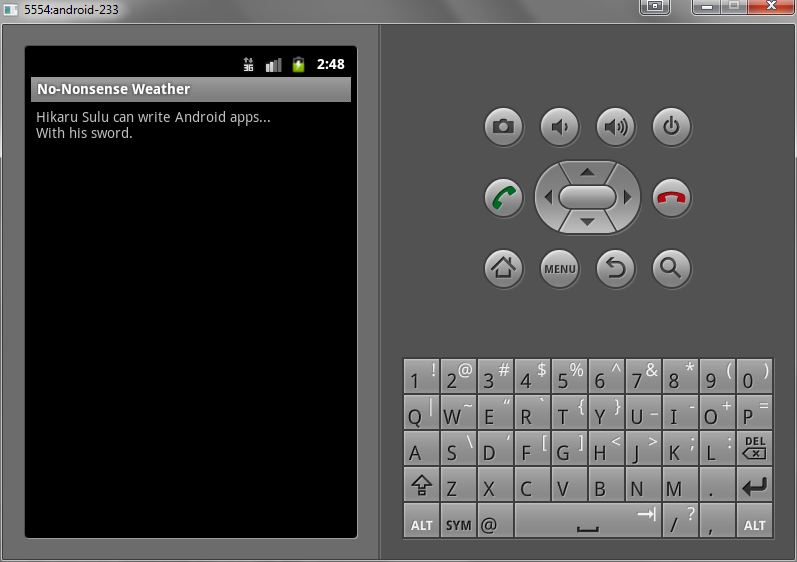
For those of you who are fellow WebOS exiles now on the Android platform, stay tuned. I am working on No-Nonsense Weather for Android. More information to follow. . . .

Palm is Dead . . . For Real

Palm Logo
Palm Logo

Just over one year ago, Palm—the mobile computing company known for the Palm Pilot and one of the original smartphones, the Treo—was absorbed by Hewlett-Packard (HP). I was a long-time Palm supporter, having owned a Palm OS-running Handspring Visor Pro, a Palm Treo 650 (my first smartphone), and later a WebOS-based Palm Pre Plus. Despite some of the most spectacular corporate mismanagement in technology history, Palm still managed to make some really excellent, innovative hardware and software over the years.

At the time of the HP buyout, I wrote a piece called Palm is Dead; Long Live Palm. I lamented the end of Palm as an independent company, but was cautiously optimistic about the future of the groundbreaking WebOS mobile operating system. WebOS was, and remains, the most user-friendly mobile operating system out there. Imagine Apple’s iOS without the stupid limitations; imagine Android without the interface kludginess. Not only that, but it was super-easy to develop for; you write applications for it in industry-standard web languages HTML, CSS, and JavaScript (with a handful of API extensions). I even wrote my own weather app.

HP had the money and infrastructure to make WebOS a success. Palm, as an independent company, was teetering on bankruptcy when the mediocre Pre smartphone came out. Palm managed to get the Pixi on the market, and then followed both with the nominally-updated Pre Plus and Pixi Plus. It was clear that Palm had cut some corners, but many of us saw the potential in the platform and embraced it anyway. Unfortunately, they were unable to get the broad adoption they needed—among either developers or users.

We’re Not Stupid

What is it about our economic crisis that has caused our leaders to think we’re idiots? This started in the crisis’s earliest days under President George W. Bush (R), Treasury Secretary Henry Paulson, and Fed. Chairman Ben Bernanke, but continued apace or accelerated under President Barack Obama (D), Treasury Secretary Tim Geithner, and Obama-reappointed Fed. Chairman Bernanke.

Paulson told us he desperately needed 700 billion dollars in bailout funds to buy up distressed mortgages under TARP, and then he and Bush used the money to buy banks and car companies instead (Constitution be damned). Bush presided over the largest federal intervention into the American economy since President Franklin D. Roosevelt’s (D) ‘New Deal’ and then, shortly thereafter, toured the world lecturing other countries not to interfere in the free market. Bernanke stood by, signing off on these monstrosities and encouraging massive deficit spending, before suddenly changing course and declaring that deficits were bad (I’m wondering which version of Bernanke was the one that Obama intended to reappoint . . . and how reappointing Bush’s Fed. Chairman constituted ‘change’ anyway).

Now Obama wants us to believe that his massive ‘stimulus’ spending programs, widely regarded as having had little-to-no impact on our economy except to accelerate our federal debt to crisis levels, reversed the recession until ‘bad luck’ intervened. You know, I can accept political spin. This isn’t spin. This is a lie.

An honorable, talented politician can admit when his policies have failed, and will seek to improve them—even to the point of making a 180-degree turnaround if the situation warrants it. This results in some short-term political harm, which is why it’s a good idea to implement sound policy in the first place, but most people respect somebody who can change his mind (provided it doesn’t have the appearance of ‘flip flopping’ for purposes of political expediency). The worst thing you can do when your policies have failed—particularly when they have failed as spectacularly as Obama’s economic policies have—is dig-in, lie about them, declare that they work, and continue them. It’s politically suicidal because, despite a fair amount of evidence to the contrary, the voters aren’t stupid.

If President Obama actually intends to try and win reelection, this is the wrong strategy. As he digs-in on failed Keynesian economic policies that are deepening and lengthening our economic malaise, he is reducing his chances exponentially by the week. If he holds out against reality until election day, his chances of reelection will have approached zero (barring an unlikely fringe nomination from the Republicans like Sarah Palin or Representative Michele Bachmann [R-MN 6th]). Claiming responsibility for a recovery we all know never happened, based entirely on inflation that the Fed. has artificially written off the books, is not the way to win an election . . . unless your constituents are morons.

Scott Bradford is a writer and technologist who has been putting his opinions online since 1995. He believes in three inviolable human rights: life, liberty, and property. He is a Catholic Christian who worships the trinitarian God described in the Nicene Creed. Scott is a husband, nerd, pet lover, and AMC/Jeep enthusiast with a B.S. degree in public administration from George Mason University.