
Distrusting the ‘Cloud’

The trend in technology right now is to move everything into the ‘cloud.’ What this means is, for example, companies are using Internet software hosted by others (like Google’s Gmail email system) to replace traditional products they used to run themselves in their offices (like Microsoft’s Exchange email server). It’s also increasingly the trend for personal information—people are storing all their data in Facebook instead of on their computers themselves.

I don’t like the cloud. I don’t like it for business purposes, and I don’t like it for my own personal purposes either. I don’t like it because, when you rely on the ‘cloud,’ you are relying on the people and systems that run the cloud and hoping (praying?) that they care half as much about your data as you do. If a company uses Google’s email and documents systems to conduct their business, the company grinds completely to a halt when their Internet access (or Google’s servers) go down, and the company can do nothing to fix it except wait.

Users of the Danger Hiptop—generally known as the T-Mobile Sidekick in the United States—are learning this now. Their phones stored their data up in the ‘cloud’ on servers run by Microsoft, which bought Danger and their Hiptop business a few years back. The server crashed hard, and there apparently weren’t any usable backups. Sidekick users have simply lost their information.

I use the ‘cloud’ for some things. This site, for example, is hosted by Dotster (as is my main email account). But I rely on the cloud only as far as I have to, and my desktop email clients regularly sync my messages to my hard drive and I regularly back up my site database into my machines as well. I am a stickler for backups—I have an external hard drive and a server with a RAID array, both of which contain full backups of my important data, and I also have a periodic off-site backup procedure in place. I know where my data is, I know how it’s backed up, and if I lose anything I have nobody to blame but myself.

I don’t trust Google, Microsoft, or anybody else to store and back up my data with anything close to the diligence I use, so I generally avoid using the cloud for anything important. Even when I have to use the cloud (my employer now uses Gmail), I do everything I can to make sure I have my own backups to use when the cloud goes down. This has made me a minor hero once or twice when Gmail goes down and I’m the only one who can pull up an email we desperately need from my local archive.
Various Little Adjustments

I spent a bit of time this evening making a handful of small, mostly administrative updates to the site that I’ve been stewing on for a few weeks:

  • I finally added our new shotgun to the Firearms page; I totally slacked on this for the last month.
  • All site policies and rules have been brought together on one new Policies & Rules page.
  • I’ve added a new Technology page under About the Site to highlight all the products and tools that go into making this site work. Most people won’t find this too interesting, but a few might.
  • I’ve promoted the old Web & Software page to the main menu, re-named it Software, and set it up to be able to support any new software projects I might take on.

Nothing too earth-shattering for now. Enjoy!

Share to:

Send to:

Fairfax Sewer County

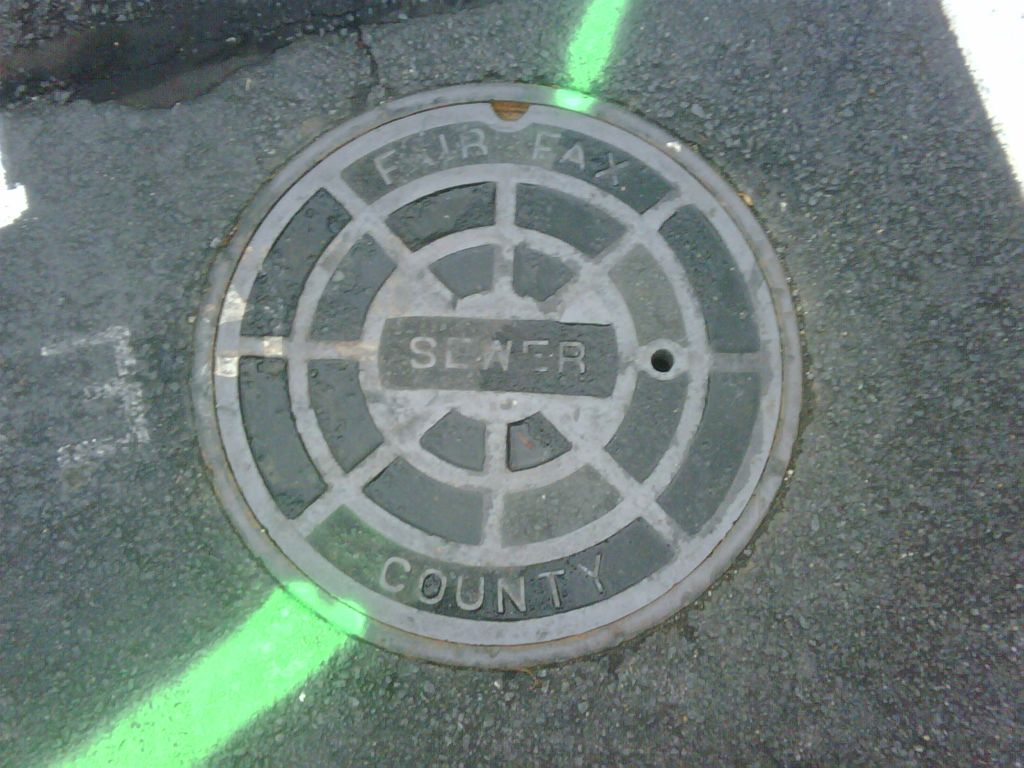
sewercountyI’ve lived in Fairfax County, Virginia, for much of my life—about 18 years of it now, believe it or not, in three different stints. I have always hated the Fairfax County Sewer manhole covers. They’re intended to say “Fairfax County” around the outside and “Sewer” in the middle. Well, maybe there’s something wrong with me, but every time I’ve seen one of these—as a child, as a teen, and now as an adult—I instinctively read it as “Fairfax Sewer County.”

Not exactly the message they’re trying to get across.

There are obviously much more important things for Fairfax County to worry about, but really guys, come up with a clearer label for your manhole covers. How about putting “Fairfax County” together as a phrase on the top and then upside-down on the bottom so it can be read from almost any angle. Or, maybe we should just not put the county’s name. We know we’re in Fairfax County, so it really just needs to say “Sewer.”

Just a thought.

Privatize the Postal Service

Article 1, Section 8, Clause 7 of the United States Constitution states that “[The Congress shall have Power] To establish Post Offices and post Roads.” This is the foundation of the United States Postal Service (USPS), one of the few things our government does with valid Constitutional authority.

The idea behind the Postal Service was to provide a reliable, inexpensive way for the people, businesses, and government of the United States to communicate with one another and ‘grease the wheels’ of our society and economy. In the 1780s when the document was written, there were no telegraphs, telephones, Internets, or Twitters to use for our intercommunication. Mail was it. Needless to say, times have changed.

We don’t necessarily need a Postal Service today—especially not one with a federally enforced monopoly on the transmission of letters. The text of the Constitution does not require the government to operate a Postal Service, it merely gives them the authority to establish one if they choose. It’s time to disband the federal Postal Service by privatizing it and ending its monopoly on letter carriage. It’s time to allow FedEx and UPS to compete directly with, or even purchase, the existing USPS entity and its infrastructure.

John Potter, current Postmaster General, knows that things have to change at USPS. He doesn’t, however, talk about privatization. He defends the existence of the Postal Service, but apparently doesn’t concede that its time as a federally protected monopoly should be coming to an end. There will probably always be a need for mail—especially package delivery, though letter delivery has its increasingly-limited place too. There is not a need, however, for a government-established mail monopoly in the United States anymore. Congress should end the monopoly and privatize the agency with one simple regulation: the USPS and any other business that chooses to engage in private mail delivery across state lines must offer delivery to all residences and businesses in the United States, just like the current Postal Service does.

Moose on the Roof

Yeah, I know, I haven’t been super great about regular posting this week. It’s the end of the summer, the weather is turning, and . . . well it’s a bit of a slow news week. Between the slow news week, my comparative lack of motivation, and my bit of writers’ block . . . well I just don’t really haven’t had much to write about.

This, too, shall pass.

I did want to take a couple of minutes today to acknowledge my slackerdom and, most importantly, call your attention to the most important news story of the week: The Moose on the Roof.

Enjoy!

Scott Bradford is a writer and technologist who has been putting his opinions online since 1995. He believes in three inviolable human rights: life, liberty, and property. He is a Catholic Christian who worships the trinitarian God described in the Nicene Creed. Scott is a husband, nerd, pet lover, and AMC/Jeep enthusiast with a B.S. degree in public administration from George Mason University.