
Fairfax County Bond Referendum, 2009

Introduction

Virginia county governments are required to put bond issuance to a voter referendum in order to borrow money on behalf of the county. Bond issuance is usually used by governments to raise money for large capital expenditures, and those bonds are repaid to their purchasers at a later date with interest. Bond referendums in Fairfax County historically pass by a large margin, in large part because people think they are voting in favor of the agencies that will benefit. After all, who wants to vote ‘against’ schools, parks, or transportation? Many voters do not realize that bond issuance contributes to government debt and should be used sparingly.

Fairfax County School Bonds

Citizens of Fairfax County will be asked through a bond referendum to authorize the Board of Supervisors to borrow up to $232.6 million to fund Fairfax County Public Schools (FCPS). This money, in addition to bonds previously issued and other funding, will be used for building new schools and improving existing ones.

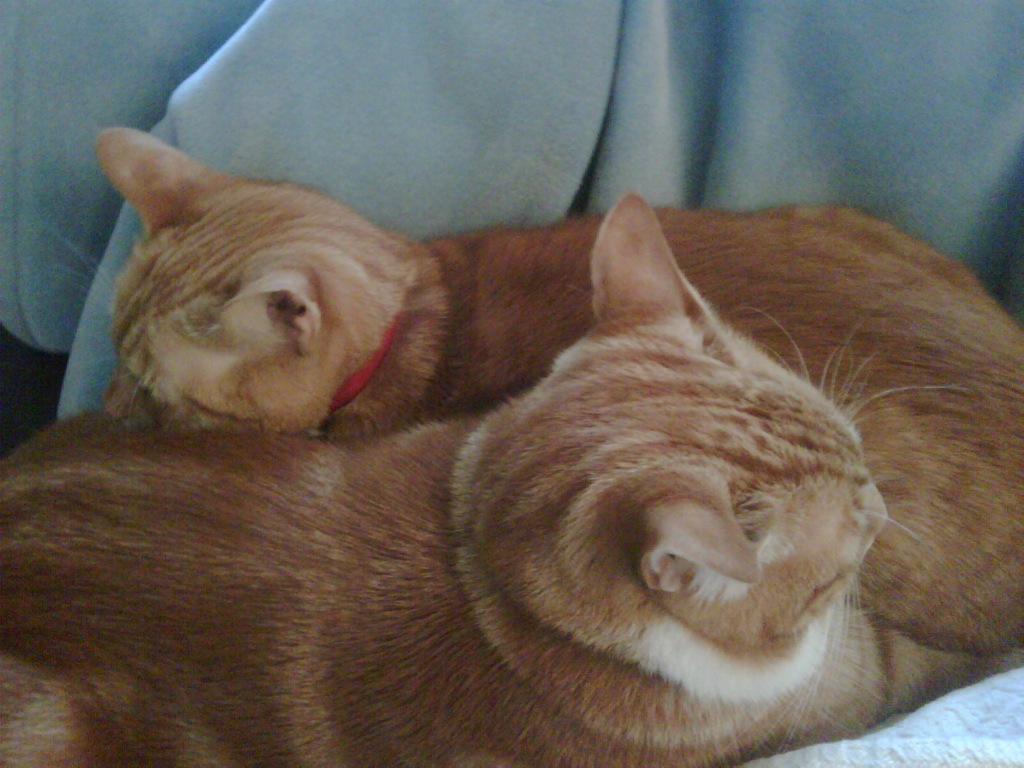
More Animal Pictures

Haven’t had much time for writing (and what little I have is going into my 2009 endorsements), so here are some more random pictures of animals. Today I have two of our cats cuddling and/or cleaning each other, one of a small frog, and one of a leaf with legs.

The frog is my favorite. Unfortunately the picture doesn’t show it very well, but that’s actually a vertical column at our church with the frog sitting on it. He’s about six or seven feet up, which is why the shot is from below :-).

Time for Metro Board Accountability (Updated)

It is time for the Metro Board of Directors to be held accountable.

Currently, the unelected Board apparently answers to nobody. It is unclear exactly how its members are selected and how they can be removed. The public has no impact on their decisions and, because it’s not clear who picks the members, the public doesn’t really know who to complain to when the Board does something that we disagree with.

For example, the Metro Board today extended General Manager John Catoe’s contract for another three years. Catoe took over in 2006 and, as far as I can tell, has done absolutely nothing to stop the system’s precipitous slide. During his tenure, he continued his predecessor’s policy of ignoring NTSB recommendations and putting passenger safety at risk. Even though he came to Washington from the Los Angeles transit system, southern neighbor of San Francisco’s BART system (which has had a real fail-safe train detection system for decades), Catoe never thought of putting one in place here. He even had the audacity to claim that no such system existed.

In my humble opinion, Catoe and the Metro Board have blood on their hands because of their failure to take basic, common sense steps to protect riders before the deadly MetroRail collision in June. Don’t think it’s all that bad? Read up on what’s been going on.

Bottom line: Catoe and the Metro Board are completely out of touch with the taxpayers and Metro riders. It is time for new leadership.

CORRECTION 9/30/2009: This piece originally stated that John Catoe came to Washington from the San Francisco BART system. Catoe, however, came to Washington from the Los Angeles County Metropolitan Transportation Authority. I have corrected the error. Thank you to Brett Tyler of the Washington Metropolitan Area Transit Authority for calling this error to my attention.

2009 Endorsements and Election Plans

As many of my readers are surely aware, I make political endorsements in every election in which I am eligible to vote, from little school board elections all the way up to presidential elections. In Virginia, we have elections every single November for local, state, and/or federal offices. I traditionally make my endorsements some time in the latter half of September, just over a month before the election.

2009 is no different. I am working this week on researching the candidates and making endorsements for Governor of Virginia, Lieutenant Governor of Virginia, Attorney General of Virginia, the 86th District of the Virginia House of Delegates, and a Fairfax County bond referendum. I am expecting to begin publishing them early next week.

Also, as I have done since 2004, I am planning to cover election night with live results in all of my endorsed elections. I suspect that all eyes will be on Virginia and New Jersey, the only states with gubernatorial elections this year, so be sure to check here for the real deal on Virginia’s results. I make calls based on my own method—an independent analysis of media reports, exit polling, and official returns. I have been known to occasionally call an election [correctly] before any mainstream media outlet does, if the data supports the call.

Most notably (and the one I’m really proud of), I called the 2004 Presidential election for George W. Bush (R) literally hours before any of the major media outlets did based on my own analysis of Ohio’s return data that turned out to be correct.

NTSB Makes Six [More] Urgent Metro Recommendations

The National Transportation Safety Board (NTSB) has made nine recommendations to the Washington Metropolitan Area Transit Authority (WMATA, ‘Metro’), six of them considered ‘urgent’, in the aftermath of the June collision that killed nine.

The recommendations relate to the automatic train detection systems that were not properly designed and do not include any redundancy whatsoever. The NTSB has not yet officially identified the cause of the deadly collision, but it is believed to be related to a single failure in the Automatic Train Control (ATC)/Automatic Train Protection (ATP) systems. First-year engineering students are generally aware that it is a dangerous practice to design ‘fail safe’ safety systems without an independent backup system, and other rail systems similar to Metro (such as the San Francisco BART system) implemented redundant backups decades ago.

Metro has a history of blithely ignoring urgent NTSB recommendations, so I have no reason to believe that these new recommendations will be followed promptly by our wayward transit system. Following a collision in 2004 (which, thankfully, resulted in no deaths) the NTSB recommended that Metro remove its older ‘1000 series’ trains from service because they did not hold up well in accidents. Metro failed to do so. There is a good chance that, had Metro appropriately followed NTSB recommendations, the June collision would not have been so severe. All of those killed had been riding in a ‘1000 series’ car that should not have still been in service.

Scott Bradford is a writer and technologist who has been putting his opinions online since 1995. He believes in three inviolable human rights: life, liberty, and property. He is a Catholic Christian who worships the trinitarian God described in the Nicene Creed. Scott is a husband, nerd, pet lover, and AMC/Jeep enthusiast with a B.S. degree in public administration from George Mason University.