
Shall Not Be Infringed . . .

There are times when a victory can be nearly as disheartening as a defeat. I felt this way in May when the United Methodist Church’s General Conference voted to uphold the status quo—with which I generally agree—in regard to the church’s stance on homosexuality. My ‘side’, if you can call it that, won. But it concerned me greatly (and still does) that, on an issue about which the Biblical teaching is crystal clear, 45 percent of the delegates at the conference voted to change the text to something ambiguous that made no moral statement whatsoever.

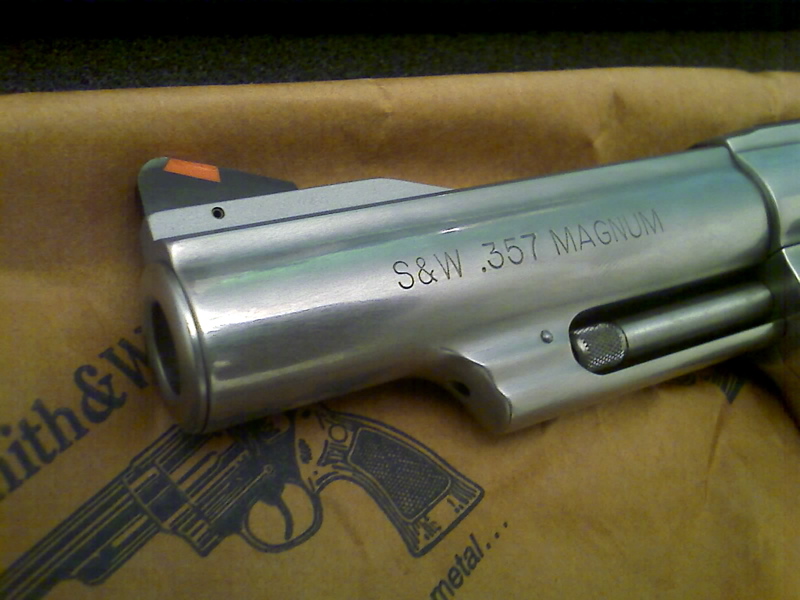
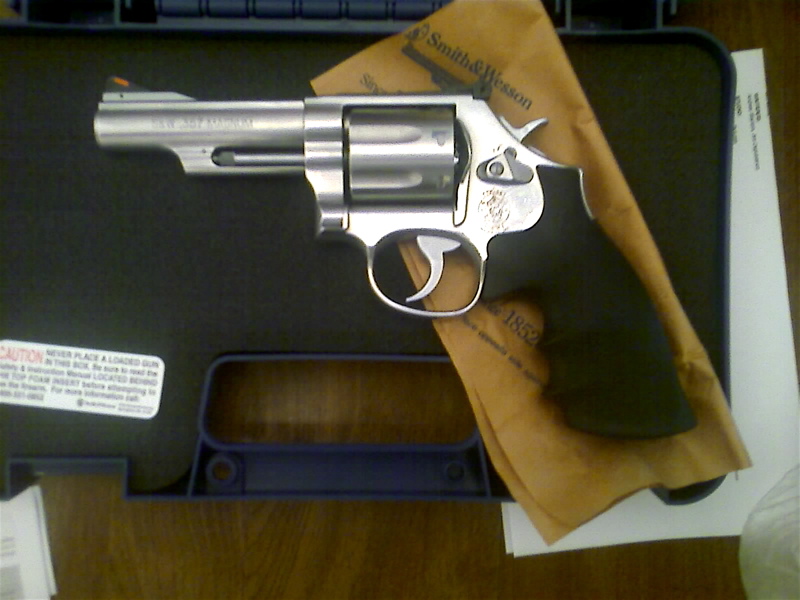
I feel very similarly about the recent U.S. Supreme Court ruling in District of Columbia v. Heller upholding the right to keep and bear arms. While I don’t think the ruling went quite far enough and it leaves many forms of gun control I consider unconstitutional intact, I generally agree with the sentiments of the decision and think it is a definite, concrete step in the right direction. What concerns me is not the actual outcome, but rather—like the UMC decision on homosexuality—how close we came to losing. Only five of the nine justices (about 56 percent) interpreted the words “the right of the people to keep and bear Arms, shall not be infringed” to mean . . . well . . . ”the right of the people to keep and bear Arms, shall not be infringed.”

Supreme Court Strikes Down DC Gun Ban

The U.S. Supreme Court has issued a ruling upholding the individual right to bear arms under the Second Amendment to the U.S. Constitution, striking down the Washington, DC, handgun ban that has been in effect since 1976 and potentially affecting other such bans across the country.

The Court stated unequivocally in its 5-4 ruling that the Second Amendment guarantees individuals, not just a formal militia, the right to own weapons and use them for self defense in the home and for other legal purposes. The court did not, however, find the right to bear arms to be unlimited. States and jurisdictions are still permitted to regulate gun sales, to limit the carrying of concealed weapons, to require licensing or other legal restriction on ownership of firearms, to prohibit carrying weapons in sensitive buildings like schools and courthouses, and limit gun ownership by felons and the mentally retarded.

From the ruling:

Undoubtedly some think that the Second Amendment is outmoded in a society where our standing army is the pride of our Nation, where well-trained police forces provide personal security, and where gun violence is a serious problem. That is perhaps debatable, but what is not debatable is that it is not the role of this Court to pronounce the Second Amendment extinct.

Read on for additional excerpts from the text of the ruling (PDF link).

Expanding Usage of the V-Chip

Driving home from work yesterday, I ended up behind a truck with a large, bright, orange label attached to the back stating “THIS TRAILER MONITORED BY V CHIP TECHNOLOGY.” This struck me as odd, since the V-Chip is the name of the parental control technology included by law in all televisions manufactured since 2000. The V-Chip, which was introduced along side all those stupid TV ratings (e.g., TV-MA), allows parents to censor what their children see—you know, since the best way to prepare children for the harsh realities of life is to shelter them from those realities.

Regardless, the federally-mandated V-Chip included in every TV since 2000 is rarely used, since most parents don’t know it exists and those who do either don’t understand how to use it or don’t want to. Perhaps, in an effort to put all that tax money to better use, the federal government is going to be mandating that V-Chips be added to trucks. The chip will prevent those trucks from driving down any highways that include offensive billboards or suggestive lane markings, filter bad language from the CB radio, and prevent drivers from listening to Paul McCartney or looking at Janet Jackson’s nipple.

Symbian (Mobile) Support Added

My U.S. readers have probably never heard of Symbian, which is a smartphone operating system that dominates the mobile phone market pretty much everywhere but here. With today’s news that Nokia has purchased the remaining 52 percent of Symbian it didn’t already own (with the stated intent of making the OS an open-source product), I figured it was about time to give Symbian users some love.

With some minor adjustments, I am initiating official Off on a Tangent support for Symbian mobile phones today—whether they use the S60 or UIQ interface systems. The WebKit-based S60 browser has full ‘hi-fi’ support (see ‘zoomed’ image at right), while the Opera Mobile-based UIQ browser currently has only ‘low-fi’ support. I am expecting to move UIQ support up to ‘hi-fi’ after Opera Mobile 9.5 rolls out. Symbian joins Windows Mobile, Palm OS, Blackberry, Apple iPhone, and the Android betas as supported and tested mobile platforms that work well with this site.

As an aside, I’m very excited about the direction of the smartphone industry lately. Apple’s iPhone seems to have kicked the other companies in the butt, and we’re just now starting to see some real improvement and innovation in a field that—frankly—completely sucked only a year or two ago. Soon we’ll have at least two solid, open source smartphone operating systems (Symbian and various flavors of Linux) competing with Apple and Microsoft for your handsets, and that’s very good for us consumers!

Study: 70mph [Is As] Safe As 65

I have long contended that most speed limits, at least in my home state of Virginia, are set too low (which is part of why I oppose speed cameras). I’m a big believer in laws and other government regulations saying what they mean and meaning what they say. Speed limits are supposed to be the absolute maximum speed at which a car can travel safely on a road (even if individual vehicles or current conditions require slower travel in some cases). States should set the limits at the maximum safe value (on an open, rural freeway that’s in the area of 75 or 80 miles-per-hour) and then ticket people for breaking that limit by even 1 miles-per-hour. None of this 5-10 miles-per-hour ‘buffer zone’ junk.

One of the fastest rejoinders of the slowpokes is that higher speed limits result in more, and more severe, accidents. I have never felt right about that claim, and more and more studies are starting to show I’m right (though, admittedly, a fair number of studies show the opposite). At minimum, the evidence is very weak for a direct correlation between speed limits and accident volume or severity—and even if there is a correlation, it would likely be mitigated or eliminated if we were more cautious about who we issued driver’s licenses to (e.g., requiring demonstration of solid driving skill before giving license to drive).

In reality, most drivers drive at a reasonably safe speed. Only 10 or 20 percent of drivers, in my humble opinion, drive dangerously fast, and it turns out that many traffic engineers agree! The general rule in-practice (on paper) in the U.S. is that speed limits are to be set at the 85th percentile—meaning the departments of transportation should measure the speed of drivers on the road and set the speed limit high enough that only 15 percent of them would be breaking it. Speed limits in the U.S., however, average about 8-12 miles-per-hour lower than the appropriate 85th percentile speed. Either the DOTs in this country have really, really bad math skills, or they’re not really using the 85th percentile rule.

Scott Bradford is a writer and technologist who has been putting his opinions online since 1995. He believes in three inviolable human rights: life, liberty, and property. He is a Catholic Christian who worships the trinitarian God described in the Nicene Creed. Scott is a husband, nerd, pet lover, and AMC/Jeep enthusiast with a B.S. degree in public administration from George Mason University.