U.S. House, VA-10th District, 2016

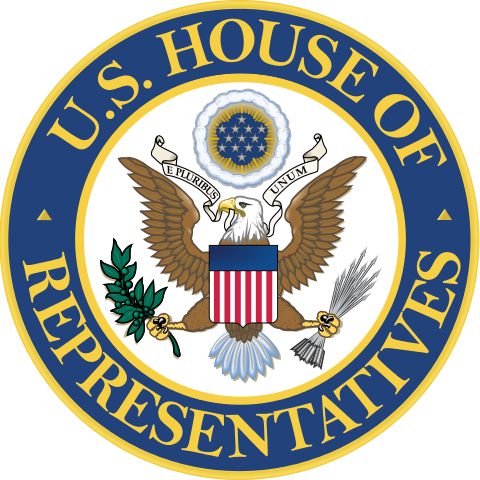
Seal of the U.S. House of Representatives
Seal of the U.S. House

In the race to represent Virginia’s Tenth District in the United States House of Representatives, incumbent Representative Barbara Comstock (R-VA 10th) is seeking reelection and is challenged by LuAnn Bennett (D).

The Tenth District encompasses Clarke County, Frederick County, Loudoun County, the cities of Manassas and Winchester, and parts of Fairfax and Prince William counties. Comstock was first elected in 2014 and is nearing the end of her first term.

All seats in the House of Representatives are up for election every two years. There are 435 seats, representing each of the fifty states in rough proportion to their population as recorded in the most recent national census. There are an additional six non-voting delegate seats representing U.S. territories and the District of Columbia.

The Republican Party currently holds a 247-186 majority over the Democratic Party in the House, and two seats are vacant. Virginia has eleven seats in the House, with eight held by Republicans and three held by Democrats.

Virginia Statewide Ballot Issues, 2016

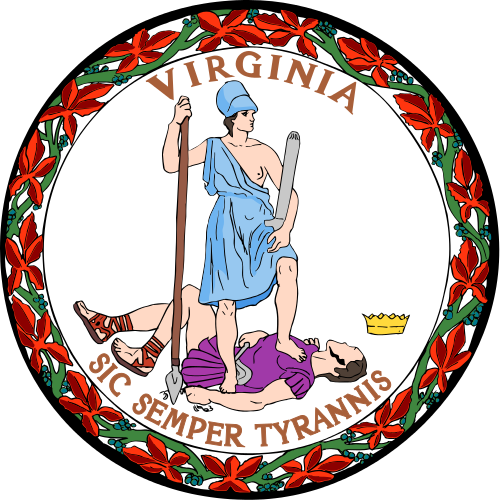
Seal of Virginia
Seal of Virginia

Article XII, Section 1, of the Constitution of Virginia establishes a process for amending the constitution. The state Senate or the House of Delegates proposes amendments and, after having been passed through both houses, they are then presented to the voters for approval. Once approved by the voters, the state constitution is amended as specified, and that change can only be reversed by repeating the amendment process.

Citizens of Virginia will be voting on two constitutional amendments in this year’s November election, each of which would change or add text to the Constitution of Virginia.

Worker Rights

The Code of Virginia includes a number of protections for workers, including a prohibition against employers denying employment to nonunion workers or compelling employee membership in labor unions, and restrictions against the establishment of abusive union monopolies. These restrictions, commonly (but incorrectly) called ‘Right to Work’ laws, are in-place in twenty-six states.

Loudoun County Bond Referendums, 2016

Seal of Loudoun County

Article VII, Section 10, of the Constitution of the Commonwealth of Virginia requires local governments to obtain voter approval to issue bonds. Voters in Loudoun County, Virginia, will be asked to consider four bond referendums on this year’s November ballot.

Bonds are debt. When they are sold, the issuing government receives an immediate influx of cash from the purchasers. But, like a bank loan, all of that money must be repaid over time (plus interest). As such, bonds should be used sparingly, and only for large, unusual projects where funding them directly from the general fund is not possible.

Parks and Recreation Projects

Voters in Loudoun County, Virginia, will be asked in a referendum to authorize the county to issue up to $76,115,000 in general obligation bonds for parks and recreation projects. These would be used to finance the construction of a community center in Ashburn, a park in the Blue Ridge District, and “other public park, recreational, and community center facilities.”

Meeting “Weird Al” (Briefly)

Meeting "Weird Al"
Meeting “Weird Al”

I met “Weird Al” Yankovic last Sunday.

My sister, Kristen, invited Melissa and me to join her at his “Mandatory World Tour” performance at Wolf Trap National Park for the Performing Arts in Vienna, Virginia. Our VIP tickets included seating close to the stage, a gift bag, admission to a pre-show party, and—best of all—a chance to meet the man himself.

If you have never been to a “Weird Al” concert, I suggest you remedy that as soon as possible. He and his band put on an amazing and hilarious show. They perform his most well-known parody songs, always perfectly capturing the sound and style of the original, while going through constant costume changes and interacting with props (and the audience). During breaks for costume changes, video clips of “Weird Al’s” weirdest stuff—television and film cameos, clips from his own shows and videos, and more—plays on the screen.

He also puts a few interesting twists on his songs now and then, most notably in an acoustic set near the concert’s mid-point. That’s why, when I met him, I suggested that he do a live album. His response, without missing a beat, was something like this: “We’ve done a couple of live DVD’s, and if you look away from the TV that’s just like a live album!”

Indeed.

2016 Presidential Bill of Rights Scores

In August, I proposed a system of scoring political candidates (and especially presidential candidates) according to their level of support for the specific provisions of the Bill of Rights. Now that the list of Virginia presidential candidates is set, I have reviewed each of them according to that system and assigned scores.

The details of the scoring methodology are not repeated here. If you are interested in a more detailed treatment of the score components, you can refer back to that original post. You can also take a look below the chart for some notes that explain some of the scores, especially those that are based on assumptions rather than explicit statements by the candidates.

It is possible that these scores will need to be adjusted as the election season goes forward based on new candidate positions and statements. If that happens, the post will be labeled with a ‘last modified’ date and a description of the changes will be added at the end of the post.

As I noted on the original post, the only good/acceptable score is an A+ (100%). Because the President of the United States is sworn to protect and defend the constitution, he or she must comply with every single one of its provisions. Scores of A and B (80-99%) are bad. Scores of C and D (60-79%) are really bad. Scores of F (0-59%) are really, really bad.

Scott Bradford is a writer and technologist who has been putting his opinions online since 1995. He believes in three inviolable human rights: life, liberty, and property. He is a Catholic Christian who worships the trinitarian God described in the Nicene Creed. Scott is a husband, nerd, pet lover, and AMC/Jeep enthusiast with a B.S. degree in public administration from George Mason University.