Since 2004, I have made political endorsements each year here on Off on a Tangent . . . and this year will be no different. Following my standard policy, I will be making endorsements for every race and ballot issue that will be in contention my home precinct.
This year happens to have a fairly heavy ballot. Citizens of Loudoun County, Virginia, will be electing our representatives in the Virginia General Assembly (both Senate and House of Delegates), the entire Loudoun County Board of Supervisors (chairman and district members), the entire Loudoun County School Board (at-large and district members), the county treasurer, county sheriff, county commonwealth’s attorney, clerk of the county circuit court, county commissioner of revenue, and Loudoun Soil and Water Conservation District Directors. On top of all of that, we have two Loudoun County bond referendums.
All-in-all, I will be reviewing thirty candidates for fourteen offices. I will be dividing my endorsements into four sets, and will begin posting them daily on Tuesday, September 29. First will be the two ballot issues and some largely-unimportant offices, followed by the five Loudoun County constitutional offices, then the Loudoun County Board of Supervisors races, and finally, on Friday, October 2, the two Virginia General Assembly races.
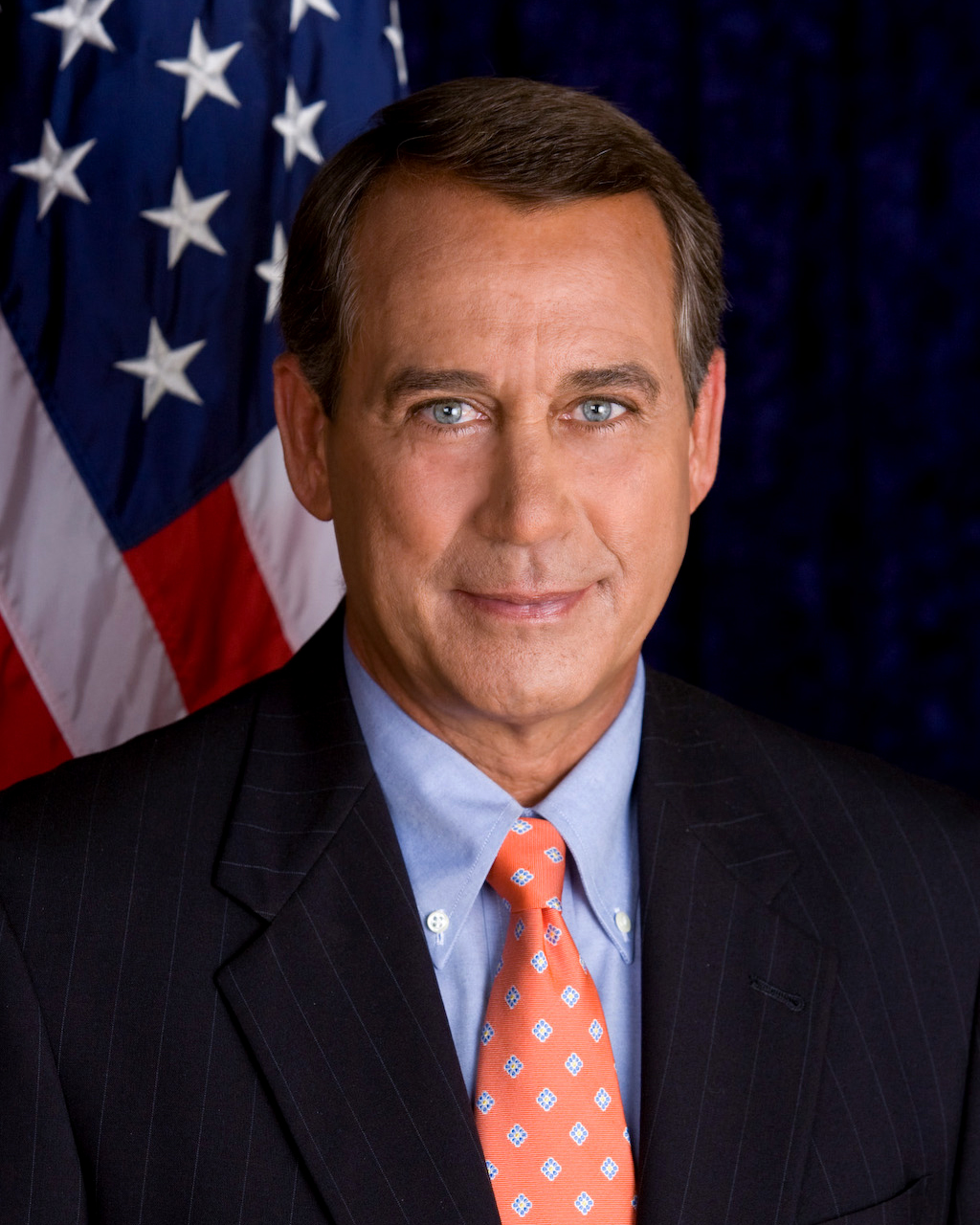
Representative John Boehner (R-OH 8th), currently serving as the Speaker of the U.S. House of Representatives, announced today that he will be resigning from Congress at the end of October. Boehner was first elected to the House in 1990, and is currently serving his thirteenth term. He became the House Majority Leader in 2006, and continued as the House Minority Leader when the Democratic Party gained a House majority following the 2006 congressional elections. He was elected Speaker of the House after the Republican Party regained a House majority following the 2010 elections.
Boehner has presided over a Republican Party in turmoil, splintered between old-guard ‘big government’ insiders and a resurgent wave of fiscal and social conservatives. He has attempted to chart a pragmatic course and find areas of agreement and compromise, but has been largely unsuccessful in today’s political environment. In addition to a hard-line taken by many of his more conservative Republican peers, the Democratic Party has also shifted toward a default position of stubborn intransigence, particularly with regard to budgeting and spending.
Conservative Republicans who feel that Boehner has been a poor advocate for their causes, and claim he has been too willing to capitulate to Democratic demands, had been preparing to mount an internal challenge to his leadership. It is unclear if Boehner would have been able to hold on, and he cited the prospect of a prolonged leadership battle as one reason for his resignation.
The Speaker of the U.S. House of Representatives falls immediately after the Vice President in the line of presidential succession. It is likely that the House will select a new speaker soon after Boehner’s resignation takes effect.
Many years ago, I took an interest in video and purchased a camcorder and a copy of Apple Final Cut Pro. These ended up being a complete waste of money; I rarely used either the camcorder (which I eventually sold) or the software (which was eventually obsolete and worthless).
Final Cut Pro 4 also came with a companion application called Soundtrack, which Apple had designed as a tool for non-musicians to create royalty-free music for their videos. Strangely, this ended up being the part of the Final Cut Pro suite that I used the most. It was fun and effortless to throw together neat little songs from the 5,000 included loops. In 2004, I used Soundtrack to become one of the hundreds (thousands?) of Internet personalities making songs featuring former Governor Howard Dean’s (D-VT) infamous scream.
Some time around then, I also started attempting to use Soundtrack to make music for some of the lyrics and poetry I had written. This was part of my on-again off-again efforts to turn some of my written work into sung work . . . efforts that have very occasionally resulted in poor-quality demos up here on the site . . . demos that I promptly delete when I soon realize that they really aren’t good. I still plan to produce something someday, but I no longer commit to any time-line. They may be next month; they may be in thirty years.
As far as I can recall, I never released (even temporarily) the work I did in Soundtrack. Although I liked what I had made, it didn’t feel right to release music built from loops of other musicians’ work, even if I arranged it myself and had the legal right to do so. I also only recorded a couple vocals, and wasn’t very happy with the result (in large part, I now realize, to the poor equipment I was using). So, eventually, I put all of that stuff aside and decided that if I ever released a demo, it would not be based on royalty-free loops (except perhaps here-and-there to add some depth).
But for all these years, sitting in my archives, I’ve had almost an album’s worth of songs without vocals . . . songs I put a lot of effort into, once upon a time. I rediscovered them again recently, and when I played them back I realized I still kind-of liked them. Maybe it’s time for them to see the light of day . . . not as a long-awaited demo, but as an experimental album of instrumental music, and as a sort of sample of my musical tastes. Think of it as a tenuous sketch of what an eventual ‘real’ album might sound like.
Two of these eleven songs—Mood Swings and Clubbed—were always intended as instrumentals. Clubbed was intended as a sort of joke hidden track, and so is completely stylistically different than the rest. The other nine songs were all meant to have lyrics, and so they have parts where the music pulls back to allow the vocals to come to the fore. I have severed any link between these songs and the lyrics that were originally meant to pair with them; they have new titles and a new order. The entire collection is forty-five minutes and twenty seconds long, which I still think is about the ‘sweet spot’ for an album (although most modern albums are much longer). Enjoy.
Ashley Madison is a well-known web site explicitly designed to help married people have extramarital affairs. Their trademarked tagline is: “Life is short. Have an affair.” They describe themselves as “the most famous name in infidelity and married dating.”
They have also been the victim of one of the most attention-getting hacks in recent history. A group calling themselves “The Impact Team” was able to illegally obtain gigabytes of Ashley Madison internal data, including a complete dump of their user accounts, and threatened to release the data if Avid Life Media—Ashley Madison’s parent company—did not shut the site down. The site stayed up, and, on August 19, the hackers made good on their threat.
Thirty-seven million user accounts were exposed. Many public figures in entertainment and politics have already been found out and publicly shamed, and more are likely to come. And it is almost certain that, shielded from the public eye, hundreds of thousands of families have been thrown into turmoil by the revelation that a loved one signed up on a cheater site.
Millions are clamoring for a way to avoid getting caught up in the mess, and Off on a Tangent is here to help. Here are ten sure-fire tips to help you avoid getting caught up in this or any future hack of a cheating web site:
Don’t cheat on your spouse.
Don’t even think about cheating on your spouse.
Don’t sign up on web sites dedicated to cheating on your spouse.
You probably take radar for granted. It’s just one of those commonplace, everyday technologies that you interact with—one way or another—all the time. When there is severe weather in your area, the television weathermen and online sources all put familiar Doppler radar images front and center. We know when and where it will be raining or snowing, can estimate how much precipitation we’ve received, and can even track wind patterns, determine if a tornado is forming, and issue critical warnings before they strike.
Weather radar is the kind that we ‘regular folks’ interact with all of the time, but it’s not the only kind. Police departments use car-based and handheld radar systems to find and catch speeders, which may or may not be a good use of their time (and our money). Scientists can use ground-penetrating radar systems to study the Earth’s crust. Boat- and ship-based marine radar systems are an essential part of navigation and collision avoidance, especially in poor weather, and in many harbors the ‘vessel traffic services’ use radar (and other) systems to manage traffic and improve safety.
Radar systems, small and large, also form an integral part of our aviation network. The air traffic control system relies on radar (combined with other technologies) to keep track of the aircraft overhead and help ensure that they reach their destinations safely. Controllers can guide aircraft away from ground obstacles and each other, and give instructions that lead pilots to their intended destinations even in the most adverse of conditions.
In addition to these ground-based systems, commercial aircraft have multiple radar systems operating on-board the aircraft itself. Since 1965, commercial aircraft operating in the United States have been required to have on-board weather radar systems (14 CFR 121.357). And in the aftermath of the 1974 crash of TWA Flight 514 (see a previous article in this series), they were also required to have a ground proximity warning system (39 FR 44439). These proximity warning systems have been implemented in the form of a radar altimeter . . . a device that, using radar, monitors and reports to the pilots the actual distance between the aircraft and the ground, and sounds warnings when the plane is too low.
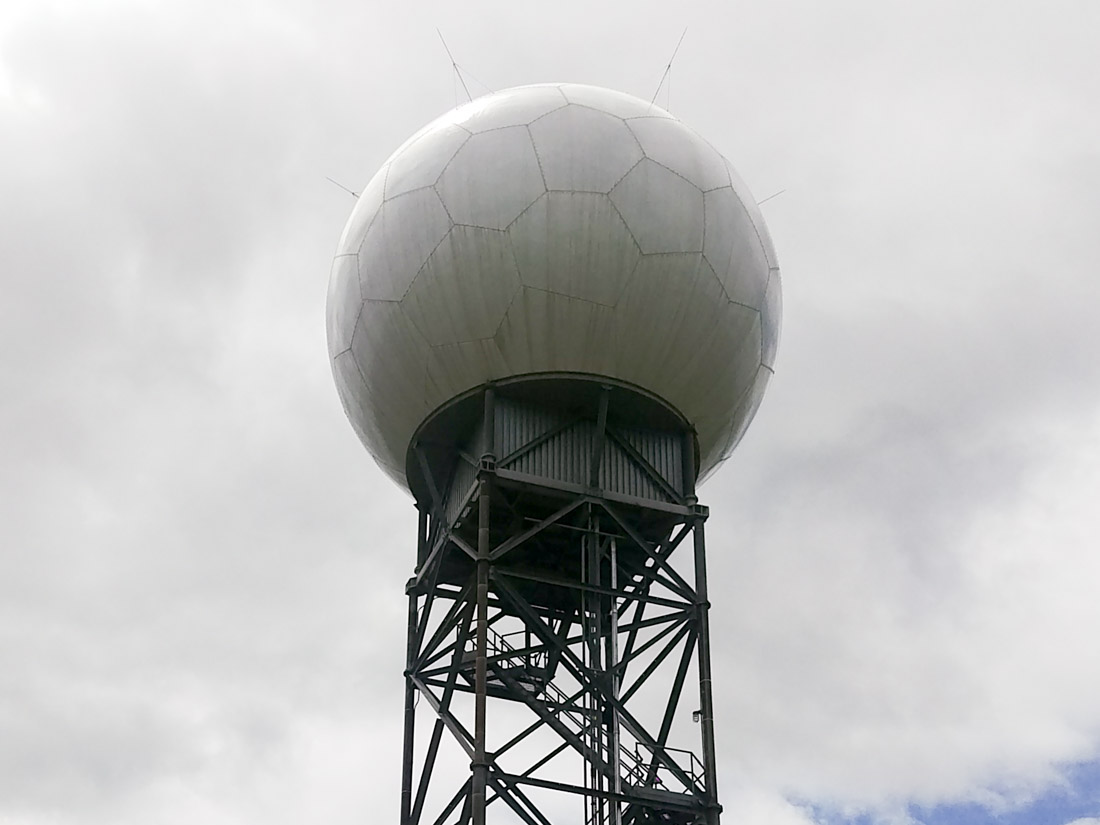
There are two important radar sites located in Loudoun County, Virginia, and one more located about seven miles beyond our borders in Fauquier County, Virginia.
Scott Bradford is a writer and technologist who has been putting his opinions online since 1995. He believes in three inviolable human rights: life, liberty, and property. He is a Catholic Christian who worships the trinitarian God described in the Nicene Creed. Scott is a husband, nerd, pet lover, and AMC/Jeep enthusiast with a B.S. degree in public administration from George Mason University.
X
Site Information
Off on a Tangent Website 26.0 “Sarah”
Theme: 26.0.83
Plugin: 6.0.165
Scribentes veritatem ab anno Domini MCMXCV
(Writing the truth since A.D. 1995)
Official Time:
Keyboard Shortcuts
Just type these sequences on the keyboard, or enter them in the search bar!