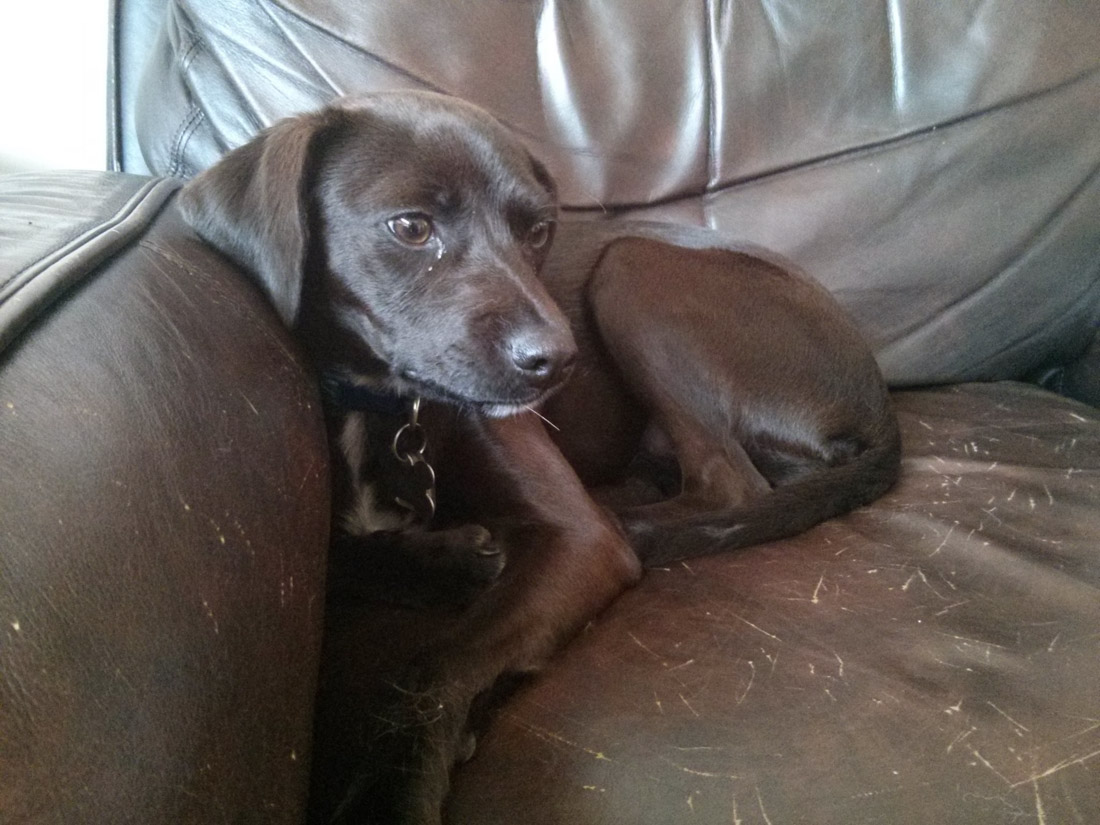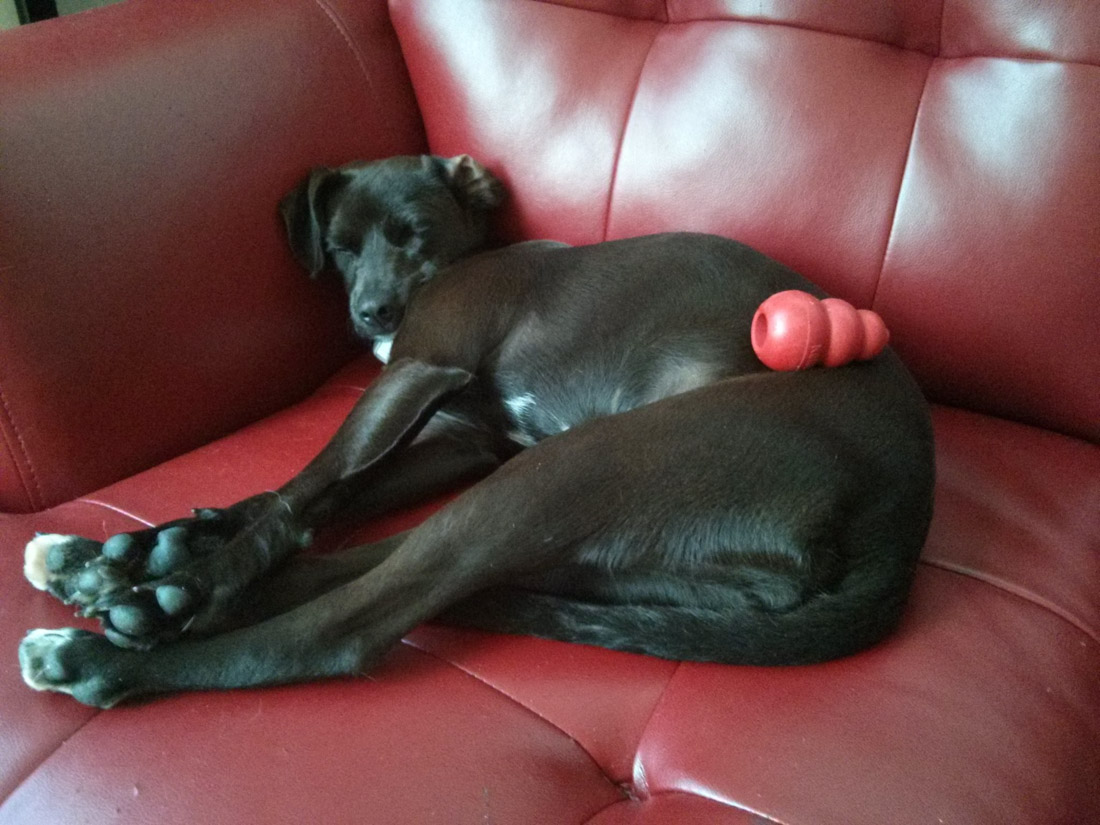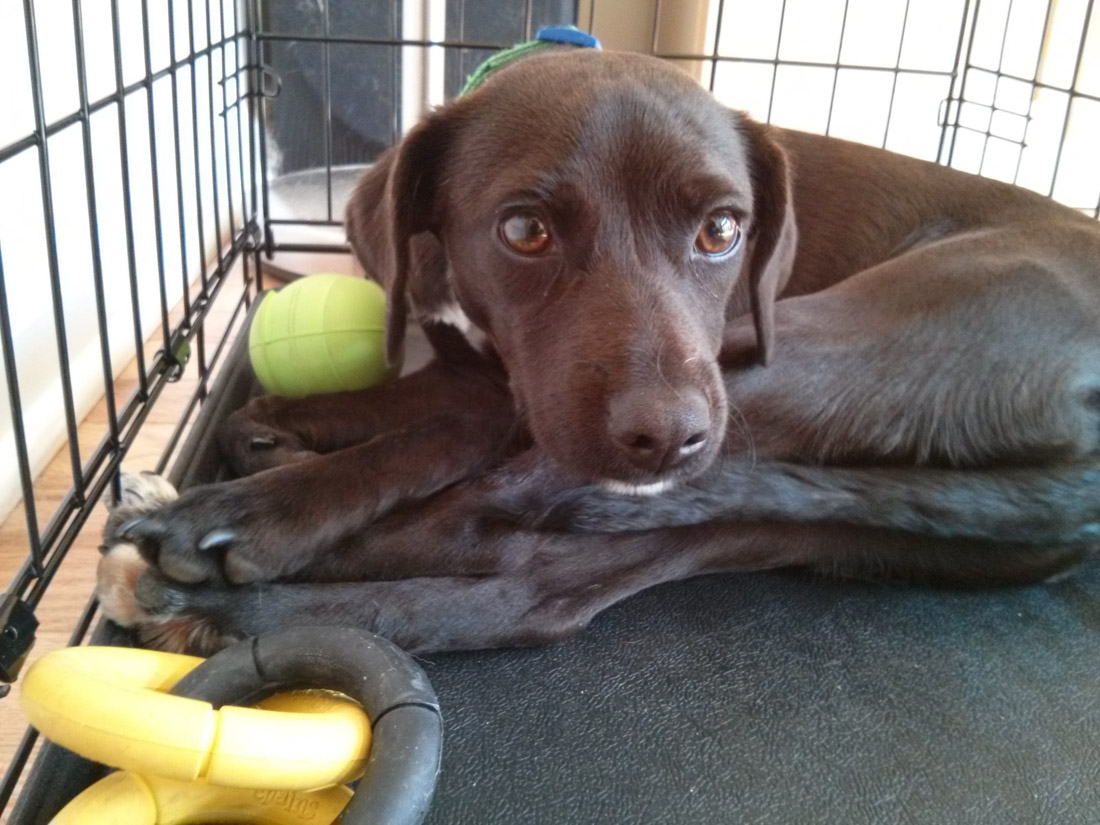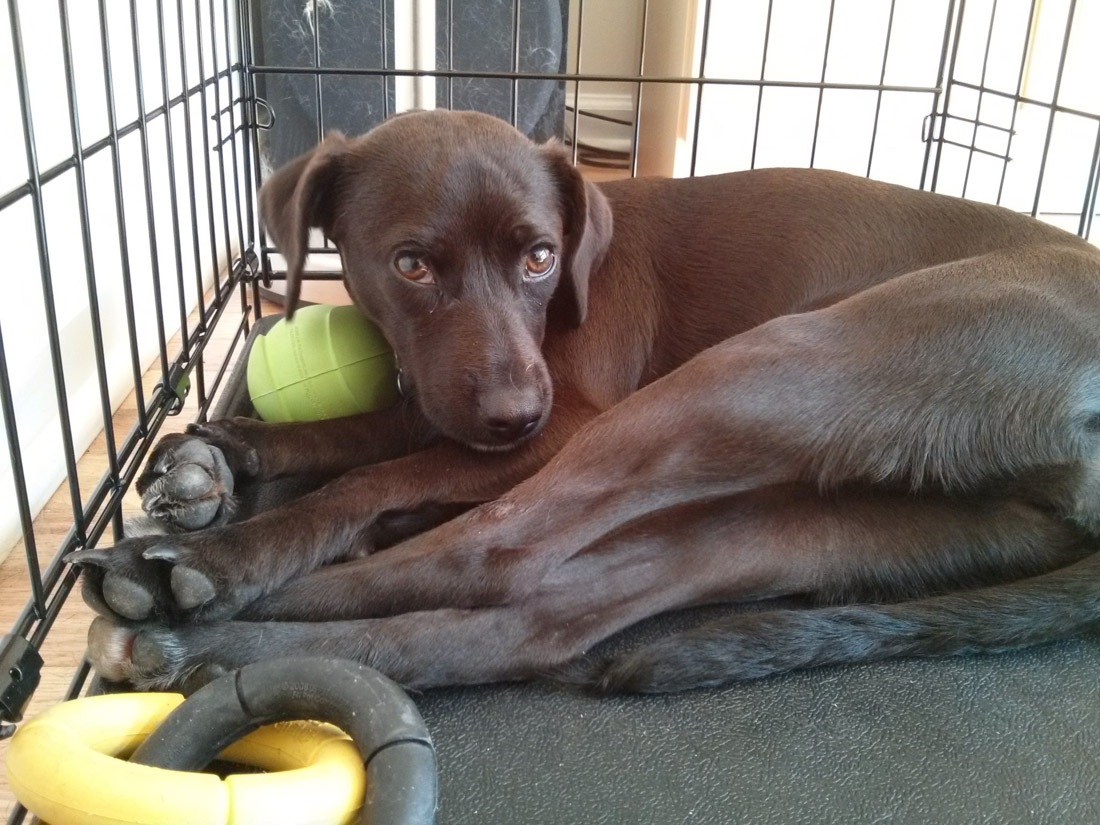
Meet Nena the Dog

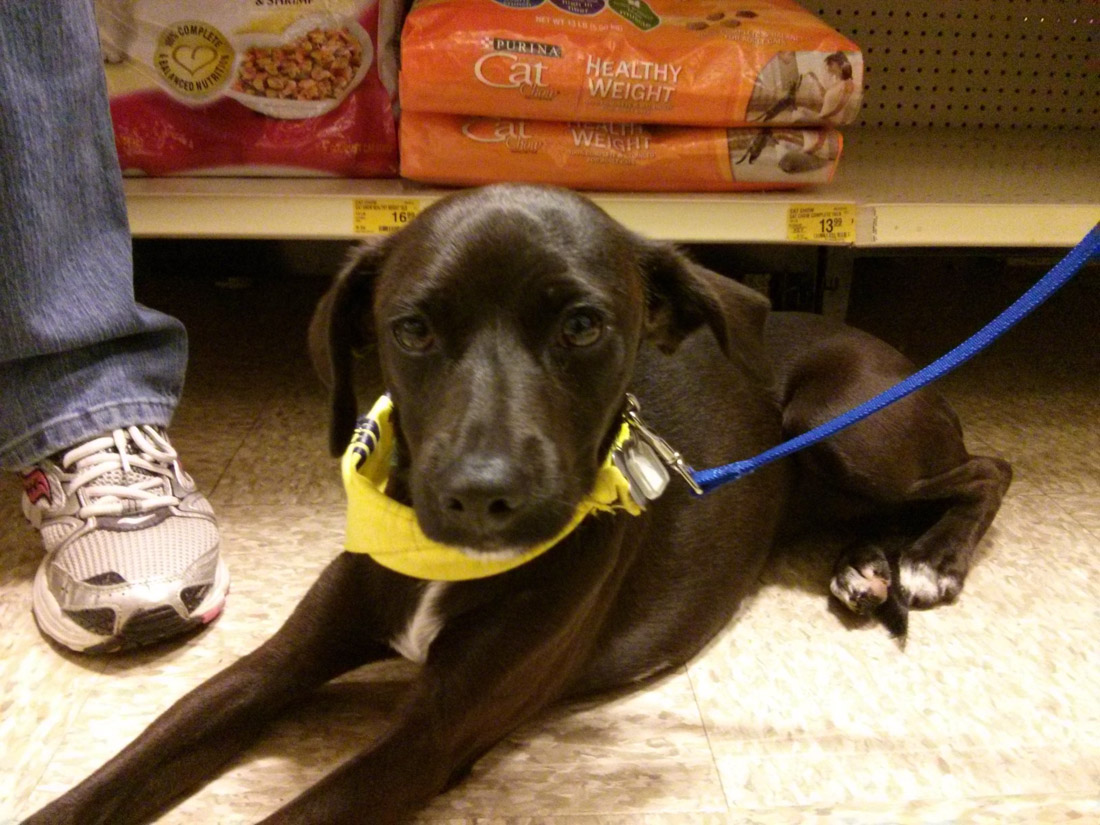
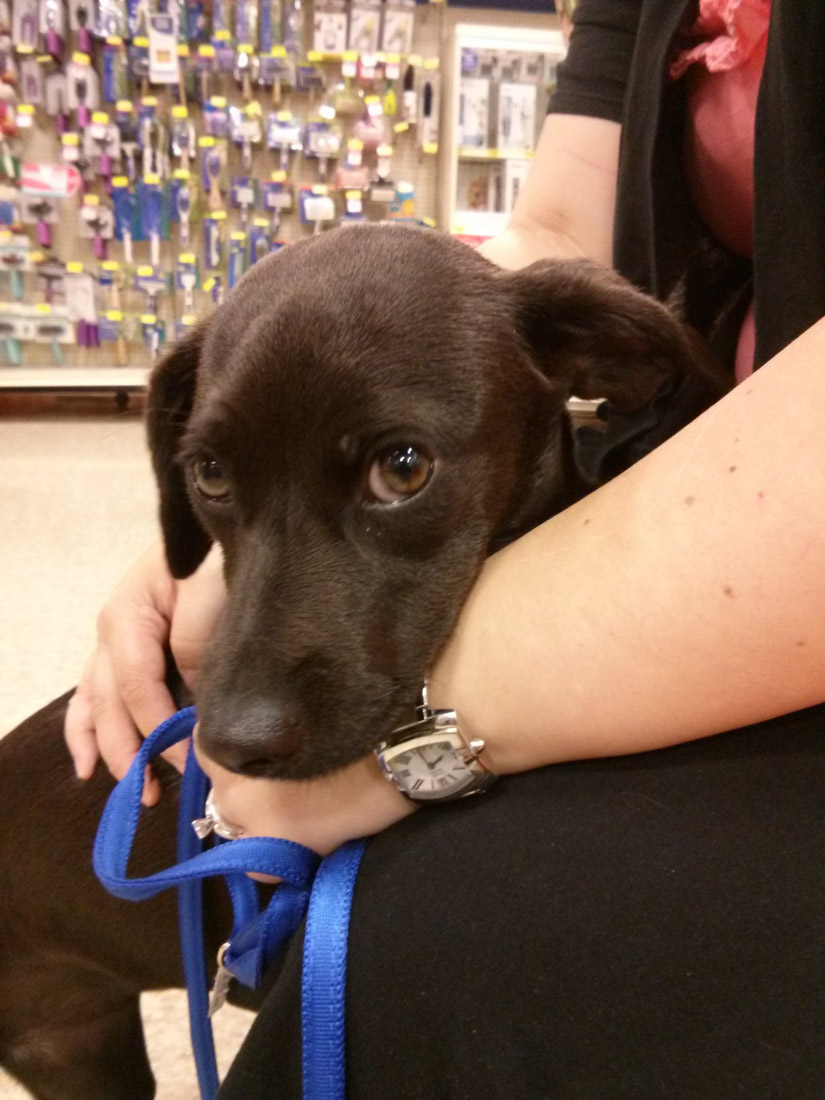
About two weeks ago, Melissa and I dropped by the Petsmart store in Sterling, Virginia, to see what dogs the Lost Dog & Cat Rescue Foundation had available for adoption. We met a seven month old chihuahua/terrier mix named Sophia, and she seemed like a good fit, but Melissa wimped out and we went home to think about it.

Within a couple of days, Melissa and decided that she really did want to make Sophia part of the family . . . so she contacted the foundation and asked them to bring Sophia to the Friday adoption event at the Petsmart in Fair Lakes. We met up with her again there, filled out some paperwork, paid a fee, and went home with a dog.

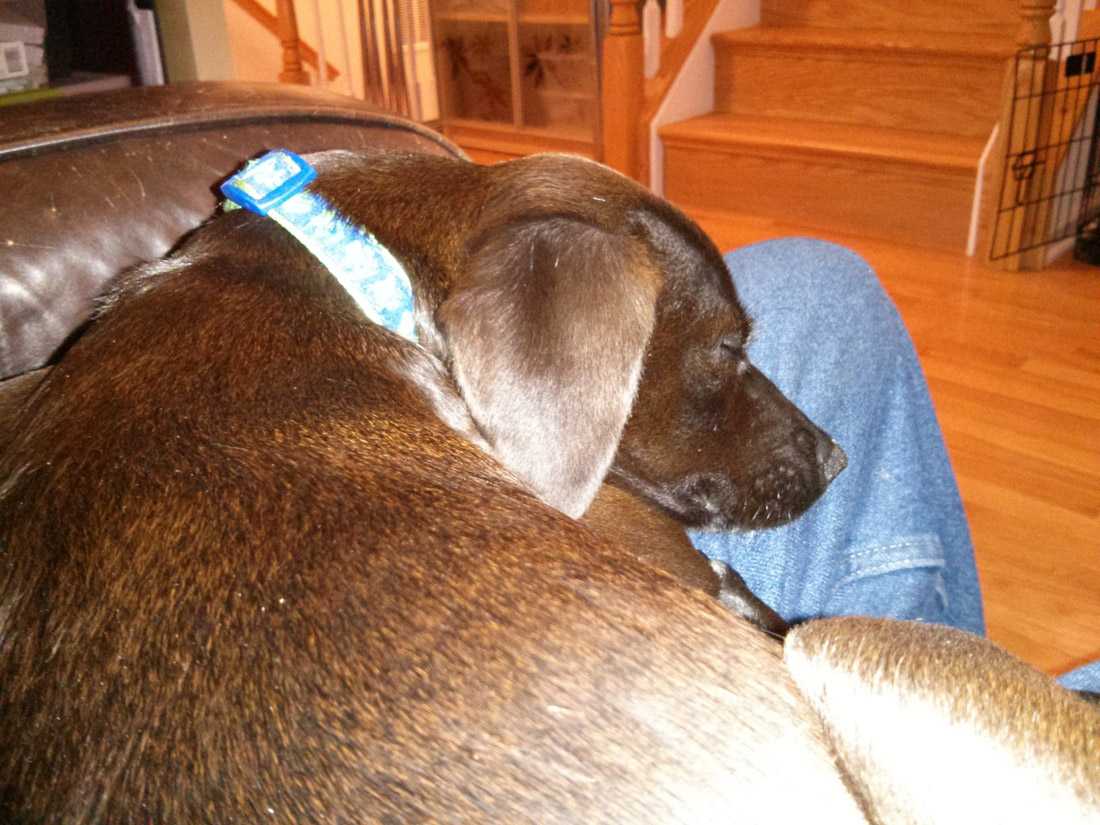
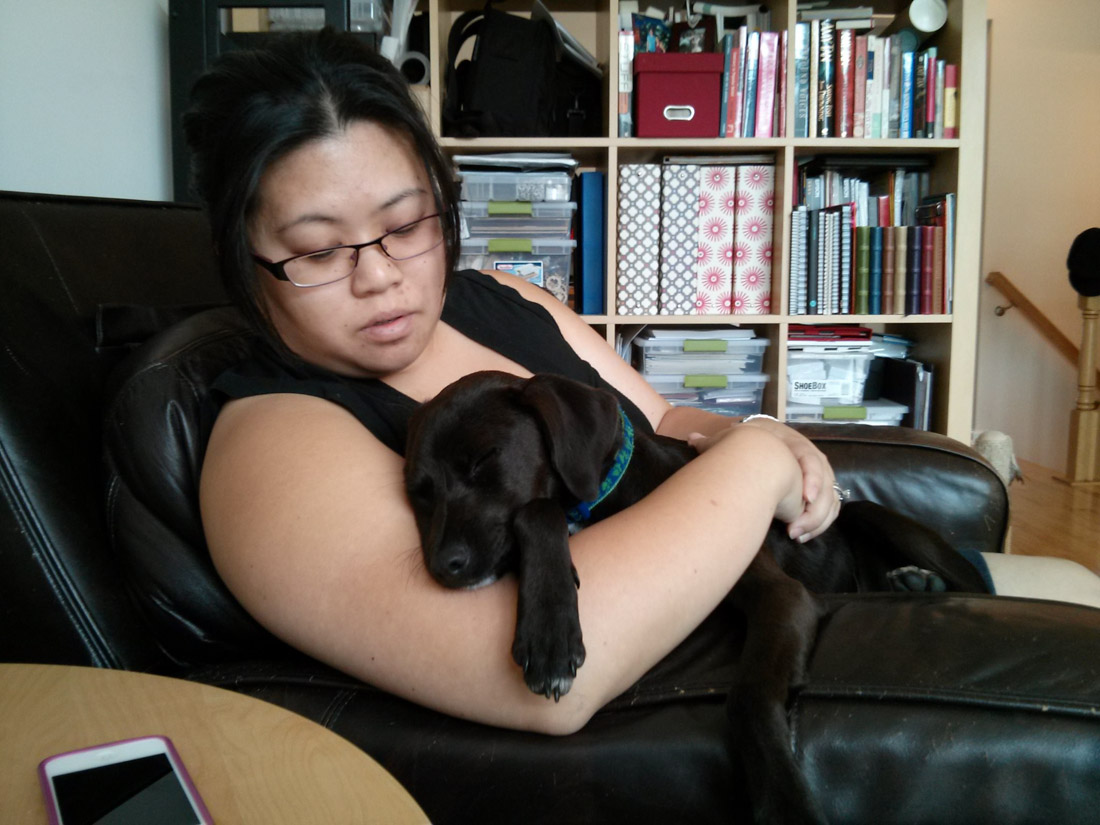
Over the last week we’ve been getting to know her (and letting her get to know us). We decided to change her name to Nena, which is a Spanish term of endearment that roughly means ‘little girl.’ This reflects her heritage as a rescue from Puerto Rico, where there are apparently tons of semi-wild chihuahua/terrier mixes running around.

She is a fast learner, and she’s already got house-training down (with only a couple of accidents at the beginning). She is great on walks around the neighborhood, friendly with the neighbors (both human and canine), and she even gets along pretty well with the cats. Nena and Mei Mei have pretty much worked out an arrangement.

Vincent is still coming around, which is being complicated by the fact that he injured some of his front toes with (I think) an extra-high jump down from the top of the kitchen cabinets. We took him to the emergency vet (on the Fourth of July) and are treating him with pain medication and lots of love. In another week or so we are hoping he will be good as new.

Edward Snowden Isn’t a Criminal

In 2006, it came to light that the National Security Agency (NSA) was collecting phone records. At the time, I found this unobjectionable because of a key nuance: those records were being volunteered to the NSA by the phone companies. The records belong to the companies, and they may use them however they like (as long as they don’t violate the terms of service and privacy policies they have in-place with their customers). This was a completely voluntary effort, and some companies—like Qwest—decided not to share their records with the government. We may like or dislike the NSA’s efforts, and we might have wished our phone company hadn’t cooperated with them, but no laws were being broken.

Around the same time, we also found out that President George W. Bush’s (R) administration was engaging in limited warrantless wiretapping of phone calls to and from some overseas numbers. Because this program dealt only with international calls, it fell squarely within the normal range of presidential war powers, and was also perfectly legal. Calls with both ends in the United States, on the other hand, could only be tapped with a warrant except in truly extraordinary cases.

The Fourth Amendment to the U.S. Constitution, with the assistance of tons of related case-law, demarcates clear lines between legal and illegal forms of electronic espionage and searches. The collection of data from businesses that voluntarily provide it falls on the legal side. The monitoring of phone calls to enemies across our borders in a time of war also falls on the legal side. The monitoring of phone calls and other communications after obtaining a warrant is also perfectly legal. But our government has played fast-and-loose with these lines before, and, thanks to Edward Snowden, we know they are still doing it today.

Snowden, formerly a low-level government contractor with Booz Allen Hamilton, publicly revealed the existence of an NSA espionage program that collects essentially all phone records in the United States under order of the U.S. Foreign Intelligence Surveillance Court (FISC). This sounds very similar to the program that was revealed in 2006, and is probably related, but now the NSA is compelling companies to provide the information whether they want to or not. Now it’s not voluntary cooperation, but a full-on search and seizure. That is where it crossed the line from a legal (if questionable) program to one that is blatantly, absolutely unconstitutional.

Supreme Court Strikes Part of DOMA

Seal of the Supreme Court

The United States Supreme Court has voted 5-4 to strike down a provision of the Defense of Marriage Act (DOMA) that prohibited legally married homosexual couples from receiving federal marriage benefits. United States v. Windsor was brought by Edith Windsor, who was denied federal estate tax exemption when her partner—legally recognized as her spouse in the State of New York—died in 2009. According to this ruling, the Fourteenth Amendment’s equal protection clause and the Fifth Amendment’s due process clause prohibit the federal government from discriminating between marriages, including same-sex marriages, legally conferred by the states.

It appears at this time that the ruling is narrowly crafted and will not have any direct, immediate impact on states that do not recognize same-sex marriage. It does, however, lay a groundwork for a number of future legal challenges. In particular, the ruling does not directly address federal recognition of same-sex couples who are legally married in one state, then move to a state that does not recognize that marriage. The ruling also side-steps numerous Full Faith and Credit clause issues, and leaves unanswered the question of whether the Fourteenth Amendment’s equal protection clause should require all states to recognize same-sex marriages.

The majority opinion in United States v. Windsor was issued by Justice Anthony Kennedy joined by Justices Ruth Bader Ginsburg, Stephen Breyer, Sonia Sotomayor, and Elena Kagan. Separate dissenting opinions were issued by Chief Justice John Roberts, Justice Antonin Scalia joined by Justice Clarence Thomas, and Justice Samuel Alito. Thomas also joined, in part, with the dissent written by Alito. Roberts joined, in part, with the dissent by Scalia and Thomas.

The court also separately dismissed Hollingsworth v. Perry by a 5-4 vote. In this case, supporters of California’s Proposition Eight—a voter initiative that outlawed the recognition of same-sex marriage in the state—were found to lack necessary standing to challenge a state court ruling that overturned the law. The effect is that same-sex marriages will continue to be legally recognized in California, even though the voters there acted through referendum to prohibit them.

The majority opinion in Hollingsworth v. Perry was issued by Roberts and joined by Scalia, Ginsburg, Breyer, and Kagan. A dissenting opinion was issued by Kennedy joined by Thomas, Alito, and Sotomayor.

Subaru Horn and Grille Updates

I mentioned back in April, after I upgraded my car’s stereo, that the next upgrades to my trusty Subaru Outback would involve repairing a worn-out hood latch, installing some new horns, and blacking out some of the chrome on the grille. I fixed the hood latch shortly thereafter, which didn’t really justify a post all its own. Then the car needed new shocks and struts (which was expected), and I had to get the paint on the hood repaired due to damage from the ironically-named OEM ‘hood protector.’ Then there was a bit of a shipping snafu with the new horns, a bunch of pre-planned traveling, and a lot of rainy weather . . . so I didn’t get around to the other stuff until this past weekend.

Anyway, I bought a pair of Hella Supertone horns. They come in an obnoxious red color, which is meant to look ‘dramatic’ behind your grille. I find it a bit tacky, but thankfully you can get blacked-out versions of the horns from SubiMods . . . along with a very handy mounting bracket and wire harness. The whole kit was almost stupidly easy to install. The only hard part was getting the bumper cover and grille off the car, which is far more complicated than it ought to be.

While the grille was off the car anyway, I removed the chrome-colored ‘wings’ and Melissa—who is far more talented with paint than I am—blacked them out for me. It ends up giving the grille a bit more of a subtly-aggressive look, as opposed to the overly-chromed flashy look it came with from the factory. I like it.

Read on for some photos, and before-and-after MP3’s of the horn. They’ll give you a good idea of the tone change, but what they don’t really capture is the fact that the horn is now much, much louder than it used to be . . . in part because the Supertones are probably twice as loud as the stock horns, and in part because the stock horns were located behind the bumper cover and the new ones are mounted with a clear line-of-sight through the open grille. Good times.

Colonial Beach and Surroundings

As soon as Melissa and I got back from our epic, ~2,800 mile road-trip to Oklahoma, we celebrated our anniversary with a three-day weekend in Colonial Beach, Virginia and the surrounding region. Colonial Beach is a town located on the Potomac River coast of Virginia’s Northern Neck. The town was a popular destination for vacationers from the Washington, DC, metro area, at least until the Chesapeake Bay Bridge opened in 1952 and made it much easier to drive to more-distant ocean beaches.

Melissa and I enjoy the laid-back atmosphere of the Northern Neck, so we end up spending a lot of our anniversaries out that-way. You may remember last year’s trip, where we made a stop at the George Washington Birthplace National Monument (which is actually near Colonial Beach) on the way back.

Anyway, when we drove out on Saturday, May 25, we went straight to Stratford Hall, the birthplace of Robert E. Lee, which is actually twenty miles (give or take) past Colonial Beach. down the Northern Neck. After that, we back-tracked to Colonial Beach and took some photos and had some dinner. We ended up staying at a hotel further to the northwest in Dahlgren, Virginia, near the U.S. 301 bridge over the Potomac into Maryland.

On Sunday we went to Mass at Saint Elizabeth of Hungary Catholic Church in Colonial Beach, took a bunch more photos, dropped by the birthplace of President James Monroe (Democratic-Republican)—a roadside obelisk where there will, someday, be a museum—and then drove around aimlessly for a while. On Monday we slept in, relaxed, and drove home. It was a wonderful, relaxing, largely stress-free weekend. Photos below!

Scott Bradford is a writer and technologist who has been putting his opinions online since 1995. He believes in three inviolable human rights: life, liberty, and property. He is a Catholic Christian who worships the trinitarian God described in the Nicene Creed. Scott is a husband, nerd, pet lover, and AMC/Jeep enthusiast with a B.S. degree in public administration from George Mason University.