
So, I was in a meeting this afternoon in an interior conference room at the office. It was running a bit longer that I expected, and I was beginning to worry that it would run over into my next meeting. The next meeting was at 2pm, and it was past 1:50 already.
I don’t remember noticing the initial vibration of the earthquake. According to media reports, it began fairly gently for 10 or 15 seconds before spiking into the strongest Virginia earthquake in over a century. Our building carries vibrations from moving furniture and such pretty easily, and we are located very close to Washington Dulles International Airport and get a lot of plane noise and vibrations, so the whole first chunk of the quake didn’t attract any attention from me or any of the other people in the room.
Then it went crazy—a violent shake that was obviously either an earthquake or something else way out-of-the-ordinary. The meeting pretty much immediately disbanded.
Being in an interior room, I had little to go on to determine whether there had been an earthquake or, say, an explosion somewhere in the building. I asked some people from my cube-row if they had seen anything outside, and they told me that they had seen streetlights and other stuff outside shaking . . . clear confirmation that we had experienced a quake. Soon Facebook lit up with tons of other people reporting the same thing, people from all around the DC metro area and (surprising to me at the time) as far away as Roanoke and Altavista. In those first moments, I felt convinced that the quake was centered in the DC area because it shook violently. I’ve felt quakes in this area before, most of them centered near where this one was (northwest of Richmond), but they had all been positively gentle compared to this one . . . more like a truck driving by or a jet taking off. This one, once it really kicked-in, was more like a truck slamming into the building.
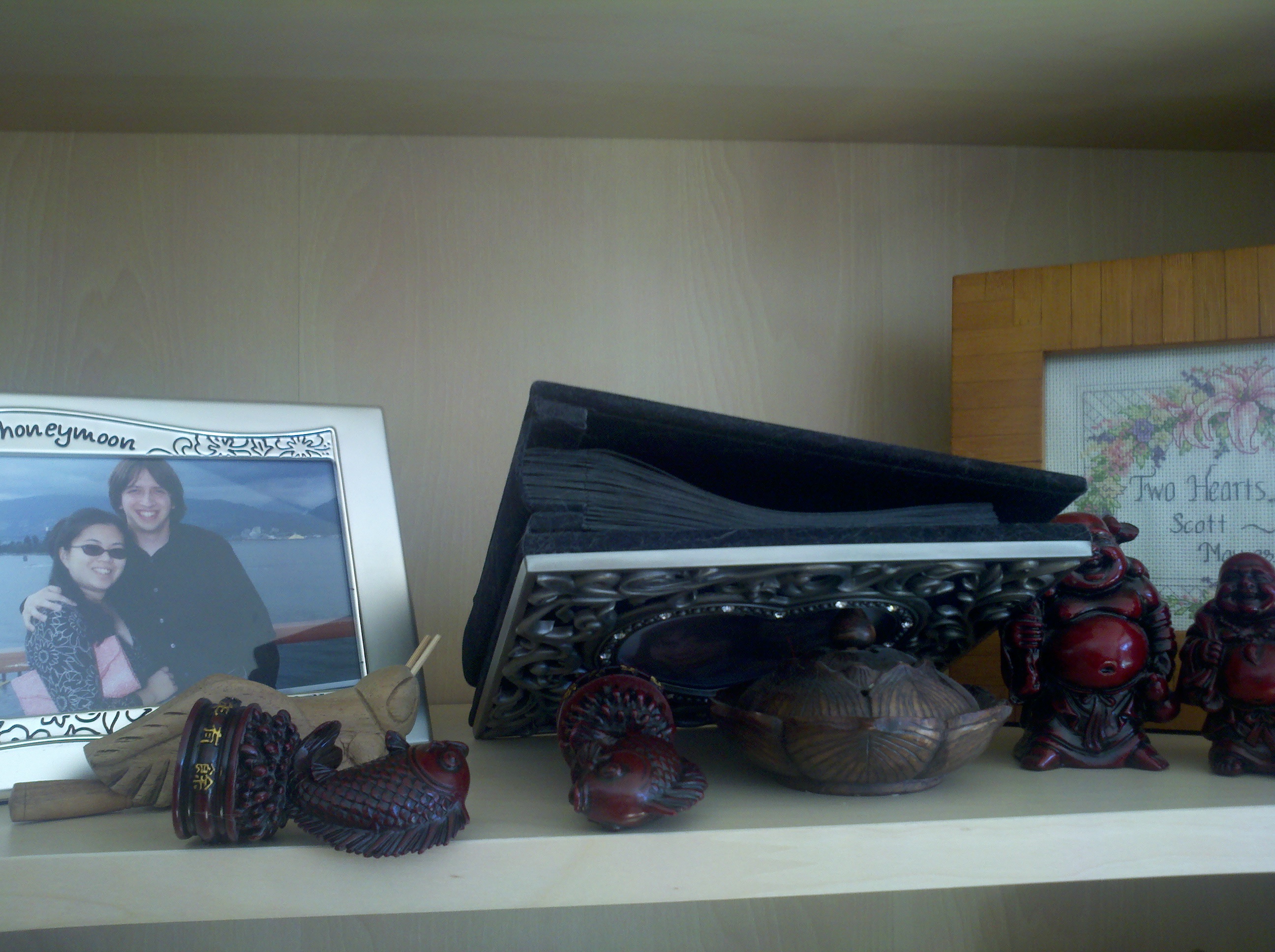
All-in-all, the quake wasn’t very serious. Californians are laughing at our unnecessarily over-the-top reaction of evacuating federal buildings and sending everybody home early. At my house, the full extent of the damage is captured in the photo above—a photo book fell over, taking a couple small fish figurines with it. The figurines didn’t even break. Most of the damage in the region was very minor, with a couple notable exceptions. There was an apparent partial wall collapse in Vienna and possible serious damage to the National Cathedral (Episcopal) in Washington, DC, where several pinnacles collapsed and cracks appeared in the structure of the building (this might end up being the big damage story). There are also reports of some serious damage to residential buildings closer to the epicenter.
To the Californians making fun of us: Don’t forget that your buildings were designed for this, and ours weren’t, and this happens to you all the time, and it hasn’t happened here in more than a century. Cut us some slack ;-). As for us here on the east coast, well, we had our unnecessary early dismissal today. Let’s get back to work!