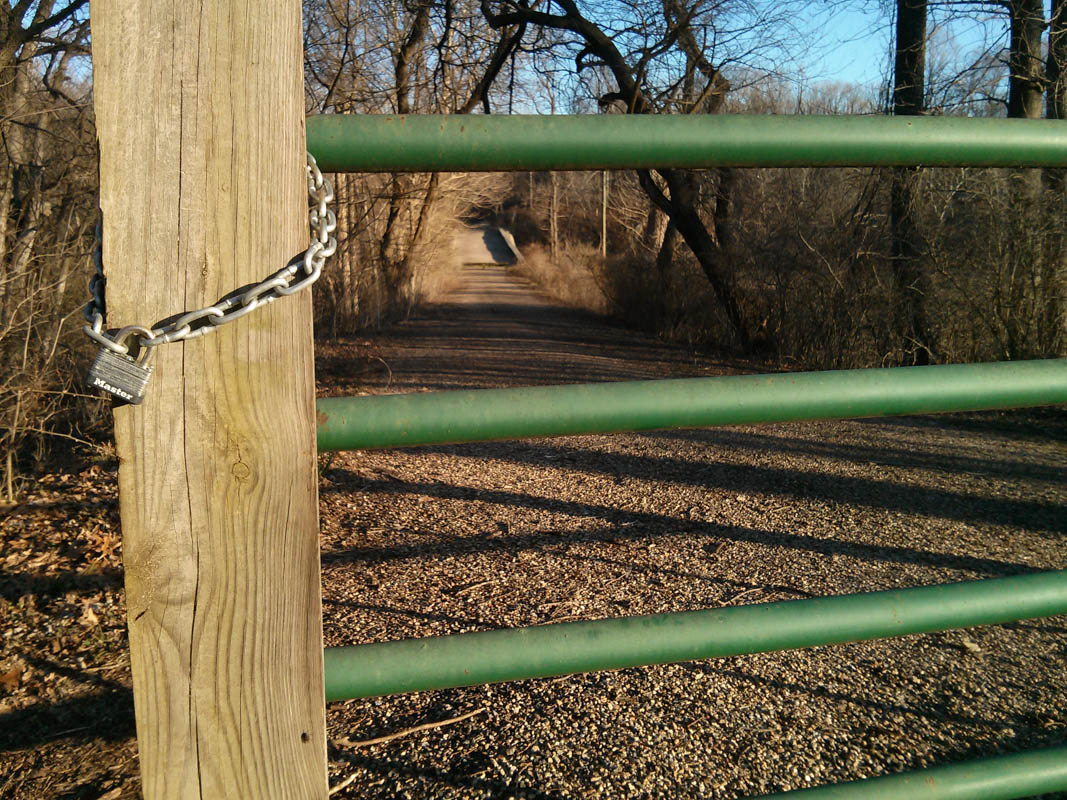
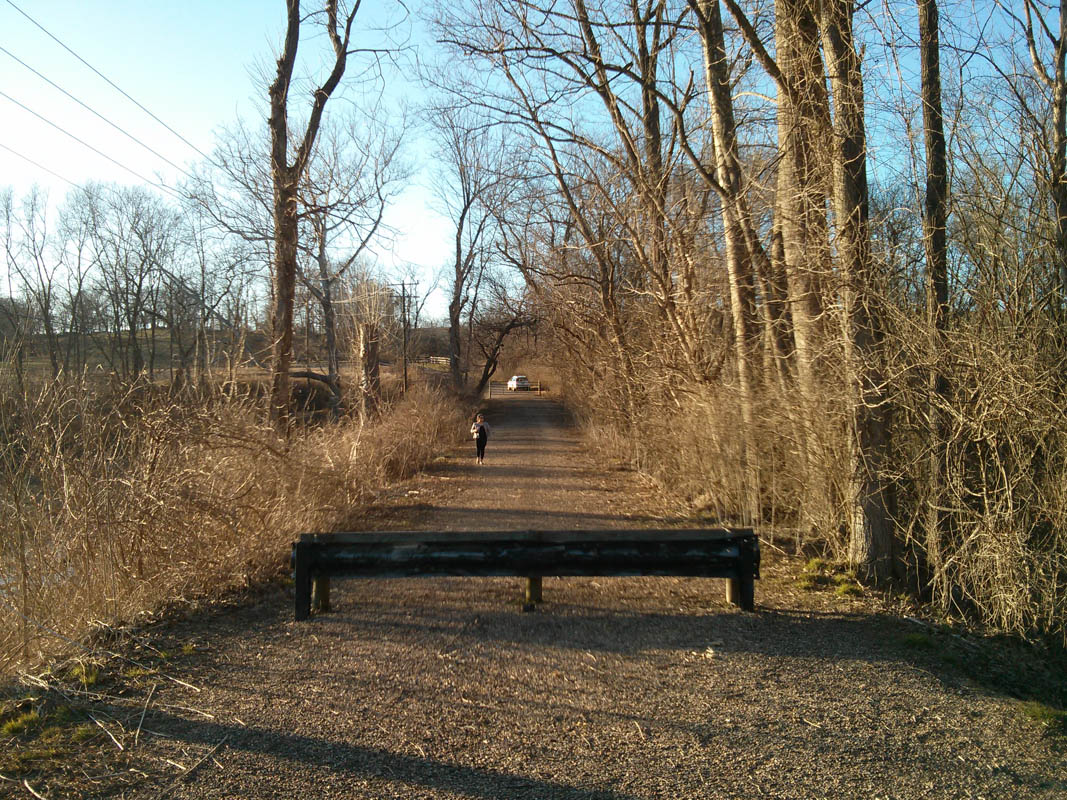
Melissa and I went for a nice afternoon drive down some of the wonderful country roads in Loudoun, Prince William, and Fauquier Counties today. Along the way we stopped at the Goose Creek Stone Bridge, which is located just north of the Loudoun/Fauquier border to the west of Middleburg, Virginia. It was built some time between 1801 and 1803 to carry the Ashby’s Gap Turnpike, and it is among the oldest and longest remaining stone turnpike bridges in Virginia. In June 1863, it was the site of a battle between advancing Union and retreating Confederate troops.
When U.S. 50 was built, replacing the Ashby’s Gap Turnpike through this area, it was routed slightly further south on a modern bridge . . . but thankfully, unlike countless other historic bridges, this one was not torn down. The property is now owned and maintained by the Fauquier-Loudon Garden Club and is open to the public.
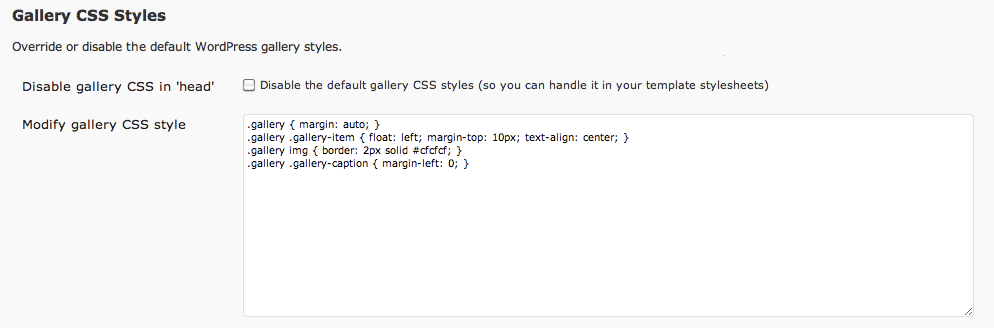
WordPress places the CSS styles for its galleries directly into the post content, which breaks XHTML validation. This plugin moves the styles into the header of the page where they belong. It also gives you the option to modify the default gallery style CSS or disable the gallery styles entirely (so you can control them from your template CSS files).
This update is a small maintenance update that corrects an ‘undefined variable’ error that was occurring with new versions of WordPress. As a result of the changes, the plugin now requires WordPress 3.0 or higher.
As always, contact me if you find any bugs or issues!
The College of Cardinals has voted in their eighth General Congregation to begin the papal conclave on Tuesday, March 12, 2013. The College will vote in that conclave, which is held privately in the Vatican’s Sistine Chapel, to elect a new Roman Pontiff to lead the Catholic Church.
A new pope must receive a two-thirds super-majority vote. At the 2005 papal conclave that followed the death of Blessed John Paul II, Pope Benedict XVI was elected after four ballot cycles, with at least two ballots held each day during the conclave. As such, it is possible (though not certain) that a new pope will be elected before the end of next week.
Of the 117 cardinals under the age of eighty who are eligible to vote in the conclave, 115 will participate. The other two cardinals have excused themselves from the proceedings for personal or health reasons.
Pope Benedict XVI resigned the papacy at the end of February, the first pontiff to do so in nearly six hundred years. Once elected, his successor will be the 266th Bishop of Rome—an office first held by Saint Peter, whom Christ had appointed head of the church (cf. Matthew 16:19)—and will be responsible for shepherding the world’s 1.16 billion Catholics.
I read with some amusement this morning that North Korea has vowed that, effective March 11, it is cancelling the 1953 armistice agreement that ended the Korean war. In and of itself, this kind of saber-rattling isn’t very funny. The two Korean states are still technically at war with one another, and nobody wants the Korean peninsula to erupt into violence again. But I laughed when I saw the headline because I distinctly remember that the government of North Korea already announced that the armistice was over back in May 2009.
The reclusive government of North Korea has always had a penchant for brinkmanship and has regularly violated the armistice anyway. In November 2010, for example, the North Korean military launched a full-on artillery attack on Yeonpyong Island in South Korea that killed four and injured nineteen. The South Korean military returned fire while the bombardment went on, but otherwise did not engage in serious military retaliation.
Among all the ‘trouble spots’ in the world, Korea has always been the one that scares me the most—even more so now that North Korea has nuclear weapons. Aside from the North Korean pattern of belligerence, their government just seems to be wholly disconnected from reality. Other belligerent states like Iran and the Hamas government of Gaza are dangerous, but they are somewhat predictable and they are motivated by ideologies that, though irrational, can be analysed and understood.
North Korea, on the other hand, can’t even keep its story straight from day to day about whether the 1953 armistice is still in effect or not . . . there isn’t even solid ground from which we could begin having serious negotiations. It’s reminiscent of George Orwell’s 1984, where ‘truth’ is constantly shifting based on the leader’s whims at the moment. I just hope Kim Jong-un doesn’t decide on such a whim to start a nuclear war. . . .
There is nothing in the world like the papacy. Beginning with Saint Peter, who was appointed head of the church by Christ himself, a scant 265 men have served as the Bishop of Rome and head of the Christian church. Most have been great men. A few have been down-right diabolical. But all down the line, the successors of Saint Peter—and the One, Holy, Catholic, and Apostolic Church that they shepherd—have been protected by the Holy Spirit from teaching error in matters of faith and morals. Christ promised as much when he appointed Saint Peter to lead his people: “And I tell you, you are Peter, and on this rock I will build my church, and the powers of death shall not prevail against it” (Matthew 16:19, RSV-CE).
But, despite what some might claim, the Holy Spirit doesn’t sweep down from heaven and ordain a new pope. In 1997, Cardinal Joseph Ratzinger—the man who would become Pope Benedict XVI only eight years later—said, “The Spirit’s role should be understood in a much more elastic sense, not that he dictates the candidate for whom one must vote. Probably the only assurance he offers is that the thing cannot be totally ruined. There are too many contrary instances of popes the Holy Spirit obviously would not have picked!”
This is consistent with the establishment of what we now call the papacy as recorded in Holy Scripture. Christ told Peter that the powers of death (or the ‘gates of hell’) would not prevail against the Church. That doesn’t mean that they wouldn’t make inroads at times. That doesn’t mean that there wouldn’t be dark, evil days in the development and spread of the Christian faith. That doesn’t mean that our priests, bishops, and even our popes wouldn’t fall woefully short at times. No, it just means that their sins (and ours) can never completely eclipse the underlying truths of the Christian faith. And they haven’t. Sin has bruised us, and hurt us, and embarrassed us . . . but it has not beaten us. It can’t. Sin has already been conquered.
Scott Bradford is a writer and technologist who has been putting his opinions online since 1995. He believes in three inviolable human rights: life, liberty, and property. He is a Catholic Christian who worships the trinitarian God described in the Nicene Creed. Scott is a husband, nerd, pet lover, and AMC/Jeep enthusiast with a B.S. degree in public administration from George Mason University.
X
Site Information
Off on a Tangent Website 26.0 “Sarah”
Theme: 26.0.83
Plugin: 6.0.165
Scribentes veritatem ab anno Domini MCMXCV
(Writing the truth since A.D. 1995)
Official Time:
Keyboard Shortcuts
Just type these sequences on the keyboard, or enter them in the search bar!