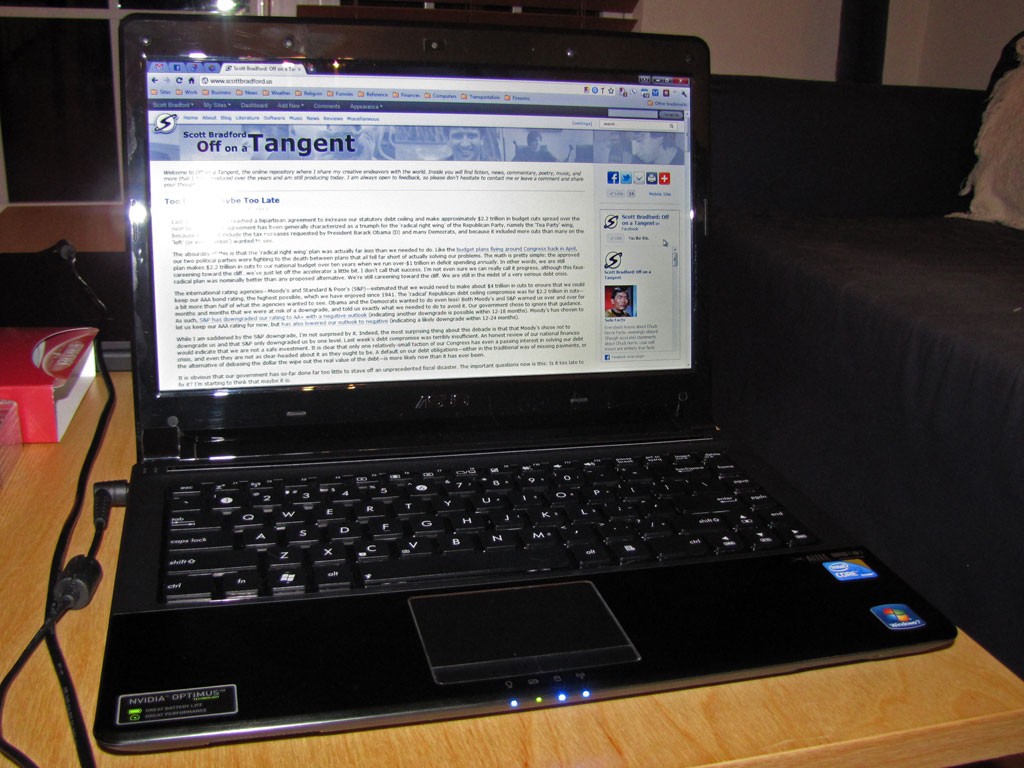
I’ve just launched a minor revision to the site, which brings the version to 22.3. You won’t notice much visually different in this revision, but I’ve made a ton of little changes, bug fixes, performance improvements, etc. Here are some of the things that have changed:
- Static Site Improvements: The static site, located at http://static.scottbradford.us/, has seen a number of improvements. This site is where I do special live coverage, and it also serves as the ‘down for maintenance’ page. Most of the improvements relate to the live coverage functions, which you won’t see until the next time I do a live coverage event. Among the new features is a more dynamic, simple method for me to manage live events, and the ability to sort with newest-at-top or newest-at-bottom.
- Bunches of Little Improvements: I’ve tweaked the home page Facebook box, made internal site links more reliable on the mobile site, and made the quotes paused/resumed state ‘sticky’ from page-to-page (and session-to-session). In addition, the holiday images respect your time zone (instead of being hard-coded to Eastern time), and the site is smarter about remembering holiday information during a session (rather than re-loading it on each page load). This will improve performance a bit.
- Bunches of Bug Fixed: The title on the mobile site now links back to the home page like it’s supposed to, I’ve fixed the image overlay captions (which a recent WordPress update broke), improved the behavior of the quotes sidebar widget on short pages and prevented it from ever overlapping other sidebar content, and improved background/foreground performance in Chrome and Firefox (which each recently changed background JavaScript behavior).
All-in-all, lots and lots of little things all added together. Let me know if you notice any problems!